Determine the meaning of words and phrases as they are used in a text, including figurative, connotative, and technical meanings; analyze the cumulative impact of specific word choices on meaning and tone (e.g., how the language of a court opinion differs from that of a newspaper).
Analyze in detail how an authors ideas or claims are developed and refined by particular sentences, paragraphs, or larger portions of a text (e.g., a section or chapter).
Determine a central idea of a text and analyze its development over the course of the text, including how it emerges and is shaped and refined by specific details; provide an objective summary of the text
Analyze various accounts of a subject told in different mediums (e.g., a persons life story in print and multimedia), determining which details are emphasized in each account.
Evaluate and/or reflect on a speakers point of view, reasoning, and use of evidence and rhetoric, identifying any fallacious reasoning or exaggerated or distorted evidence.
Track each student's skills and progress in your Mastery dashboards
Give this quiz to my class
Q 1/13
Score 0
As used in paragraph 11 of “A Big Surprise from the Edge of the Solar System,” which meaning of the word acute best applies?
60
intense
dire
crucial
clear
Q 2/13
Score 0
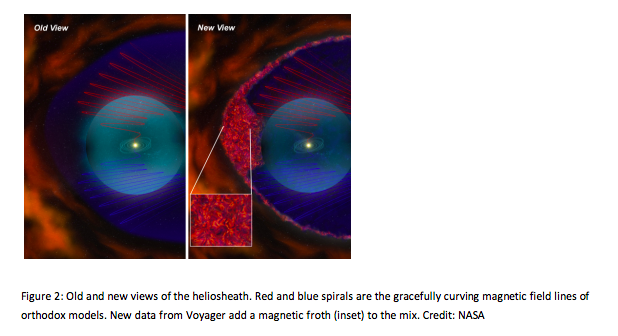
Part A: Read the caption under Figure 2 in the text. What is the meaning of the word orthodox as used in the caption?
60
conservative
official
legitimate
traditional
13 questions
Q.
As used in paragraph 11 of “A Big Surprise from the Edge of the Solar System,” which meaning of the word acute best applies?
1
60 sec
ELAGSE9RI1
Q.
Part A: Read the caption under Figure 2 in the text. What is the meaning of the word orthodox as used in the caption?
2
60 sec
ELAGSE9RI1
Q.
Part B: Which word in the caption under Figure 2 provides the strongest clue to the meaning of the word orthodox?
3
60 sec
ELAGSE9RI4
Q.
What is the relationship between the terms magnetic reconnection and magnetic bubbles as they are used in the article?
4
60 sec
ELAGSE9RI5
Q.
Part A: Why does the author provide an explanation of the graceful-arc theory of the sun’s magnetic field?
5
60 sec
ELAGSE9RI6
Q.
Part B: How does this explanation contribute to the author’s purpose in the article?
6
60 sec
ELAGSE9RI6
Q.
In the article, the author reveals Opher’s claim that “The magnetic bubbles appear to be our first line of defense against cosmic rays . . .” Which sentences from the article is most helpful to develop this claim?
7
60 sec
ELAGSE9RI5
Q.
Which of these possible ideas could be used to introduce a summary of the article?
8
60 sec
ELAGSE9RI2
Q.
Which of these possible ideas could be used to conclude a summary of the article?
9
60 sec
ELAGSE9RI2
Q.
Which excerpt from the video best demonstrates the central idea?
10
60 sec
ELAGSE9RI2
Q.
Part A: Why does the author of the article compare cosmic rays to cannonballs?
11
60 sec
ELAGSE9RI7
Q.
Part B: Which excerpt from the video demonstrates a technique similar to the answer to Part A?
12
60 sec
ELAGSE9SL3
Q.
In paragraph 9 of the article, the author claims that “Energetic particle sensor readings suggest that the Voyagers are occasionally dipping in and out of the foam—so there might be regions where the old ideas still hold.” Which image from the video best supports this claim?