Ask questions to compare and contrast the relationship between transformation processes of all rock types (sedimentary, igneous, and metamorphic) and specific plate tectonic settings. (Clarification statement: The plate tectonic settings to be considered here are continental collision, subduction zone, mid-ocean ridge, transformation fault, hot spot, and passive zone.)
Track each student's skills and progress in your Mastery dashboards
Give this quiz to my class
Q 1/12
Score 0
True or False: Rocks are made of minerals.
60
True
False
Q 2/12
Score 0
True or False: The process by which rocks are broken into little pieces called sediments is erosion.
60
False
True
12 questions
Q.
True or False: Rocks are made of minerals.
1
60 sec
SES2d
Q.
True or False: The process by which rocks are broken into little pieces called sediments is erosion.
2
60 sec
SES2d
Q.
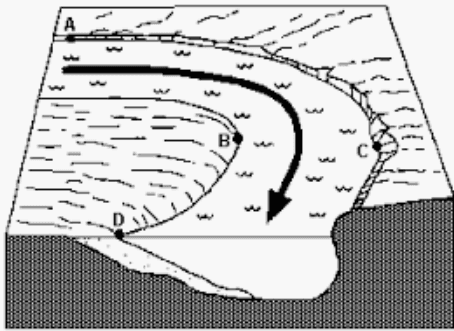
Which part of the river would you most likely find a rock made of small pebbles cemented together?
3
60 sec
SES2d
Q.
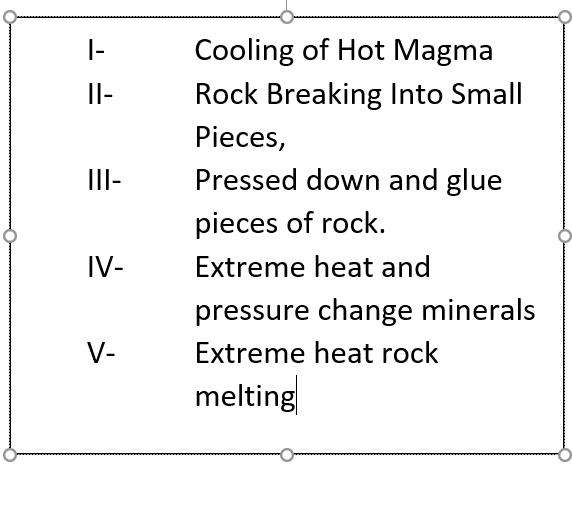
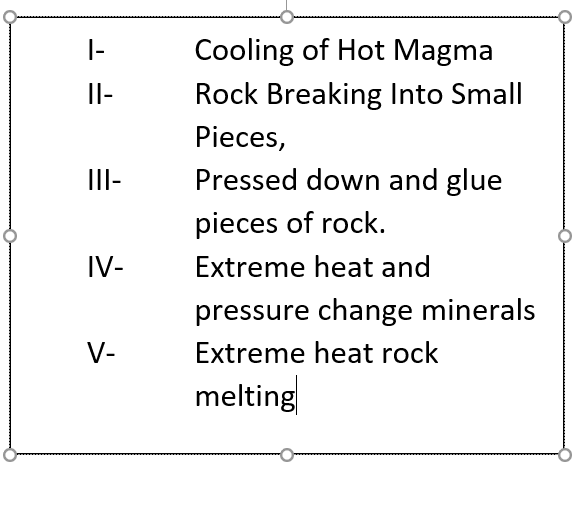
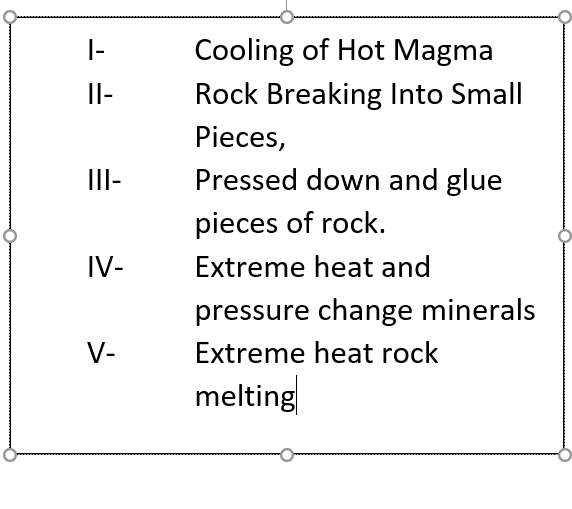
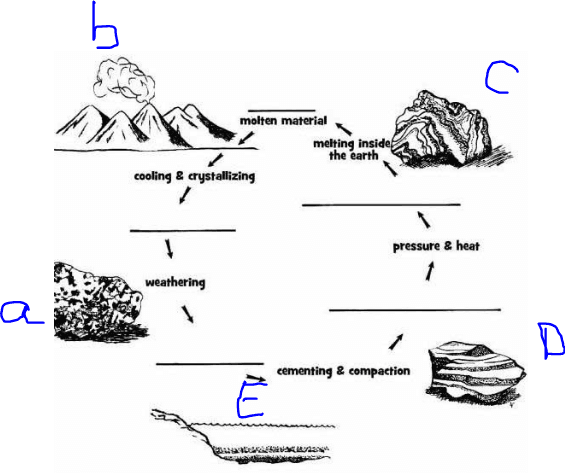
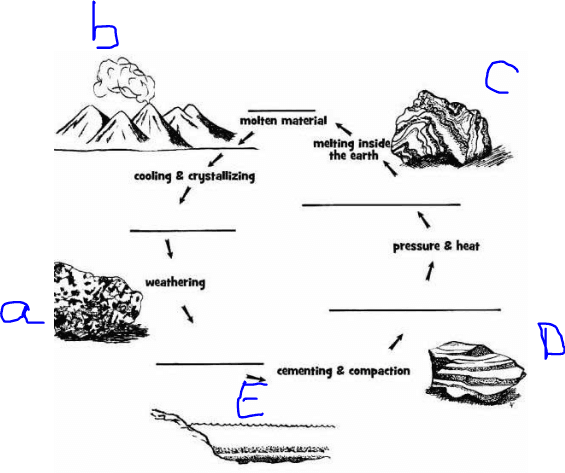
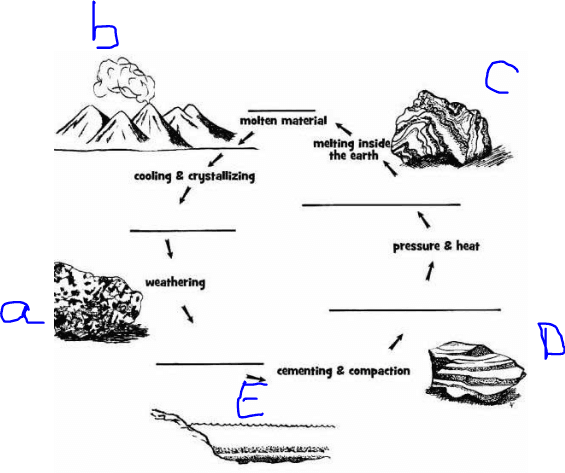
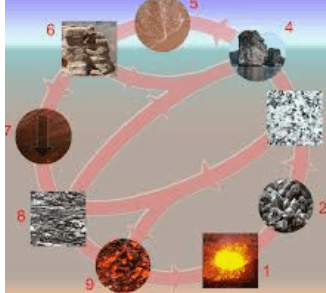
Which stage of the process best represents the solidification of liquid rock, making an igneous rock?
4
60 sec
SES2d
Q.
Which processes would best represent the life cycle of sedimentary rock?
5
60 sec
SES2d
Q.
Which stage of rock formation best explains a complete chemical change in a rock 's composition?
6
60 sec
SES2d
Q.
Use the diagram above to answer. Molten material, cooling, and crystallization results in _________________________ rock formation.
7
60 sec
SES2d
Q.
According to the diagram , what is created from weathering and erosion of rocks?
8
60 sec
SES2d
Q.
Kelly found a rock with layered bands that looked like glassy ribbons. Which rock in the diagram would best represent her discovery?
9
60 sec
SES2d
Q.
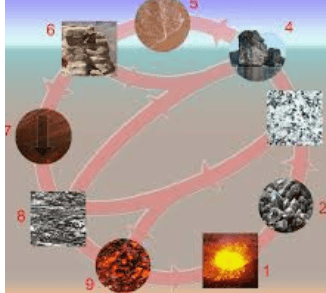
According to the image, what would be the correct process between 8 and 1
10
60 sec
SES2d
Q.
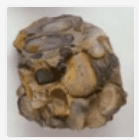
The rock sample shows smaller pieces of rock glued together. What formation process created this rock.
11
60 sec
SES2d
Q.
What would be the correct rock formation process between 8 and 5?