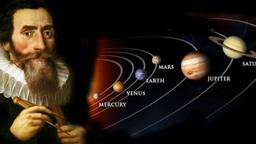
Use mathematical or computational representations to predict the motion of orbiting objects in the solar system. [Clarification Statement: Emphasis is on Newtonian gravitational laws governing orbital motions, which apply to human-made satellites as well as planets and moons.] [Assessment Boundary: Mathematical representations for the gravitational attraction of bodies and Kepler's Laws of orbital motions should not deal with more than two bodies, nor involve calculus.]
Track each student's skills and progress in your Mastery dashboards
Give this quiz to my class
Q 1/8
Score 0
A regular repeating path that one object in space takes around another object is called . . .
30
an orbit
an ellipse
a satellite
Q 2/8
Score 0
An object that orbits around another object in space is called a
30
ellipse
satellite
moon
planet
8 questions
Q.
A regular repeating path that one object in space takes around another object is called . . .
1
30 sec
HS-ESS1-4
Q.
An object that orbits around another object in space is called a
2
30 sec
HS-ESS1-4
Q.
Satellites orbit around another object in an ellipse at a focus. Which of Kepler's Laws is being described?
3
30 sec
HS-ESS1-4
Q.
Planets move fastest when closest to the sun. Which of Kepler's laws is being described?
4
30 sec
HS-ESS1-4
Q.
A planet's orbital period is proportional to its average distance from the sun. Which of Kepler's laws is being described?
5
30 sec
HS-ESS1-4
Q.
How do satellites stay in orbit?
6
30 sec
HS-ESS1-4
Q.
The force between all objects in the universe is known as
7
30 sec
HS-ESS1-4
Q.
What two things does Newton's Law of Gravitation depend upon?