Loading...


MARKET FORMS OF MEAT
Quiz by MELANIE OBIADO
Customize this quiz to suit your class
Instantly translate to 100+ languages
Tag the questions with any skills you have. Your dashboard will track each student's mastery of each skill.
Give this quiz to my class
Meat that is recently slaughtered, has not been preserved, or frozen.
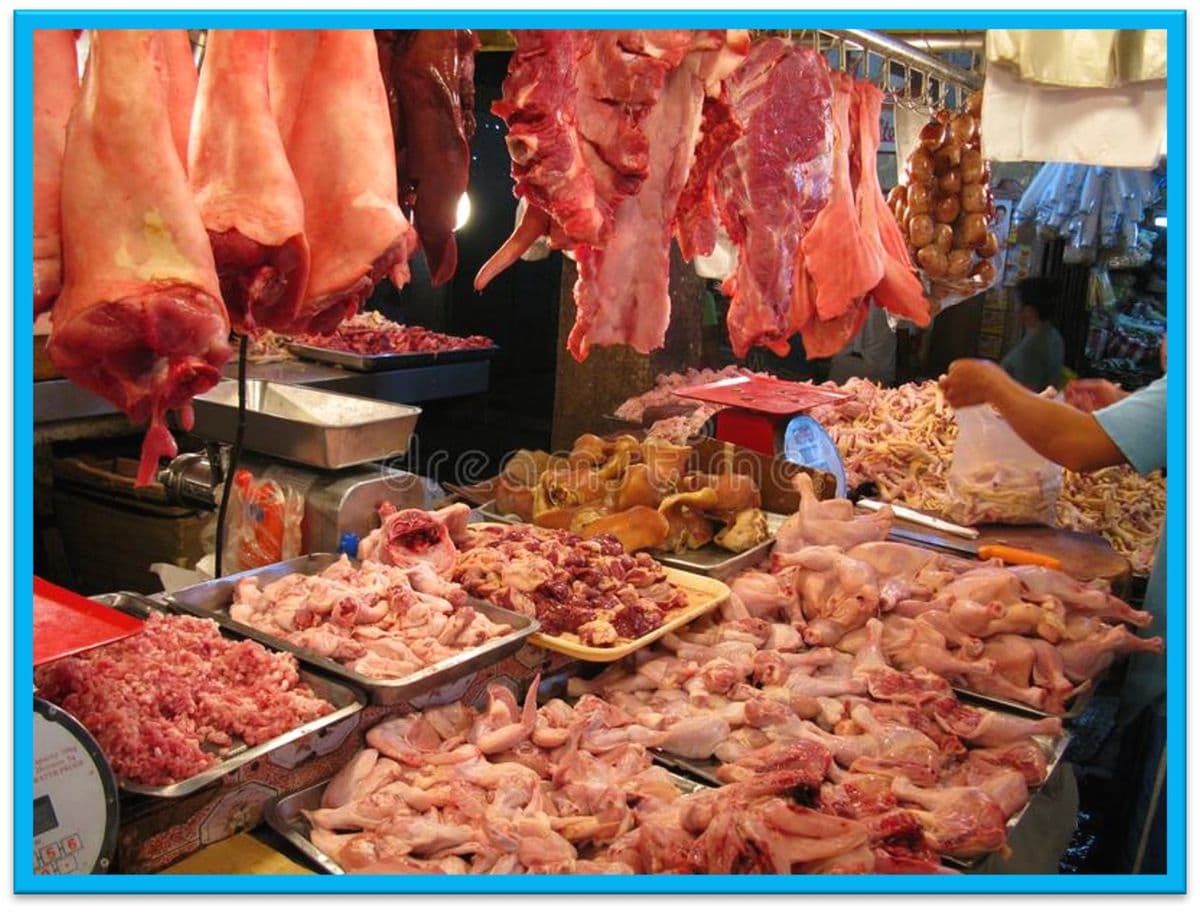
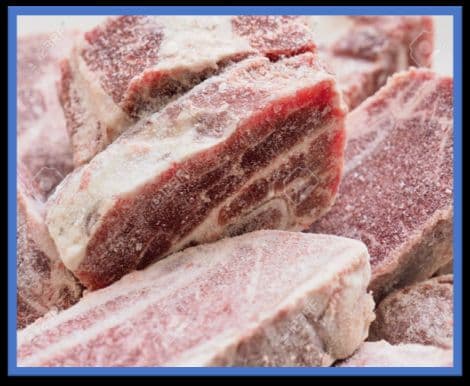
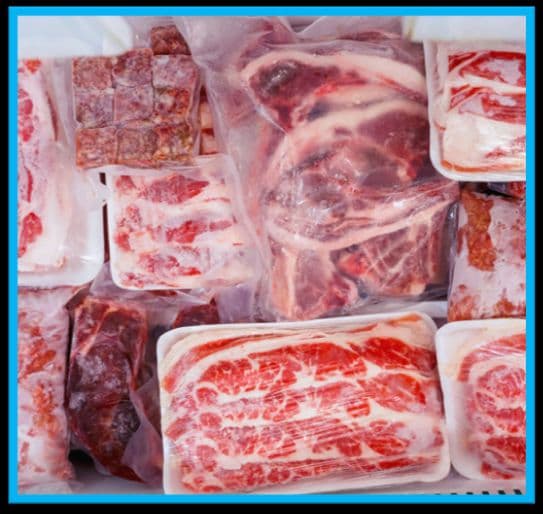
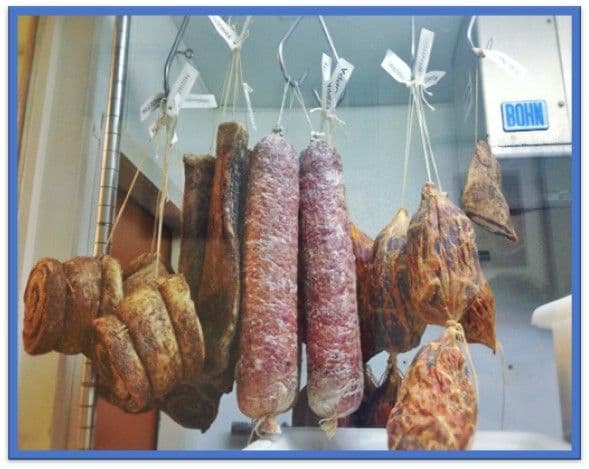
Meat that is recently slaughtered, has not been preserved, or frozen.
• There are two groups of animals which are important in agriculture. • The groups are domestic and wild animals. 1. Domestic animals • These are animals which are trained to live with people in their homes. • Some examples includes : Uses of domestic animals • Source of food, for example milk, eggs and meat. • For cultural purposes, for example paying lobola. • Some are used for transport and labour. • Domestic animals can also be a source of income. 2 . Wild animals • These are animals which are found in game reserves and in the forests • They are also called game animals. • Examples of wild animals are: Uses of wild animals • Some of the wild animals give us meat, hides and ivory. • Wild animals attract visitors from other countries, so the country gets money. Wednesday 06 September 2023 Exercise: Domestic animals 1. What is a domestic animal? [2] 2. What is a wild animal? [2] 3. Name any 4 domestic animals that you know. [4] 4. State any 2 uses of domestic animals. [2] 5. Name any 3 wild animals that you know. [3] 6. Give 2 uses of wild ani mals. [2] 7. Wild animals can also be called animals. [1] • Animals, like human beings need good food to help them to grow and reproduce. • The main sources of food for animals include stock feeds, pastures, veld grass, crop remains and cereal grains. • These foods contain the most needed essential nutrients. Nutrient Function carbohydrates Gives energy Fats Give energy and warmth Proteins Helps in growth and repair of body parts Minerals Help in the formation of bones and teeth Vitamins Help develop good sight, improve fertility and help animals fight diseases Water Transports food in the body, cools the body and remove waste from the body. • Livestock are domesticated animals that are kept for food, use or for sale. • Small livestock has many uses. • They are a good source of food. • They also give us manure to use in gardens. • We get clothes and medicine as well from small livestock • Examples of small livestock are rabbits, sheep, goats and all form of poultry Poultry • All animals that are kept by farmers which have wings and feathers and lay eggs are called poultry. • They are a good source of white meat, eggs and manure. • They are also a source of income when we well them and their products. • Poultry includes chicken, guinea fowl, ducks, turkey, pigeons and quail birds. Rabbits • Rabbits have 3 known uses which are: They are kept for meat Kept for pelts. (pelt is animal skin used to make blankets, hats and jackets) They are used at agricultural shows • Rabbits are cheap to buy, easy to keep and feed. • They take about 4 months to mature. • Rabbits are fed using green vegetables and rabbit pellets. Wednesday 20 September 2023 Small livestock 1. Give 3 examples of small livestock. [3] 2. State 3 things that are provided by small livestock. [3] 3. What are the 2 uses of rabbits? [2] 4. Pelts are used to make _________________ [1] 5. State any 4 examples poultry. [4] 6. Rabbits take ___________ months to mature. [1] 7. What is poultry? • Apiculture is the keeping of bees in order for them to produce honey for sale. • Apiculture is very important because: (i) Provides honey - a valuable nutritional food (ii) Provides bees wax - which has many uses in industry Uses of wax For making candles Polish furniture Make crayons Prevent tools from rusting (iii) Honey bees are excellent pollinating agents, thus increasing agricultural yields. BEE COLONY Inhabitants of the bee colony and their roles • A honey bee colony typically consists of three kinds of adult bees: workers, drones and the queen 1. Workers • Workers are the smallest and constitute the majority of bees occupying the colony. • They do not lay eggs. • Workers have specialized structures, such as brood food glands, scent glands, wax glands, and pollen baskets. • these allow them to perform all the labors of the hive. Roles of the worker bees they forage for nectar, pollen, water, and plant sap. They clean and polish the cells. feed the brood. care for the queen. remove debris. handle incoming nectar. build beeswax combs. guard the entrance. 2. Drones • Drones (male bees) are the largest bees in the colony. • They are generally present only during late spring and summer. • The drone’s head is much larger than that of either the queen or worker. • Drones have no stinger, pollen baskets, or wax glands. • Their main function is to mate with the queen. 3 . Queen • Each colony has only one queen. • The queen is the largest of the bees in a bee colony. • The Queen Bee plays a vital role in the hive because she is the only female with fully developed ovaries. • She produces both fertilized and unfertilized eggs. • Queens lay the greatest number of eggs in the spring and early summer. • The queen also produce chemical scents that help regulate the unity of the colony. 1. What is apiculture? [2] 2. Give 3 reasons why apiculture is important in Zimbabwe. [3] 3. Name the 3 inhabitants of the bee colony. [3] 4. Briefly explain the roles of each inhabitant named in number 3. • Apart from using hand tools, farmers also use some farm implements and machinery to carry out their field work. • Machines help farmers do their work more easily and quickly. • The most common implements used by farmers to grow, harvest and transport their produces are: mouldboard plough Cultivator Scotch cart Harrow Planter Maize sheller combine harvesters Boom sprayers Disc harrow Spike toothed harrow KNAPSACK SPRAYER • Farming is a business. • Communal farmers grow crops and keep animal mainly for their own use. • If there is any extra they sell to get money. • Commercial farmers grow crops and keep animals for sale. • Crops and animals produced are called farm produce. • There are places were farmers have to sell their produce. • Farmers can take their produce to local markets. • A market is a place where buying and selling occurs. • Some of the local markets includes: A shopping centre A school A nearest bus stop A local village A school Local Grain Marketing Board depot (GMB) Types of farm produce Beef Fruits Mutton Eggs Vegetables Pork Milk Chicken Cereals/grains beansMarket Forms of FishMARKET FORMS OF EGGSMarket forms of Fish and ShellfishQuiz #5- Varieties of Egg Dishes&Market forms of eggsCHAPTER-5 FORMS OF MARKETGenerate exact multiple choice questions as give below 1. **Which round of negotiations led to the establishment of the World Trade Organization (WTO)?** - (a) Doha Round - (b) Tokyo Round - (c) Uruguay Round - (d) Kennedy Round **Answer:** (c) Uruguay Round 2. **The General Agreement on Tariffs and Trade (GATT) dealt with:** - (a) Goods only - (b) Services only - (c) Intellectual property only - (d) All of the above **Answer:** (a) Goods only 3. **The 'National Treatment' principle means:** - (a) Exported products are treated equally in the domestic market - (b) Imported goods are treated the same as local goods in the domestic market - (c) Exported products should have the same tariff - (d) None of the above **Answer:** (b) Imported goods are treated the same as local goods in the domestic market 4. **'Bound tariff' refers to:** - (a) A limit on tariffs for imports based on WTO commitments - (b) The tax rate on all exports - (c) The overall cost of tariffs - (d) A tariff-free trade condition **Answer:** (a) A limit on tariffs for imports based on WTO commitments 5. **The Most-Favoured Nation (MFN) principle ensures:** - (a) Equal treatment for all WTO members - (b) Only certain countries receive benefits - (c) Tariffs are raised annually - (d) One country is favored over others **Answer:** (a) Equal treatment for all WTO members 6. **The Agreement on Agriculture includes commitments in:** - (a) Market access, domestic support, and export subsidies - (b) Increasing crop yield and technology access - (c) Subsidizing imports only - (d) Agricultural tariffs only **Answer:** (a) Market access, domestic support, and export subsidies 7. **Which agreement replaced the Multi-Fiber Arrangement (MFA)?** - (a) Agreement on Textiles and Clothing - (b) Agreement on Agriculture - (c) TRIPS Agreement - (d) Technical Barriers to Trade Agreement **Answer:** (a) Agreement on Textiles and Clothing 8. **The WTO's TRIPS Agreement pertains to:** - (a) Agricultural products - (b) Intellectual property rights - (c) Investment measures - (d) Customs valuation **Answer:** (b) Intellectual property rights 9. **The Doha Round primarily focuses on:** - (a) Tariffs on manufactured goods - (b) Trade in agricultural goods - (c) Technology trade - (d) Intellectual property in medicine **Answer:** (b) Trade in agricultural goods 10. **The WTO aims to:** - (a) Restrict all trade - (b) Facilitate free and fair trade - (c) Promote monopoly - (d) Limit member negotiations **Answer:** (b) Facilitate free and fair trade 11. **RTAs aim to:** - (a) Block international trade - (b) Reduce trade barriers within a group of countries - (c) Increase tariffs among members - (d) Promote non-trade-related policies **Answer:** (b) Reduce trade barriers within a group of countries 12. **Customs unions require members to:** - (a) Keep individual external tariffs - (b) Impose the same external tariff on non-members - (c) Remove tariffs only temporarily - (d) Avoid any tariffs within the union **Answer:** (b) Impose the same external tariff on non-members 13. **The WTO's highest decision-making body is:** - (a) General Council - (b) Ministerial Conference - (c) TRIPS Council - (d) Dispute Settlement Body **Answer:** (b) Ministerial Conference 14. **Which principle prevents discrimination between WTO members?** - (a) MFN - (b) National Treatment - (c) Market Access - (d) Subsidy Reduction **Answer:** (a) MFN 15. **A common market involves:** - (a) A shared currency - (b) Free movement of goods, services, and factors of production - (c) Only trade agreements for goods - (d) No tariffs on agriculture **Answer:** (b) Free movement of goods, services, and factors of production 16. **The Agreement on Subsidies and Countervailing Measures addresses:** - (a) Trade in textiles - (b) Subsidies that distort trade - (c) All intellectual property laws - (d) Agricultural trade only **Answer:** (b) Subsidies that distort trade 17. **The WTO's TRIMs Agreement regulates:** - (a) Investments - (b) Trade in goods - (c) Trade in services - (d) Agricultural products **Answer:** (a) Investments 18. **The primary goal of the WTO's SPS Agreement is:** - (a) To allow subsidies on food exports - (b) To prevent arbitrary sanitary restrictions on trade - (c) To regulate intellectual property - (d) To impose environmental standards **Answer:** (b) To prevent arbitrary sanitary restrictions on trade 19. **A trading bloc is:** - (a) A group of countries with no trade agreements - (b) A group of countries that may have a common external tariff - (c) Only formed by countries from the same continent - (d) An agreement that restricts all trade **Answer:** (b) A group of countries that may have a common external tariff 20. **The GATT was succeeded by the WTO because:** - (a) GATT was only for developed countries - (b) WTO covers more areas like services and intellectual property - (c) GATT was non-binding - (d) WTO allows subsidies for agriculture **Answer:** (b) WTO covers more areas like services and intellectual property Certainly! Here are an additional 30 multiple-choice questions based on the document content, with answers provided after each question. --- ### Additional Questions and Answers 21. **The WTO’s Agreement on Technical Barriers to Trade (TBT) seeks to:** - (a) Restrict imports to a minimum - (b) Prevent standards from becoming unnecessary trade barriers - (c) Allow countries to set any standard for goods - (d) Promote only national standards for products **Answer:** (b) Prevent standards from becoming unnecessary trade barriers 22. **The Trade Policy Review Mechanism (TPRM) is designed to:** - (a) Impose tariffs on certain goods - (b) Regularly review and assess national trade policies - (c) Regulate customs duties globally - (d) Control intellectual property rights **Answer:** (b) Regularly review and assess national trade policies 23. **The principle of “progressive liberalization” means that:** - (a) Trade barriers are reduced gradually over time - (b) All tariffs are removed immediately - (c) Only developed countries reduce trade barriers - (d) No commitments are required from developing countries **Answer:** (a) Trade barriers are reduced gradually over time 24. **Which council oversees the Agreement on Trade-Related Aspects of Intellectual Property Rights (TRIPS)?** - (a) General Council - (b) Services Council - (c) TRIPS Council - (d) Agriculture Council **Answer:** (c) TRIPS Council 25. **The WTO’s 'Dispute Settlement Body' is responsible for:** - (a) Deciding on national trade policies - (b) Settling trade disputes between member countries - (c) Creating new trade agreements - (d) Setting tariffs for member countries **Answer:** (b) Settling trade disputes between member countries 26. **A customs union differs from a free trade area because it:** - (a) Allows tariffs between member countries - (b) Establishes a common external tariff for non-members - (c) Applies only to services - (d) Imposes import quotas on all goods **Answer:** (b) Establishes a common external tariff for non-members 27. **Which of the following agreements deals with cross-border investments?** - (a) TRIPS - (b) TBT - (c) TRIMs - (d) GATS **Answer:** (c) TRIMs 28. **In a preferential trade agreement, member countries:** - (a) Impose the same tariffs as non-members - (b) Reduce trade barriers for each other only - (c) Apply high tariffs to non-member countries - (d) Have no external trade barriers **Answer:** (b) Reduce trade barriers for each other only 29. **The WTO’s Agreement on Agriculture includes which commitment?** - (a) Export subsidies for all agricultural goods - (b) Reduction of domestic support for farmers - (c) Complete elimination of tariffs on food products - (d) Increase in import quotas on agricultural goods **Answer:** (b) Reduction of domestic support for farmers 30. **The Agreement on Anti-Dumping allows countries to:** - (a) Increase exports by lowering prices - (b) Impose duties on imports sold below fair market value - (c) Eliminate all tariffs on certain goods - (d) Restrict domestic production of certain goods **Answer:** (b) Impose duties on imports sold below fair market value 31. **The main objective of WTO’s “National Treatment” principle is to:** - (a) Prevent imports altogether - (b) Treat foreign goods the same as domestic goods - (c) Impose tariffs on all foreign products - (d) Promote exports **Answer:** (b) Treat foreign goods the same as domestic goods 32. **Which of the following is a major goal of the WTO?** - (a) Ensuring trade restrictions remain high - (b) Promoting international free trade and competition - (c) Limiting access to global markets - (d) Supporting only developed countries **Answer:** (b) Promoting international free trade and competition 33. **An economic and monetary union involves:** - (a) A free trade area only - (b) A common currency among members - (c) No external trade agreements - (d) Different currencies for each member country **Answer:** (b) A common currency among members 34. **The WTO's Ministerial Conference meets:** - (a) Annually - (b) Every two years - (c) Quarterly - (d) Every five years **Answer:** (b) Every two years 35. **The WTO Agreement on Trade-Related Aspects of Intellectual Property Rights (TRIPS) mandates:** - (a) Free trade for all countries - (b) Uniform intellectual property protection standards - (c) Different IP laws for each country - (d) No IP protection for developing countries **Answer:** (b) Uniform intellectual property protection standards 36. **The WTO principle of 'transparency' requires member countries to:** - (a) Keep trade policies secret - (b) Publicly disclose trade policies and practices - (c) Have identical trade policies - (d) Eliminate tariffs on all goods **Answer:** (b) Publicly disclose trade policies and practices 37. **One of the WTO's objectives in dispute settlement is to:** - (a) Resolve trade disputes peacefully - (b) Impose sanctions on non-members - (c) Regulate global tariffs - (d) Control member states' import quotas **Answer:** (a) Resolve trade disputes peacefully 38. **Under the WTO's Market Access commitment, member countries agree to:** - (a) Allow unrestricted imports - (b) Set maximum tariff levels on imported goods - (c) Ban certain goods from other countries - (d) Only trade with specific countries **Answer:** (b) Set maximum tariff levels on imported goods 39. **GATS, or the General Agreement on Trade in Services, governs trade in:** - (a) Agricultural goods - (b) Intellectual property - (c) Services - (d) Manufactured products **Answer:** (c) Services 40. **The Agreement on Pre-shipment Inspection (PSI) aims to:** - (a) Ensure high tariffs on all imports - (b) Allow for inspection of goods before shipping - (c) Eliminate export taxes - (d) Control intellectual property trade **Answer:** (b) Allow for inspection of goods before shipping 41. **Which of the following agreements aims to harmonize customs valuation?** - (a) Anti-Dumping Agreement - (b) Customs Valuation Agreement - (c) TRIMs Agreement - (d) Agreement on Subsidies **Answer:** (b) Customs Valuation Agreement 42. **A significant aspect of the Doha Round is:** - (a) Reducing tariffs on agricultural products - (b) Restricting intellectual property rights - (c) Eliminating all forms of trade - (d) Blocking services trade agreements **Answer:** (a) Reducing tariffs on agricultural products 43. **The term “dumping” in international trade refers to:** - (a) Exporting goods at prices lower than domestic market prices - (b) Importing goods illegally - (c) Increasing domestic prices - (d) Imposing excessive tariffs **Answer:** (a) Exporting goods at prices lower than domestic market prices 44. **WTO members are expected to follow which key principle in reducing tariffs?** - (a) National Treatment - (b) Progressive Liberalization - (c) Quota System - (d) Non-Discrimination **Answer:** (b) Progressive Liberalization 45. **The WTO aims to promote fair competition by:** - (a) Allowing tariffs as the only form of protection - (b) Supporting MFN and anti-dumping measures - (c) Limiting access to agricultural products - (d) Increasing subsidies **Answer:** (b) Supporting MFN and anti-dumping measures 46. **A plurilateral agreement within the WTO:** - (a) Includes all WTO members - (b) Involves only specific countries with shared interests - (c) Bans all tariffs for members - (d) Imposes global trade restrictions **Answer:** (b) Involves only specific countries with shared interests 47. **Trade facilitation in the WTO context means:** - (a) Making trade faster, cheaper, and more predictable - (b) Increasing tariffs on imports - (c) Eliminating all customs procedures - (d) Restricting trade with non-members **Answer:** (a) Making trade faster, cheaperThe outdoor recreation industry represents a new economy. The leaders of this economy will need to have a deep understanding of our local natural resources and integrate the components of innovation, health, and wellness into a vision for what comes next. Everyone wins when you do the right things for the environment, the community, and the venture. We want to offer the young generation a chance to be part of the foundation we are building for adventure tourism in the emirates and the region. Adventure Tourism Is the Fastest-Growing Global Niche. What does this mean? It means that there’s plenty of room for young experts to enter the field. It’s not just the "guides" that the adventure tourism industry needs. It’s everything that goes with it, from adventure tourism accommodations to trip planners, event managers, marketing and finance directors, advertising, public relations, and communications. We want to highlight that adventure tourism requires more than just guides, and various careers within adventure tourism play a big role in attracting high-value customers, supporting local economies, and encouraging sustainable practices. The continued growth of this sector creates net positive impacts not only for tourism, but also for destination economies, their people, and their environment. 1) Understanding Tourism Tourism is one of the world’s fastest-growing industries and a major foreign exchange and employment generation for many countries. It is one of the most remarkable economic and social phenomena. 2) Understanding Adventure Tourism Adventure tourism is defined as the movement of the people from one to another place outside their comfort zone for exploration or travel to remote areas, exotic and possibly hostile areas. Adventure tourism is a type of tourism in which tourists engage in adventure activities such as trekking, climbing, rafting, scuba diving, or the likes. Adventure tourism gains much of its excitement by allowing the tourist to step outside their comfort zone. This may be from experiencing culture shock or through the performance of acts that required some degree of risk whether real or perceived. It is also about connecting with a new culture or a new landscape and being physically active at the same time. It is not only about being risky or pushing your boundaries. In fact, it is especially important to know and respect your limits while you are in an unfamiliar area. Adventure travel is a leisure activity that takes place in an unusual, exotic, remote, or wilderness destination. It tends to be associated with high levels of activity by the participant, most of it outdoors. Adventure tourists expect to experience various levels of risk, excitement, and tranquillity and be personally tested. In particular, they are explorers of unspoiled, exotic parts of the planet and also seek personal challenges. The main factor distinguishing adventure tourism from all other forms of tourism is the planning and preparation involved. 3) Definitions of Adventure Tourism Adventure tourism is a new concept in the tourism industry. The tourism industry adopted adventure tourism, but there is not any specific definition of adventure tourism. Most commentators concur that adventure tourism is a niche sector of the tourism industry, but there are many other niche sectors in tourism that have the same characteristics that overlap with adventure tourism such as ecotourism, activity tourism, or adventure travel. One of them can confuse. Adventure tourism is a complicated and ambiguous topic. Some important definitions of adventure tourism are as following: A) According to the Adventure Travel Trade Association (ATTA): “adventure tourism is a tourist activity that includes physical activity, cultural exchange, or activities in nature.” B) According to Muller and Cleaver: “Adventure tourism is characterized by its ability to provide the tourist with relatively high levels of sensory stimulation, usually achieved by including physically challenging experiential components with the tourist experience.” C) The Canadian Tourism Commission in 1995 defines adventure tourism as: “an outdoor leisure activity that takes place in an unusual, exotic, remote or wilderness destination, involves some form of unconventional means of transportation, and tends to be associated with low or high levels of activity.” D) According to Sung et al: “adventure tourism is the sum of the phenomena and relationships arising from the interactions of adventure touristic activities with the natural environment away from the participant’s usual place of residence area and containing elements of risk in which the outcome is influenced by the participation, setting, and the organizer of the tourist’s experience.” E) According to UNWTO: ” adventure tourism can be domestic or international, and like all travel, it must include an overnight stay, but not last longer than one year.” 4) Types of Adventure Tourism Adventure tourism has grown exponentially all over the world in recent years with tourists visiting destinations previously undiscovered. This allows for new destinations to market themselves as truly unique, appealing to those travellers looking for a rare, incomparable experience. Adventure tourism includes various activities like caving, hiking, sailing, trekking, etc. Adventure tourism is categorized into two categories: • Hard Adventure • Soft Adventure Hard Adventure Hard adventure refers to activities with high levels of risk, requiring intense commitment and advanced skills. Hard tourism includes the activities like climbing mountains/rock/ice, trekking, caving, etc. Hard adventure activities are highly risked in nature. Professional guides and advanced levels of skills are required to perform these activities. Many tourists died during climbing mountains, caving every day. Soft Adventure Soft adventure refers to activities with a perceived risk but low levels of risk, requiring minimal commitment and beginner skills; experienced guides lead most of these activities. Soft tourism includes the activities like backpacking, camping, hiking, kayaking, etc. Soft adventure activities are low-risk in nature. Professional guides lead these activities. Soft adventure is a popular category in adventure tourism as it caters to a wider audience. 5) Adventure Tourism Activities Adventure travellers are early adopters by nature, meaning they are generally more willing to try new destinations, activities, and travel products. Popular activities change rapidly, and it seems there is a new twist on an existing sport every year. Some activities have low risk and some have high. Adventure tourism activities are classified into two types: • Hard Adventure Activities • Soft Adventure Activities Hard Adventure Activities Hard adventure activities are highly risky and dangerous in nature. These activities are as the following: • Caving • Mountain Climbing • Rock Climbing • Ice Climbing • Trekking • Sky Diving Soft Adventure Activities These activities are less dangerous and risk as compared to hard adventure activities. These activities are mostly lead by professional guides. An example of these activities are: • Backpacking • Bird watching • Camping • Canoeing • Eco-tourism • Fishing • Hiking • Horseback riding • Hunting • Kayaking/sea/whitewater • Orienteering • Safaris • Scuba Diving • Snorkeling • Skiing • Snowboarding • Surfing Adventure tourism activities sit well with the environment because the natural world provides us with the resources for many of the activities that provide risk, challenge, sensory stimulus, novelty, discovery, and so on. 6) Characteristics and Features of Adventure Tourism The threefold combination of activity, nature, and culture marks adventure travel as an all-around challenge. Some unique characteristics and features of adventure tourism are as the following: • Physical activity, like involving physical exertion or psychomotor skills • Contact with nature, activities bringing contact with the natural world in general, or with specific wildlife • Contact with different cultures, i.e. people, faith, lifestyles • Journeys for example vehicle, animal, or human power • Uncertain outcomes • Danger and risk • Challenges • Anticipated rewards • Novelty • Stimulation and excitement • Exploration and discovery • Contrasting emotions 7) Adventure Tourism Supplier A tourism supply chain is the system of people, products, activities, and materials that get a product or service from its raw state through production and distribution to the consumer. As with any sector, volume discounts drive the mass price point, so major retailers primarily market select trips that sell in high volume. The supply chain for these mass tourism products is often very simple, comprising only transportation and accommodation elements. The adventure tourism supply chain is more complex. Niche products often require specializes in knowledge and operations. Adventure tourism’s supply chain linkages go very deep, and this is one of the key reasons that adventure tourism delivers greater benefits at the local level. Supply chains vary from destination to destination. Without a proper supply chain, the tourism sector cannot survive. Tourism suppliers are the backbone of the tourism industry. Adventure tourism suppliers work at a different, different level like as domestic as well international level. 8) Adventure Tourism Importance and Benefits Adventure tourism is one of the fastest-growing sectors of the tourism sector, attracting high-value customers, supporting local economies, and encouraging sustainable practices. The continued growth of this sector creates net positive impacts not only for tourism, but also for destination economies, their people, and their environment. Some importance and benefits of adventure tourism are: A) Employment Generation Adventure tourism generates jobs. Adventure tourism generates directs jobs to accommodation, transportation sector, and travel agencies or tour operators. Adventure tourism also provides indirect jobs to tourism suppliers. Adventure tourism plays an important role in the generation of employment in the economy. B) Foreign Exchange Adventure tourism attracts foreign tourists on a large scale, as a result, it helps in foreign exchange generation. When tourists travel to another country, they spend a large amount of money on accommodation, transportation, and shopping. Adventure tourism generates foreign exchange and supports the economy of the host country. C) Economy Development Adventure tourism helps in the development of the host country’s economy. Adventure tourism activities directly support the economy in various forms. The more tourists, the more economic growth. D) Support Local Communities Adventure tourism helps in the development of infrastructure and supports local communities. Adventure tourism activities directly contributed to the local economy of the communities and increase local people's living standards. E) Conservation of Natural Resources Adventure tourism activities are nature-based activities. Leaders in the adventure tourism industry are dedicated to making this tourism segment as sustainable as possible. They help in the conservation of natural resources as well as culture. F) Creating Business Opportunities Adventure tourism activities create new business opportunities. Several companies specialize in helping emerging adventure tourism operators market their products. Each new adventure tourism activity creates a new business opportunity. G) Local and Foreign Investment Adventure tourism creates business opportunities; as a result, it attracts local as well as international investors. Investors invest their money in accommodation, transportation, and travel trade organization. Adventure tourism plays an important role in the economy of the host country.