Loading...

Customize this quiz to suit your class
Instantly translate to 100+ languages
Track each student's skills and progress in your Mastery dashboards
Give this quiz to my class
The scientist __________ discovered the cure became famous.
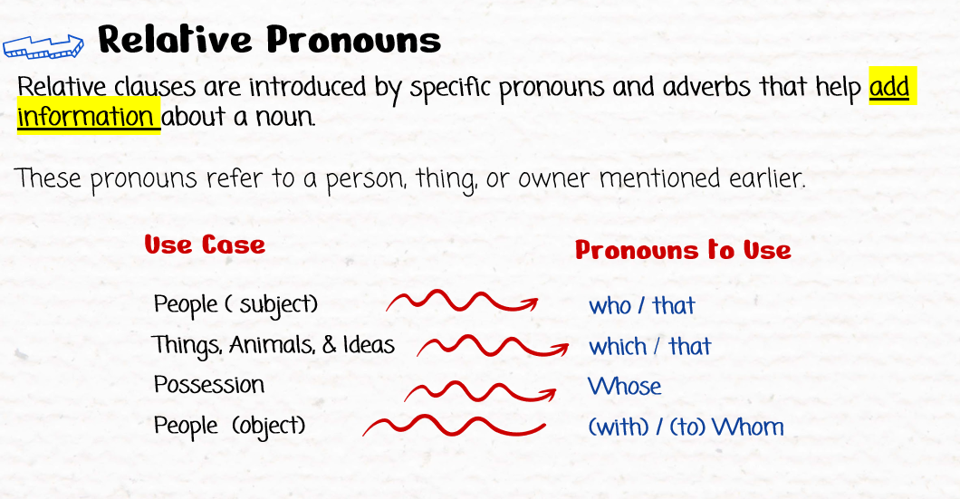
whose
which
who
when
This is the article__________ explains the theory.
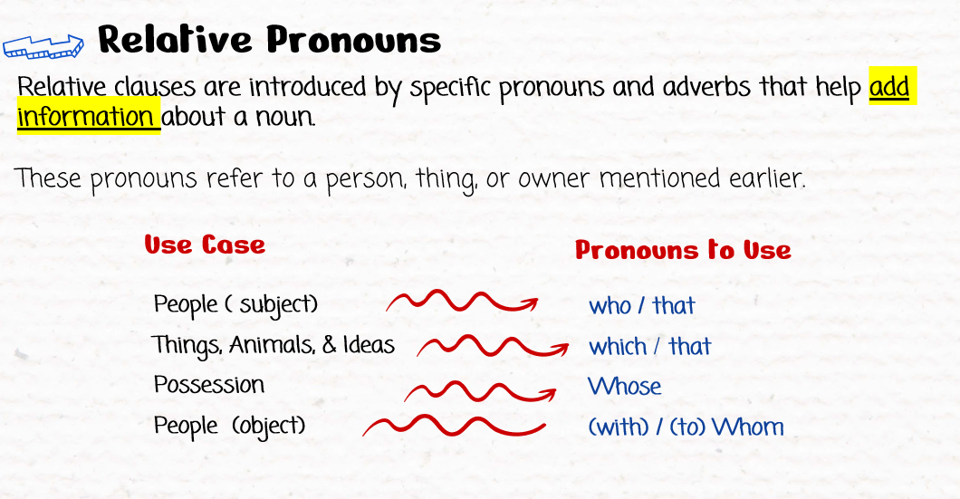
who
whom
whose
which
The scientist __________ discovered the cure became famous.
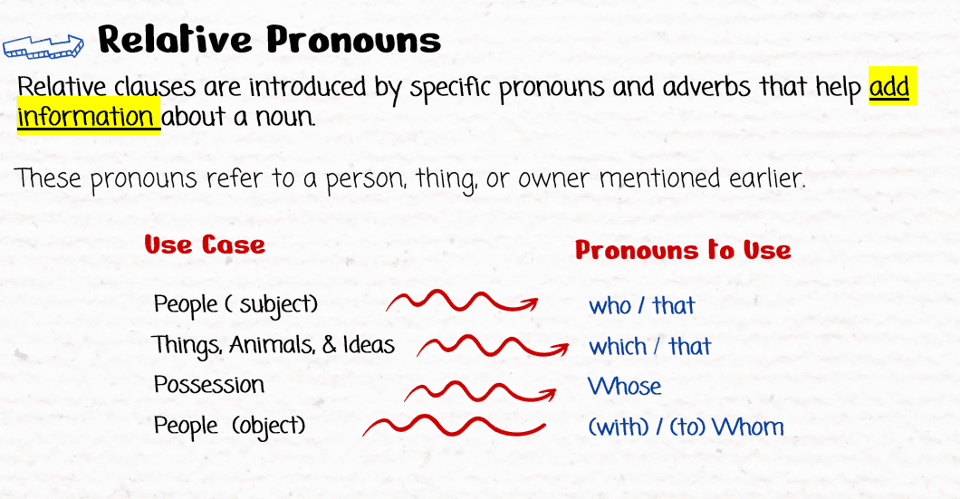
This is the article__________ explains the theory.
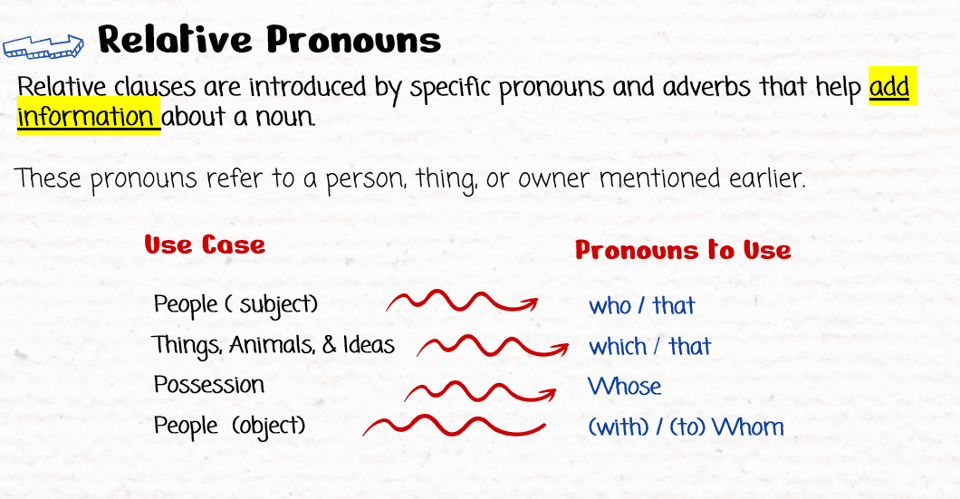
She met a writer__________ books are internationally known.
The candidate__________ they selected was highly qualified.
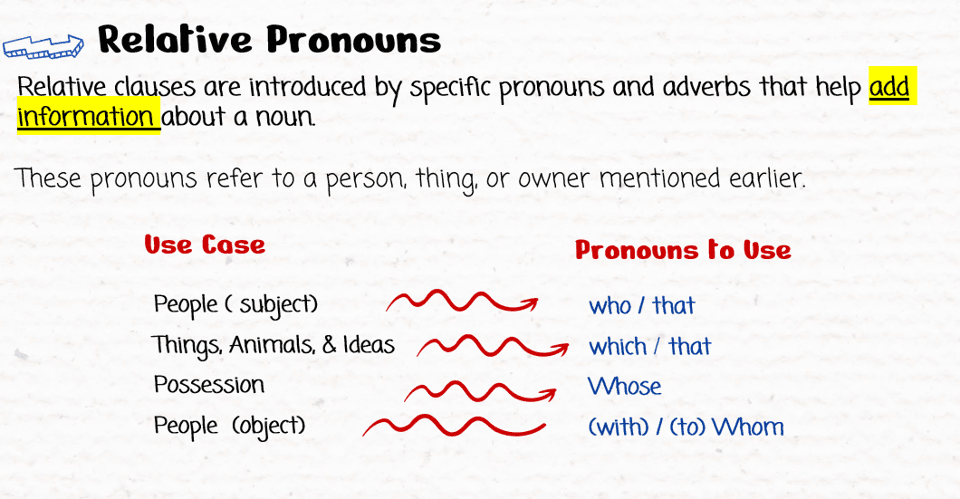
Rewrite sentences using the word given in brackets.
1. I spoke to the manager. He approved the proposal. (who)
__________________________________________________________________________________________
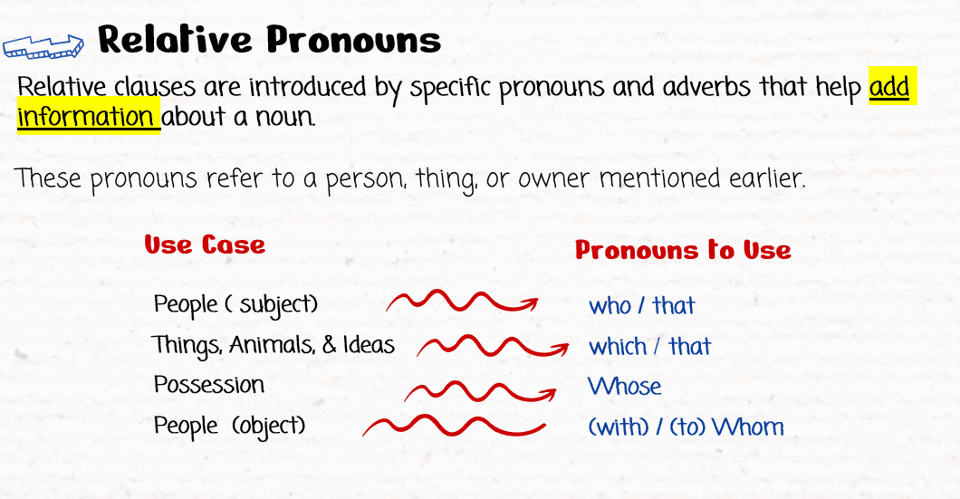
There are__________ evidence supporting the claim.

The laboratory had__________ any equipment functioning, so we must buy some
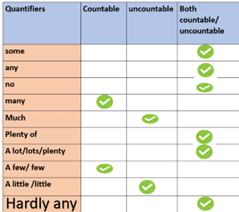
She made ________________ errors in the calculation, but she quickly checked her work and corrected them before submitting the final answer.

Rewrite sentences in the passive voice, starting with the words given.
People believe that the solution is effective.
It_____________________________________________________________________
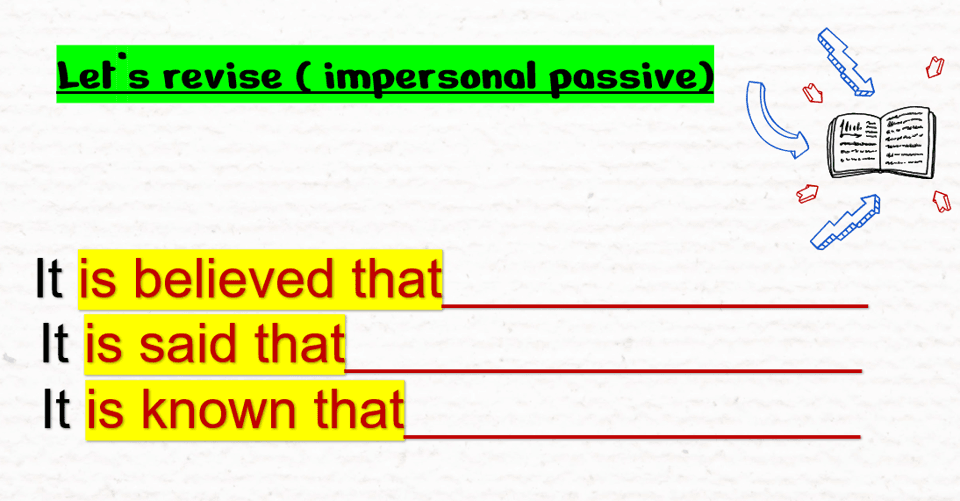
Rewrite sentences in the passive voice starting with the words given.
The police arrested the thieves.
The thieves ___________________________________________

 The Music of the O'odham English ACT Čo ja viem? (edukačná verzia)Rhetorical SyntaxDeclarative sentencesSKills AssessmentMid of second semester exam vocabulary revision Can you create an evaluation using this information PHONETICS VS. PHONOLOGY Whereas phonetics is the study of sounds that occur in language, phonology is the study of how these sounds are organized and how they function in language. It uses the classifications of sounds derived from phonetics to describe and analyze how sounds occur in speech. STRUCTURALIST PHONEMICS STRUCTURALIST PHONEMICS As linguists began to study sounds in fine detail, they recognized increasingly complex aspects of phonetic organization. For example, the sound /p/ appears in different varieties in English. STRUCTURALIST PHONEMICS One of the varieties of /p/ is indicated by [ph]. This sound is produced with an accompanying puff of air called aspiration, as in the words “pill,” and “peace.” Another sound, indicated by [p•], is produced when there is little or no aspiration; this sound occurs in a word like “spill.” A third major variety for the /p/ sound is the unreleased [p– ], which may occur at the end of a word like “stop.” To deal with these variations for the /p/ sound, the structuralists suggested the existence of an abstract unit which they termed a phoneme. STRUCTURALIST PHONEMICS A phoneme was defined by the structuralists as an abstract phonological unit that represents a class of real sounds, termed the allophones of a phoneme. The phoneme /p/ in English, then, is represented by the allophones [ph], [p•], and [p– ]. STRUCTURALISTS: MINIMAL PAIRS How do we know what these abstract units of sound called phonemes are? In order to find the phonemes of a language, the structuralists developed the concept of the minimal pair, defined as any two words that: a) Contain the same number of segments b) Differ in meaning c) Exhibit only one phonetic difference. STRUCTURALISTS: MINIMAL PAIRS In practical terms, phonemes distinguish meanings; and a phoneme can also be defined as the smallest meaning-distinguishing unit of sound. For instance, the words “pin” /pɪn/ and “bin” /bɪn/ mean different things, and the only one difference in these words occurs in the initial sounds. STRUCTURALISTS: MINIMAL PAIRS By using the concept of a minimal pair, we can determine that the three variations of the /p/ sound do not represent three phonemes. Certainly, it is possible to pronounce the word cap with either an aspirated [ph ] or unreleased [p– ]; however, the two forms [kæph ] and [kæp– ] are not a minimal pair, even though they involve different sounds, because they are identical in meaning. STRUCTURALISTS: FREE VARIATION The two forms [kæph ] and [kæp– ] are, therefore, said to exhibit free variation: that is, the pronunciation may vary without signifying a change in meaning. In other words, we may conclude that the unreleased [p– ] and the aspirated [ph ] are not representations of different phonemes in English; they are, in fact, allophones of one phoneme, /p/. STRUCTURALISTS: COMPLEMENTARY DISTRIBUTION When phonemes have more than one allophone in a language, the allophones are said to be in complementary distribution. Complementary distribution means that the allophones of a phoneme occur in different phonetic environments (that is, with different sounds surrounding them). TRANSFORMATIONAL- GENERATIVE PHONOLOGY TRANSFORMATIONAL-GENERATIVE PHONOLOGY Transformational-generative phonology is a relatively recent development in linguistic theory. Chomsky launched Transformational-Generative Grammar in 1957, but the earliest studies within this framework were largely concerned with syntax. A decade later, the first comprehensive transformational-generative treatment of English phonology appeared: Chomsky and Halle’s The Sound Pattern of English (1968). TRANSFORMATIONAL-GENERATIVE PHONOLOGY Transformational-generative phonologists strongly oppose the structuralists’ phonemic level. They replace this level by a series of rules that directly relate underlying representations to observed phonetic representations. The central mechanisms in transformational-generative phonology, then, are underlying representations and phonological rules. PHONOLOGICAL RULES A rule is an operational statement in which some linguistic entity is modified, resulting in a new linguistic entity. Rules may add elements, remove elements, or change elements. By using phonological rules, linguists attempt to demonstrate that there is order in linguistic phenomena and that linguistic patterns are systematic. PHONOLOGICAL DERIVATION A phonological derivation is an operation that begins with an underlying representation and, through the application of a set of specific rules, yields the actual sound the speaker produces. The representation of a phonological rule has the following general appearance. /A/ → [B] / C “A” changes to “B” under condition “C” PHONOLOGICAL RULE – EXAMPLE In most Southern dialects, the word ten is pronounced like the word tin. This is not an isolated fact, for den is pronounced like din and Ben is pronounced like bin, and so on. This very general fact can be represented by the phonological rule: /ɛ/ → [I] / ___ [n] den /dɛn/ → /dIn/ Ben /bɛn/ → /bIn/ ten /tɛn/ → /tIn/ /ɛ/ → [I] / ___ [n] - high - low - tense + front + high - tense + front + sonorant + anterior + coronal - continuant NOTATIONAL DEVICES IN PHONOLOGICAL RULES The statement of phonological rules can be complex, and linguists have developed several notational devices for writing them. Often, the following symbols will be necessary for stating the conditions under which rules apply: # indicates a word boundary + indicates an intraword boundary $ indicates a syllable boundary UNDERLYING REPRESENTATIONS AND RELATED ISSUES The transformational-generative description of phonology relates underlying representations to phonetic representations by rules. This can be represented in a simple example: In English, there are certain pairs of words like sign / signature, and malign / malignant that exhibit a regular alternation in their phonetic representations: [g] is present in the second member of the pairs but absent in the first member. UNDERLYING REPRESENTATIONS AND RELATED ISSUES To explain the relatedness of words such as sign / signature, we could claim that the underlying representation of the segment in all such pairs is /g/ and that a rule operates to delete /g/ before syllable-final nasals. Thus, the rule “/g/ is deleted before syllable-final nasal” would appear formally as: + voice - anterior →∅ ____ [+ nasal] $ - coronal UNDERLYING REPRESENTATIONS AND RELATED ISSUES On the left-hand side of the arrow, we place the features needed to uniquely specify /g/ among the consonants; that is, no other consonant has the features [+ voice], [- anterior], and [- coronal]. The symbols → mean that the sound /g/ changes to nothing or more properly “/g/ is deleted.” The horizontal line following the slash mark refers to the position of /g/ - namely, before a segment that is [+nasal]. Finally, this [+nasal] segment occurs before a syllable boundary, as indicated by $. A less formal way of writing this rule would be: /g/ → / _ [+nasal] $ Notice that this rule also helps describe such alternations as phlegm/phlegmatic and paradigm/paradigmatic. Application Activity: Think of other words in which this rule can be applied. Write the sound segments to prove /g/ is deleted. Another example is the process through which the prefix meaning “not” is added to words. This prefix alternates among the forms /Im/, /In/, and /Iŋ/, depending on the point of articulation of the initial segment of the following word. -If the segment begins in the extreme front part of the mouth (labials), the form is /Im/, as in improper. -If the segment begins in the extreme back part of the mouth (velars), the form is /Iŋ/, as in incomplete. -If the segment begins in the mid-region of the mouth (all other sounds), the form is /In/, as in indecent. *Exceptions:Words beginning with /r/ or /l/. Analyze the Word “in + complete,” for example. /n/ → [ŋ] / __ [k] - continuant - continuant - continuant + sonorant → + sonorant - sonorant + anterior - anterior - strident + coronal - coronal - coronal + tense THE VELAR SOFTENING RULE Still another example of alternation in English is found in pairs of words like “electric / electricity,” in which the segments /k/ and /s/ alternate. /k/ changes to [s] only before non- low, front vowels. THE VELAR SOFTENING RULE /k/ → [s] / __ - continuant + continuant - strident → - sonorant V - anterior + anterior - low - coronal + coronal - backFilmic Techniques Based on the work of Brad Smilanich Mis-en-Scene: originally a French theatrical term arrangements of all the visual elements of the stage area in film – “the contents of the frame and the way those contents are organized” include: lighting, costume, décor, props, camera movement or distance . . . all photographic decisions etc. Proxemics: Spatial relationship among characters within the mis-en-scene Rule of Thirds: a compositional rule of thumb in painting, design, photography etc. suggests image divided into 9 equal parts with two vertical and two horizontal lines important elements of the mis-en-scene should be placed along these lines and their intersections some suggest aligning with intersections makes for more interesting pictures than just centreing the subject Proxemics Camera Distance: Quite literally, how far the camera is from the subject being filmed The Hand Camera Camera Distance: Quite literally, how far the camera is from the subject being filmed Extreme Close Up: Singles out one small portion of the body or object Used to intensify emotion, or show reaction Camera Distance: Close up Shot: Shows head of character or small significant object Used to show emotions Camera Distance: Medium Shot: shows figures from the waist up allows character to be seen within background Camera Distance: Long Shot: shows figures from feet up similar to the “stage” in live theatre orients audience to figures within a location or surrounding Camera Distance: Extreme Long Shot: Sometimes called an ‘establishing shot’ Panoramic view of an exterior location orients audience to a location Camera Distance: Camera Angle: Camera’s angle of view relative to the subject being photographed High Angle Shot: looks down on the subject often used to make the subject look small and insignificant (in combination with camera distance) puts the camera (audience) in ‘power’ position Camera Angle: Low Angle Shot: looks up at the subject often used to make the subject look large and powerful puts the camera (audience) in a ‘submissive’ position Camera Angle: Flat Angle Shot: camera on same plane as the subject feels most ‘normal’ to an audience Camera Angle: Canted Shot: frame is unbalanced in relation to the subject may indicate a symbolic unbalance in the character Camera Angle: Camera Movement literally the camera moving with or around or to follow the subjects in the mis-en-scene or frame Camera Movement: Tilting Movement camera moves up or down on a horizontal axis similar to head nodding movement may be used to show subjects relation to surroundings Camera Movement: Panning Movement camera moves side to side on a vertical axis similar to head shaking movement may be used to establish setting Camera Movement: Dolly Movement camera mounted on a vehicle that moves along with the subject (camera moves, not pivots) follows the subject to signify something important Camera Movement: Crane Shot camera mounted on a crane or boom permits camera to move in & out, up & down, backward & forward often used for high aerial establishing shots Misc. Shots: Hand Held: camera carried to seem jerky, giving ‘realistic feel’ Push In: camera moves up to a character’s face to indicate an epiphany (realization) Spiral: camera circles subject for effect End for ELA 20-2 and 10-1 Shot Transitions/Editing: artificial editing done to string together multiple shots to create a narrative scene or sequence a cut is the change from one shot to another usually separated in to ‘soft’ and ‘hard’ cuts Jump Cut: an instantaneous change from one shot to another this can be very natural or may disorient the audience, depending on how it is used Transitions/Editing Swish Pan: A pan where the speed of the camera is so fast that images are blurry used often to connect events in different settings that are connected by time Transitions/Editing Dissolve: transition where one shot gradually dissapears while another shot gradually appears often used to suggest change of setting or long time passage i.e. flashbacks Transitions/Editing Fade In/Out: transition where the shot gradually overexposes to white or underexposes to black often used to suggest a lengthy passage of time or change in location Transitions/Editing Wipe: transition where one shot is gradually eliminated as another shot moves onto the screen can be vertically or horizontally often suggests movement of the camera to another location Transitions/Editing Iris In/Out: transition where one shot gradually appears as an expanding circle in the middle of an old image suggests . . .??? Transitions/Editing Shot-Reverse Shot: one character is shown looking (often off-screen) at another character, and then the other character is shown looking "back" at the first character. Since the characters are shown facing in opposite directions, the viewer unconciously assumes that they are looking at each other. Transitions/Editing Two-Shot: Face-up shot of two people. Often used in interviews, or when two presenters are hosting a show. A "One-Shot" could be a mid-shot of either of these subjects. A "Three-Shot", unsurprisingly, contains three people. Transitions/Editing Shot Transitions/Editing: Sound: used to reflect or enhance what is shown visually on the screen can include dialogue, music, sound effects, voiceover etc. Diegetic Sound: sound that has a source in the world of the story dialogue spoken by characters, sound made by objects, or music coming from a source grounded in the story of the film Non-diegetic Sound: sound that has a source outside the world of the story usually part of the score or the soundtrack Parallel Sound: sound that complements the image shown i.e. romantic music during a love scene Counterpoint Sound: sound that contradicts the ‘feeling’ of the image a happy song played while images of graphic violence are portrayed Voiceover: voice of a non-visible narrator laid over the scene often provides some comment about the narrative of the film Sound Bridge: used to ‘soften’ the transition between one scene and another takes sound from the next shot and overlays it on the current shot 2-3 seconds earlier than we see the image Examples of Diegetic/Non-Diegetic: In the first clip, the non-diegetic music changes to diegetic music when the main character moves inside of the convenience store. In the second clip, the “duhn duhn duuuuh” which often is non-diegetic becomes diegetic because it is the band in the passing bus playing that music! End for ELA 20-1 Lighting: Can be used by a director to: Control the mood of a scene guide a viewer’s eye to a specific place in mis-en-scene Emphasize and de-emphasize elements in frame Add texture and color Make people look beautiful, ugly, sinister, or angelic Standard 3-Point Lighting: uses three lights called the key light, fill light and back light forms the basis of most lighting. once you understand three point lighting you are well on the way to understanding all lighting. Key Light: main light usually the strongest and has the most influence on the look of the scene. it is placed to one side of the camera/subject so that side is well lit and other side has shadow. Fill Light: secondary light is placed on the opposite side of the key light used to fill the shadows created by key softer and less bright than key Back Light: placed behind the subject ; lights it from the rear. provides definition and subtle highlights around the subject's outlines. Separates subject from background provides a three-dimensional look. Standard 3-Point Lighting: http://www.zvork.fr/vls/ Try using this simulator to play with lighting with those 3 points.