Compare the composition, properties and structure of Earth’s atmosphere to include mixtures of gases and differences in temperature and pressure within layers.
Track each student's skills and progress in your Mastery dashboards
Give this quiz to my class
Q 1/10
Score 0
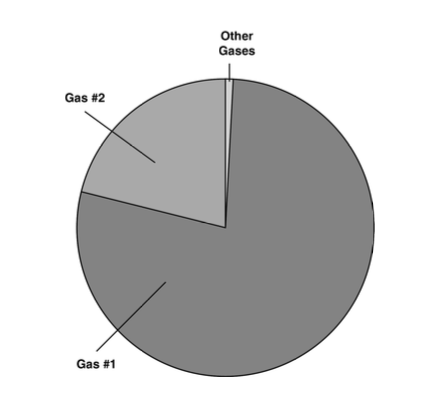
This circle graph shows the percentages of different gases in Earth’s atmosphere. Which gas is represented by Gas #2?
30
hydrogen
oxygen
nitrogen
carbon dioxide
Q 2/10
Score 0
In which layer of Earth’s atmosphere do meteors burn up?
30
mesosphere
troposphere
stratosphere
thermosphere
10 questions
Q.
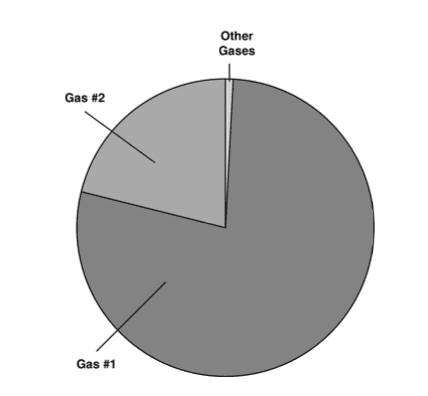
This circle graph shows the percentages of different gases in Earth’s atmosphere. Which gas is represented by Gas #2?
1
30 sec
7.E1.1
Q.
In which layer of Earth’s atmosphere do meteors burn up?
2
30 sec
7.E1.1
Q.
What instrument should be used to monitor atmospheric pressure changes as a weather system approaches?
3
30 sec
7.E1.1
Q.
How does carbon dioxide add to global warming?
4
30 sec
7.E1.1
Q.
Which trait is common in gases that contribute to Earth’s greenhouse effect?
5
30 sec
7.E1.1
Q.
The table indicates the percentages of some gases in the atmosphere of Mars.
Which gas present in the atmosphere of Mars is the primary gas found in the atmosphere of Earth?
6
30 sec
7.E1.1
Q.
The temperature of the stratosphere increases with altitude because it has
7
30 sec
7.E1.1
Q.
Troposphere is the layer of the atmosphere with the
8
30 sec
7.E1.1
Q.
When a plane flies, it travels through air that contains gases, liquids, and solids. This area is BEST described as the
9
30 sec
7.E1.1
Q.
A weather balloon is about 2 meters wide when it is near the ground. It grows to about 6 meters wide at higher altitudes. Which change MOST likely makes the balloon become wider at higher altitudes?