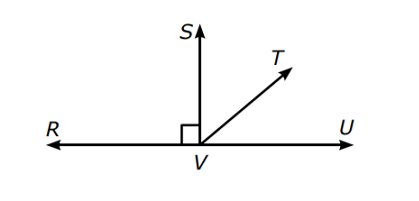
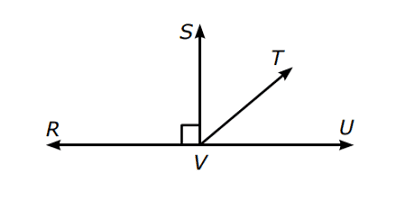
Develop an understanding of angles and angle measurement. • Understand angles as geometric shapes that are formed wherever two rays share a common endpoint, and are measured in degrees. • Measure and sketch angles in whole-number degrees using a protractor. • Solve addition and subtraction problems to find unknown angles on a diagram in real-world and mathematical problems.
Know relative sizes of measurement units. Solve problems involving metric measurement. • Measure to solve problems involving metric units: centimeter, meter, gram, kilogram, Liter, milliliter. • Add, subtract, multiply, and divide to solve one-step word problems involving whole-number measurements of length, mass, and capacity that are given in metric units.
Represent and interpret data using whole numbers. • Collect data by asking a question that yields numerical data. • Make a representation of data and interpret data in a frequency table, scaled bar graph, and/or line plot. • Determine whether a survey question will yield categorical or numerical data.
Use multiplicative reasoning to convert metric measurements from a larger unit to a smaller unit using place value understanding, twocolumn tables, and length models.
Solve problems with area and perimeter. • Find areas of rectilinear figures with known side lengths. • Solve problems involving a fixed area and varying perimeters and a fixed perimeter and varying areas. • Apply the area and perimeter formulas for rectangles in real world and mathematical problems.
Track each student's skills and progress in your Mastery dashboards
Give this quiz to my class
Q 1/7
Score 0
60
Q 2/7
Score 0
60
7 questions
Q.
1
60 sec
NC.4.MD.6
Q.
2
60 sec
NC.4.MD.1
Q.
Fourth-grade students were surveyed about their favorite pizza topping. This graph shows the results.
How many more fourth-graders chose pepperoni or sausage than chose the other toppings?
3
60 sec
NC.4.MD.4
Q.
4
60 sec
NC.4.MD.2
Q.
5
60 sec
NC.4.MD.6
Q.
Every Saturday morning, Jack reads for 30 minutes, plays basketball for 60 minutes, and rides his bike. If Jack starts these activities at 10:25 a.m. and finishes them at 12:10 p.m., how long does he spend riding his bike?
6
60 sec
NC.4.MD.8
Q.
Kathy has a garden that is 15 feet wide and 20 feet long. She will plant 1 bulb per square foot. Each bag of bulbs contains 9 bulbs. How many bags does Kathy need to buy?