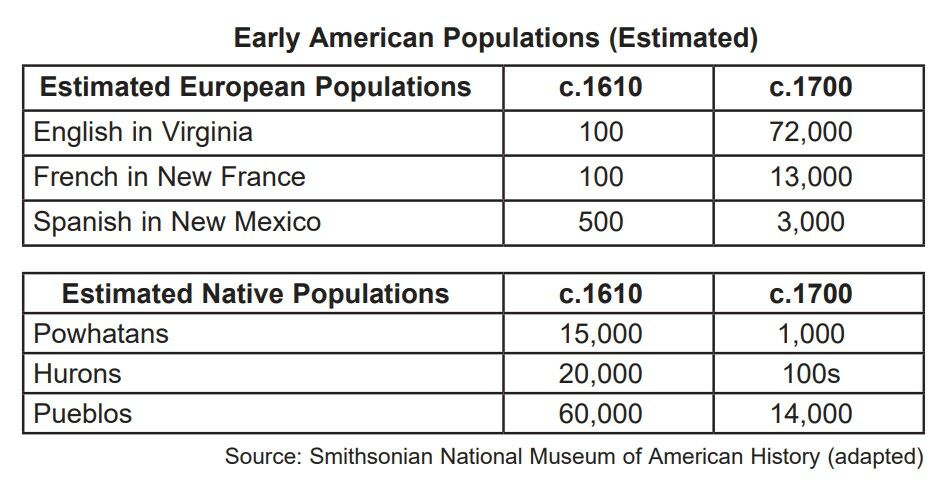
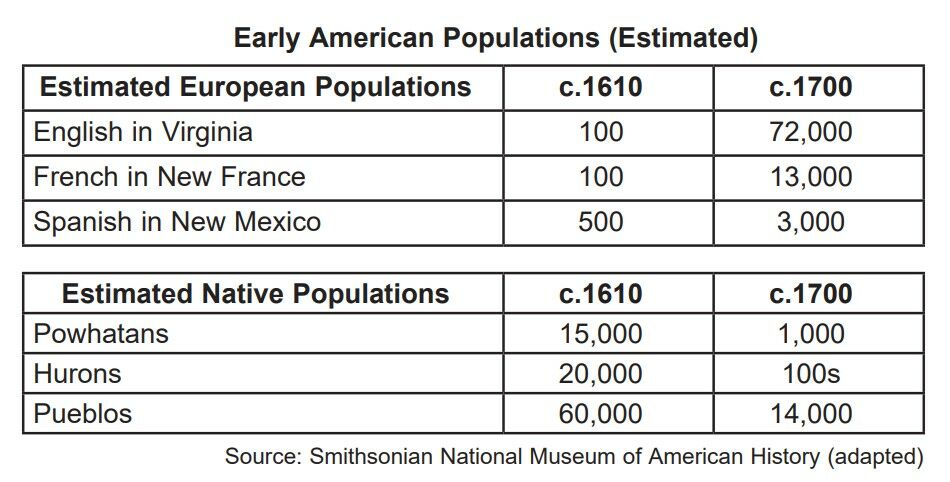
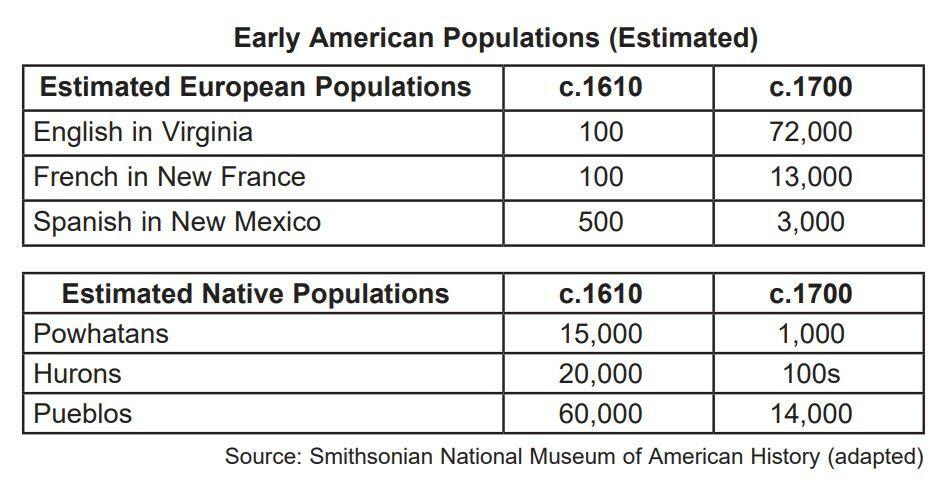
A number of factors influenced colonial economic development, social structures, and labor systems, causing variation by region. Students will examine the impacts of geographic factors on patterns of settlement and the development of colonial economic systems. Students will examine the factors influencing variations in colonial social structures and labor systems. Students will analyze slavery as a deeply established component of the colonial economic system and social structure, indentured servitude vs. slavery, the increased concentration of slaves in the South, and the development of slavery as a racial institution.
Weaknesses of the Articles of Confederation led to a convention whose purpose was to revise the Articles of Confederation but instead resulted in the writing of a new Constitution. The ratification debate over the proposed Constitution led the Federalists to agree to add a bill of rights to the Constitution. Students will examine the weaknesses and successes of government under the Articles of Confederation. Students will explore the development of the Constitution, including the major debates and their resolutions, which included compromises over representation, taxation, and slavery. Students will examine the structure, power, and function of the federal government as created by the Constitution, including key constitutional principles such as the division of power between federal and state government, the separation of powers at the federal level, the creation of checks and balances, the sovereignty of the people, and judicial independence. Students will examine the key points of debate expressed in the Federalist Papers and the Anti Federalist Papers, focusing on the protection of individual rights and the proper size for a republic. Students will examine the rights and protections provided by the Bill of Rights and to whom they initially applied.
Under the new Constitution, the young nation sought to achieve national security and political stability as the three branches of government established their relationships with each other and the states.
Students will identify presidential actions and precedents established by George
Washington, including those articulated in his Farewell Address.
Students will examine Hamilton’s economic plan, the debate surrounding the plan,
and its impacts on the development of political parties.
Students will examine the tradition of a peaceful transfer of power established in
the presidential election of 1800 and compare it to the presidential election of 2000,
focusing on the roles of the Electoral College and Congress in 1800 and the Electoral
College and the Supreme Court in 2000.
Students will examine Supreme Court cases, including Marbury v. Madison,
McCulloch v. Maryland and Gibbons v. Ogden, and analyze how these decisions
strengthened the powers of the federal government.
Different perspectives concerning constitutional, political, economic, and social issues contributed to the growth of sectionalism. Students will compare different perspectives on States rights by examining the Kentucky and Virginia Resolutions and the nullification crisis. Students will investigate the development of the abolitionist movement, focusing on Nat Turner's Rebellion, Sojourner Truth, William Lloyd Garrison (The Liberator), Frederick Douglass (The Autobiography of Frederick Douglass and The North Star), and Harriet Beecher Stowe (Uncle Tom's Cabin). Students will examine the emergence of the women's rights movement out of the abolitionist movement, including the role of the Grimké sisters, Lucretia Mott, and Elizabeth Cady Stanton, and evaluate the demands made at the Seneca Falls Convention (1848). Students will examine the issues surrounding the expansion of slavery into new territories, by exploring the Missouri Compromise, Manifest Destiny, Texas and the Mexican-American war, the Compromise of 1850, the Kansas-Nebraska Act, the Dred Scott decision, and John Brown's raid.
Rapid industrialization and urbanization created significant challenges and societal problems that were addressed by a variety of reform efforts. Students will examine demographic trends associated with urbanization and immigration between 1840 and 1920, including push-pull factors regarding Irish immigration and immigration from southern and eastern Europe. Students will examine problems faced by farmers between 1870 and 1900 and examine the goals and achievements of the Grange Movement and the Populist Party. Students will examine the attempts of workers to unionize from 1870 to 1920 in response to industrial working conditions, including the Knights of Labor, the American Federation of Labor, the American Railway Union, the International Ladies Garment Workers? Union, and the Industrial Workers of the World, considering actions taken by the unions and the responses to these actions. Students will examine Progressive Era reforms, such as the 16th and 17th amendments (1913) and the establishment of the Federal Reserve System (1913). Students will examine the efforts of the women's suffrage movement after 1900, leading to ratification of the 19th amendment (1920). Students will trace the temperance and prohibition movements leading to the ratification of the 18th amendment (1919). Students will trace reform efforts by individuals and the consequences of those efforts, including: Jane Addams and Hull House Jacob Riis? How the Other Half Lives New York Governor Theodore Roosevelt and the Tenement Reform Commission Upton Sinclair's The Jungle and the Meat Inspection Act Margaret Sanger and birth control Ida Tarbell's The History of the Standard Oil Company Ida Wells and her writings about lynching of African Americans Booker T. Washington's contributions to education, including the creation of Tuskegee Institute? W. E. B. Du Bois and the founding of the National Association for the Advancement of Colored People (NAACP), the publication of The Crisis, and the Silent Protest (1917)
New technologies and economic models created rapid industrial growth and transformed the United States. Students will examine the technological innovations that facilitated industrialization, considering energy sources, natural resources, transportation, and communication. Students will examine the growth of industries under the leadership of businessmen such as John D. Rockefeller, Andrew Carnegie, J.P. Morgan, and Henry Ford and analyze their business practices and organizational structures. Students will evaluate the effectiveness of state and federal attempts to regulate business by examining the Supreme Court decision in Wabash, St. Louis & Pacific R.R. v. Illinois (1886), the Interstate Commerce Act (1887), the Sherman Antitrust Act (1890), and President Theodore Roosevelt's trust-busting role as evidenced in Northern Securities Co. v. United States (1904).
World War I had important social, political, and economic effects on American society. Students will investigate the effects of mobilization on the United States economy, including the role and contributions of women and African Americans in the war effort. Students will investigate the causes and effects of the Great Migration on American society. Students will examine the Supreme Court decision concerning civil liberties in Schenck v. United States (1919). Students will examine the relationship between postwar recession, fear of radicals, xenophobia, and the Red Scare (1919?1921).
For many Americans, the 1920s was a time of prosperity. However, underlying economic problems, reflected in the stock market crash of 1929, led to the Great Depression. President Franklin D. Roosevelt's responses to the Great Depression increased the role of the federal government. Students will examine the reasons for economic prosperity during the 1920s. Students will examine the underlying weaknesses of the economy that led to the stock market crash of 1929 and the Great Depression. Students will compare and contrast the responses of Presidents Herbert Hoover and Franklin D. Roosevelt to the Great Depression. Students will examine the human and environmental causes of the Dust Bowl and its effects. Students will evaluate President Roosevelt's leadership during the Depression, including key legislative initiatives of the New Deal, expansion of federal government power, and the constitutional challenge represented by his court packing effort.
After World War II, ideological differences led to political tensions between the United States and the Soviet Union. In an attempt to halt the spread of Soviet influence, the United States pursued a policy of containment. Students will trace key decisions made at wartime conferences as they applied to Poland, Eastern Europe, and postwar Germany, and note how continuing disagreements over these decisions helped bring about the start of the Cold War. Students will trace United States containment policies, including the Truman Doctrine (1947), the Marshall Plan (1948), and the North Atlantic Treaty Organization (1949), and actions taken during the Berlin blockade, and consider how they represent a shift in American foreign policy. Students will examine domestic concerns about the spread of communism and the rise of McCarthyism. Students will examine the consequences of Truman's decision to fight a limited war in defense of South Korea. Students will trace the United States involvement in Vietnam, including President Johnson's decision to escalate the fighting in Vietnam. Students will examine reasons for declining public confidence in government, including America's involvement in Vietnam, student protests, the growing anti war movement, and the Watergate affair. Students will examine the congressional effort to limit presidential power through the War Powers Act.
Individuals, diverse groups, and organizations have sought to bring about change in American society through a variety of methods. Students will trace the following efforts in terms of issues/goals, key individuals and groups, and successes/limitations: Modern women's movement (e.g., The Feminine Mystique [1963], National Organization for Women , Equal Pay Act and Title IX, Roe v. Wade) Native Americans (e.g., American Indian Movement, Russell Means, native identity, and land claims) Brown Power (Chicano) movement (e.g., Cesar Chavez, United Farm Workers) People with disabilities (e.g. Individuals with Disabilities Education Act [1975], Americans with Disabilities Act [1990] ) Rights of the accused (e.g., Mapp v. Ohio [1961], Gideon v. Wainwright [1963], Miranda v. Arizona [1966]) Immigration (e.g., Immigration Act of 1965, Immigration Act of 1986, continuing debates over immigration) Gay Rights and the LGBT movement (e.g., Stonewall Inn riots [1969], efforts for equal legal rights) Environment (e.g., Silent Spring [1962], Clean Air Act of 1970, Clean Water Act of 1972, Endangered Species Act of 1973, Environmental Protection Agency [1970], Reagan's policy) Student rights (e.g., Engel v. Vitale [1962], Tinker v. Des Moines School District [1969], New Jersey v. TLO [1985]) Students will thoroughly investigate at least one of the efforts above.
Globalization and advances in technology have affected the United States economy and society. Students will examine the positive and negative consequences of globalization in relation to the United States economy. Students will investigate the role of multinational corporations and their influence on both the United States economy and on other countries around the world. Students will examine the economic relationship and the strategic rivalry between the United States and China.
Track each student's skills and progress in your Mastery dashboards