Interactions with forms of energy can be either helpful or harmful.
The force of magnetism on objects decreases as distance increases.
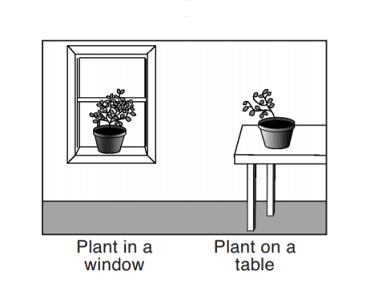
Some properties of an object are dependent on the conditions of the present surroundings in which the object exists. For example:
• temperature - hot or cold;
• lighting - shadows, color;
• moisture - wet or dry
Matter takes up space and has mass. Two objects cannot occupy the same place at the same time.
Mechanical energy may cause change in motion through the application of force and through the use of simple machines such as pulleys, levers, and inclined planes.
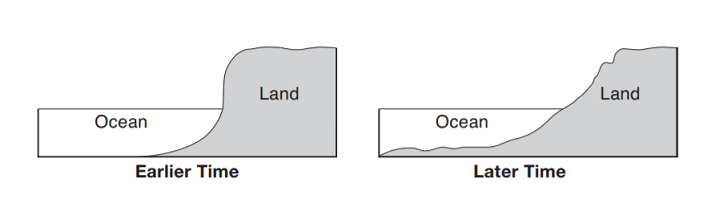
Erosion and deposition result from the interaction among air, water, and land.
• interaction between air and water breaks down earth materials;
• pieces of earth material may be moved by air, water, wind, and gravity;
• pieces of earth material will settle or deposit on land or in the water in different places;
• soil is composed of brokendown pieces of living and nonliving earth material
Matter has properties (color, hardness, odor, sound, taste, etc.) that can be observed through the senses.
Energy and matter interact: water is evaporated by the Sun’s heat; a bulb is lighted by means of electrical current; a musical instrument is played to produce sound; dark colors may absorb light, light colors may reflect light.
The force of gravity pulls objects toward the center of Earth.
Natural cycles and patterns include:
• Earth spinning around once every 24 hours (rotation), resulting in day and night;
• Earth moving in a path around the Sun (revolution), resulting in one Earth year;
• the length of daylight and darkness varying with the seasons;
• weather changing from day to day and through the seasons;
• the appearance of the Moon changing as it moves in a path around Earth to complete a single cycle
The amount of change in the motion of an object is affected by friction.
Decomposers are living things that play a vital role in recycling nutrients.
Good health habits include hand washing and personal cleanliness; avoiding harmful substances (including alcohol, tobacco, illicit drugs); eating a balanced diet; engaging in regular exercise.
Plants require air, water, nutrients, and light in order to live and thrive.
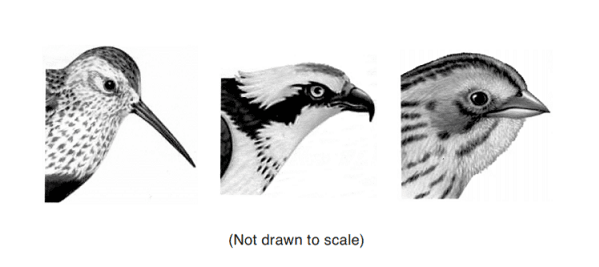
In order to survive in their environment, plants and animals must be adapted to that environment.
• seeds disperse by a plant’s own mechanism and/or in a variety of ways that can include wind, water, and animals;
• leaf, flower, stem, and root adaptations may include variations in size, shape, thickness, color, smell, and texture;
• animal adaptations include coloration for warning or attraction, camouflage, defense mechanisms, movement, hibernation, and migration
Nonliving things do not live and thrive.
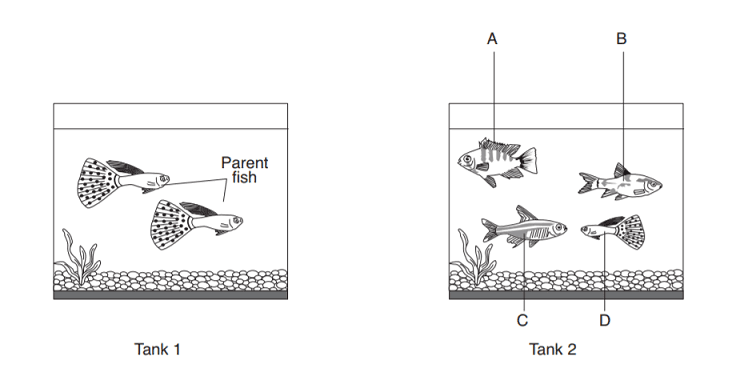
Plants and animals closely resemble their parents and other individuals in their species.
Food supplies the energy and materials necessary for growth and repair.
Some animal behaviors are influenced by environmental conditions. These behaviors may include: nest building, hibernating, hunting, migrating, and communicating.
Each kind of plant goes through its own stages of growth and development that may include seed, young plant, and mature plant.
Each kind of animal goes through its own stages of growth and development during its life span.
Living things grow, take in nutrients, breathe, reproduce, eliminate waste, and die.
Particular animal characteristics are influenced by changing environmental conditions including: fat storage in winter, coat thickness in winter, camouflage, shedding of fur.
Humans, as individuals or communities, change environments in ways that can be either helpful or harmful for themselves and other organisms.
The Sun’s energy is transferred on Earth from plants to animals through the food chain.
Track each student's skills and progress in your Mastery dashboards