Loading...

PISA SCIENCE 2025-NATURAL RESOURCES
Quiz by Retieza
Tag the questions with any skills you have. Your dashboard will track each student's mastery of each skill.
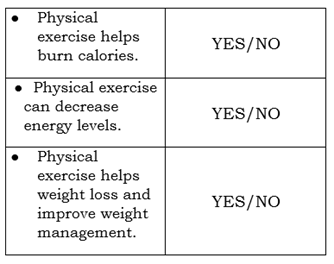
Answer “Yes” or “No” for each statement.
Understanding the relationship between the types and quantities of food consumed and how they affect energy balance can help individuals make informed dietary choices that support their health, fitness, and well-being.
Aside from managing calorie intake, what role does exercise play in achieving health and fitness goals?
What are the advantages of regular physical exercise?
Food consumption plays a pivotal role in determining an individual's or household's overall health and well-being. Foods contain calories, which are units of energy. In nutrition, calories refer to the energy that food provides when consumed and are essential for the body to function, helping fuel daily activities and maintaining bodily processes.
The calories are available from somefood groups, especially fruits and vegetables, vegetable oils, and animalproducts.
Overall, the different caloric values across food groups reflect their diverse roles in nutrition and overall dietary patterns.
● Apples:~52 calories per 100g
● Bananas:~89 calories per 100g
● Broccoli:~34 calories per 100g
● Carrots:~41 calories per 100g
● Chicken breast (cooked, skinless): ~165 calories per 100g
● Beef(ground, cooked): ~250 calories per 100g
● Pork(cooked): ~242 calories per 100g)
● Whole milk: ~61 calories per 100g
● Cheese(e.g., cheddar): ~403 calories per 100g
● Canola oil: ~884 calories per 100g
● Coconut oil: ~862 calories per 100g
"In the context of overall health and wellness, why is calorie intake a key factor?"
Answer “Yes” or “No” for each statement.
Understanding the relationship between the types and quantities of food consumed and how they affect energy balance can help individuals make informed dietary choices that support their health, fitness, and well-being.
Aside from managing calorie intake, what role does exercise play in achieving health and fitness goals?
What are the advantages of regular physical exercise?
When planning your diet, a balanced diet should consist of a range of fruits, vegetables, whole grains, lean meat, and healthy fats. Maintaining a healthy weight and promoting general health can be achieved by paying attention to portion sizes, particularly for high-calorie foods.
Somepeople eat high-calorie content food, and some are low calorie content food.
To study the effectiveness of measuring calorie diet intake, a group of adults aged 18-65 years, no diagnosed eating disorders and willing to follow a standardized diet are chosen randomly. The group is to be studied for six months. This study design will allow researchers to investigate the effectiveness of measuring calorie intake on weight management and health outcomes.
Which one of the following is the best experimental design?

Renewable energy refers to the utilization of resources that can be replenished naturally within a human lifetime. Solar energy, wind, biomass from wood, plants and animals, wave energy, and geothermal heat are a few examples of renewable energy sources.
.
The adoption of renewable energy hasincreased due to various reasons, including worries about the environmentaleffects of traditional fossil fuels, rising populations and urban development,and the declining costs associated with renewable technologies.
Additionally, the quest for energy security has further promoted the integration of renewable energy and decentralized energy production into the electrical distribution system.
The production of renewable resources involves generating energy or materials from sources that are naturally replenished over time. These resources are essential for transitioning away from fossil fuels and reducing environmental impacts.
Which of the following options are considered renewable resources?
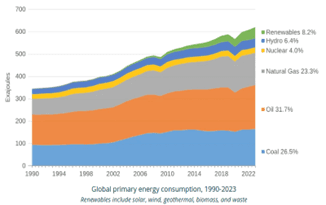
We often hear about the rapid growth of renewable technologies in media reports. But what is the significant impact this growth has had on our energy systems?
The global demand for energy is increasing, and many countries are looking for sustainable alternatives. Renewable resources such as solar, wind, and hydroelectric power are often cited as solutions to combat climate change.
A recent study estimates that transitioning to 100% renewable energy sources could reduce greenhouse gas emissions significantly. However, some critics argue that the current technology may not be efficient enough to meet global energy demands.
In a city aiming to reduce its carbon footprint, the local government has proposed a plan to increase the use of electric vehicles (EVs) powered by renewable energy sources.
Different regions of the world have varying capacities for generating renewable energy. For instance, solar energy is more effective in equatorial regions, while wind energy may be more prevalent in coastal areas.
The general energy trends in 2023 were like those in the previous year, showing a continued growth of fossil fuel consumption and CO2 emissions. While renewable energy consumption has seen a steep increase, renewables have not yet replaced any fossil fuels—rather, increasing renewable energy volumes are added on top of growing consumption of fossil fuels.
What is the critical consideration when developing a renewable energy strategy tailored to a specific region?
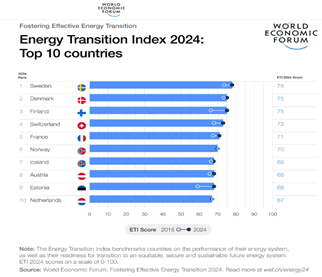
What are the potential risks or adverse effects of rapid transitioning to renewable energy without sufficient planning?
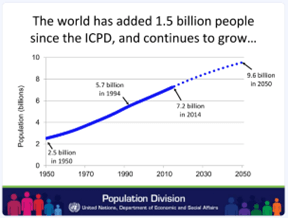
This year (2024), the world's population is 8.2 billion people, with a projected 9.7billion by 2050. The world population is predicted to peak at 10.3 billion in the mid-2080s, after which it is expected to decline to 10.2 billion by 2100.Some countries' populations are rapidly growing, while others are shrinking.
In certain regions, particularly in developing countries, declining mortality rates, increasing levels of life expectancy at birth, advances in health care, sanitation, and nutrition, migration, cultural and economic factors are expected to contribute to population growth.
Overall, while global population growth is expected to slow and eventually stabilize in the latter half of the 21stcentury, the combination of declining death rates and persistent fertility rates, particularly in specific regions, is the primary driver of current population growth.
As the global population continues to grow, urban areas are expected to expand significantly, putting pressure on resources such as food, water, and energy.
What could be a possible result of urbanization?
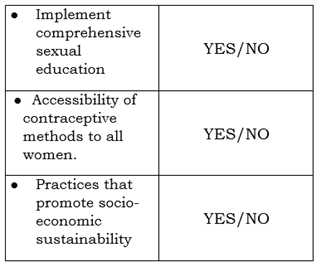
Answer “Yes” or “No” for each statement.
Addressing population growth requires a comprehensive strategy that integrates education, healthcare, economic development, and policy reforms. It is crucial to customize these approaches to align with the unique needs and circumstances of various communities to maximize their effectiveness.
What are some effective strategies for addressing population growth?
Biodiversity is essential for the processes that support all life on Earth, including humans. Without a diverse range of animals, plants, and microorganisms, we cannot maintain the healthy ecosystems on which we rely for the air we breathe and the food we eat.
Biodiversity promotes an ecosystem'sresilience by providing a diverse range of species capable of filling multipleroles, ensuring that even if certain species are impacted by changes, otherscan thrive and maintain ecological functioning. Diverse ecosystems are betterat recovering from disturbances and adapting to changing conditions.
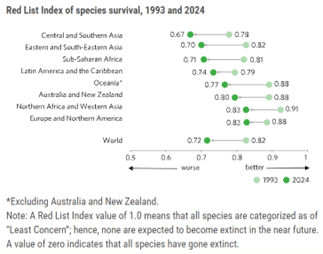
Global biodiversity faces ongoing threats, evidenced by a 12 percent deterioration in the Red List Index between 1993 and2024. Over 44,000 species, or 28 percent of almost 160,000 assessed species, are currently threatened.
Biodiversity is vital for the health of the planet and the well-being of all living organisms. Protecting and conserving biodiversity requires global cooperation and local action to ensure a sustainable future for generations to come.
Whichof the following statements best describes biodiversity?
A local community is planning to clear a forest area to build a shopping mall. The forest is home to many species of plants and animals. What is one potential consequence of this action on biodiversity?
A wildlife reserve is faced with a decreasing population of a keystone species due to poaching. Which of the following actions would be the most effective way to protect this species and enhance biodiversity in the area?
