Loading...


PISA-SCIENCE PRETEST
Quiz by Shelaros B. Moralla-Lofranco
Tag the questions with any skills you have. Your dashboard will track each student's mastery of each skill.
BIRD MIGRATION
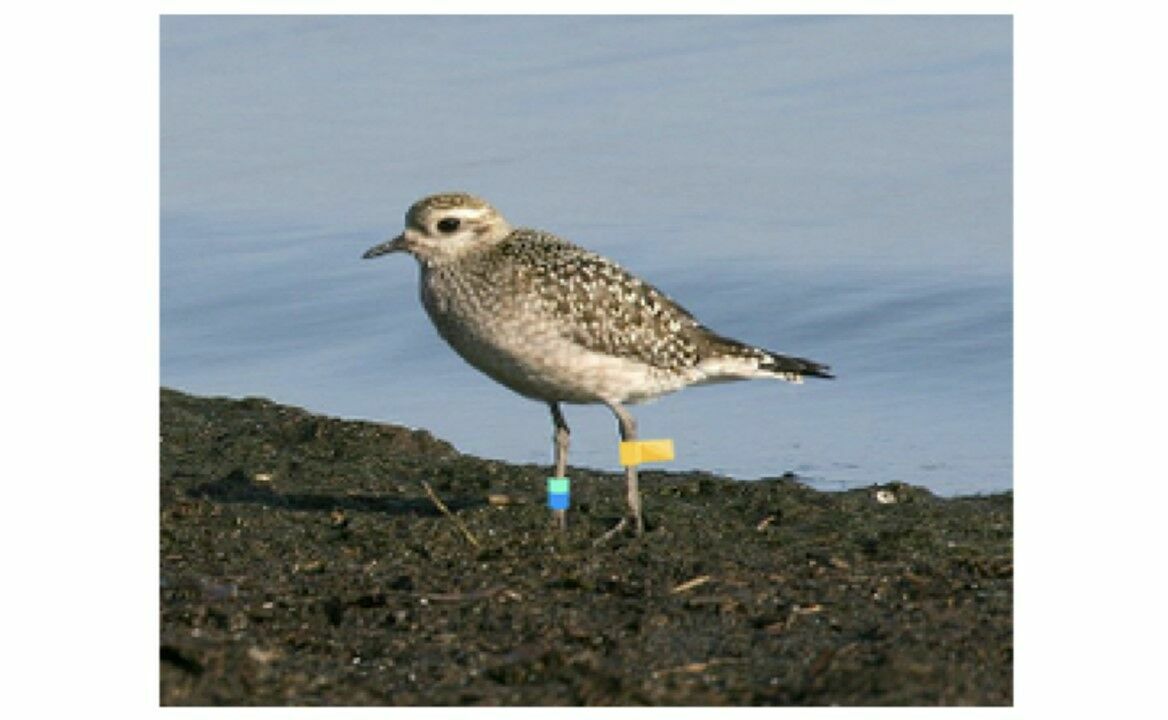
Bird migration is a seasonal large-scale movement of birds to and from their breeding grounds. Every year volunteers count migrating birds at specific locations. Scientists capture some of the birds and tag their legs with a combination of coloured rings and flags. The scientists use sightings of tagged birds together with volunteers' counts to determine the migratory routes of birds.
Refer to “Bird Migration” . Click on a choice to answer the question.
Most migratory birds gather in one area and then migrate in large groups rather than individually. This behavior is a result of evolution. Which of the following is the best scientific explanation for the evolution of this behavior in most migratory birds?
Flying in large groups allowed other bird species to join the migration.
Birds that migrated individually or in small groups were more likely to find adequate food.
Birds that migrated individually or in small groups were less likely to survive and have offspring.
Flying in large groups allowed each bird to have a better chance of finding a nesting site.
BIRD MIGRATION
Golden Plovers
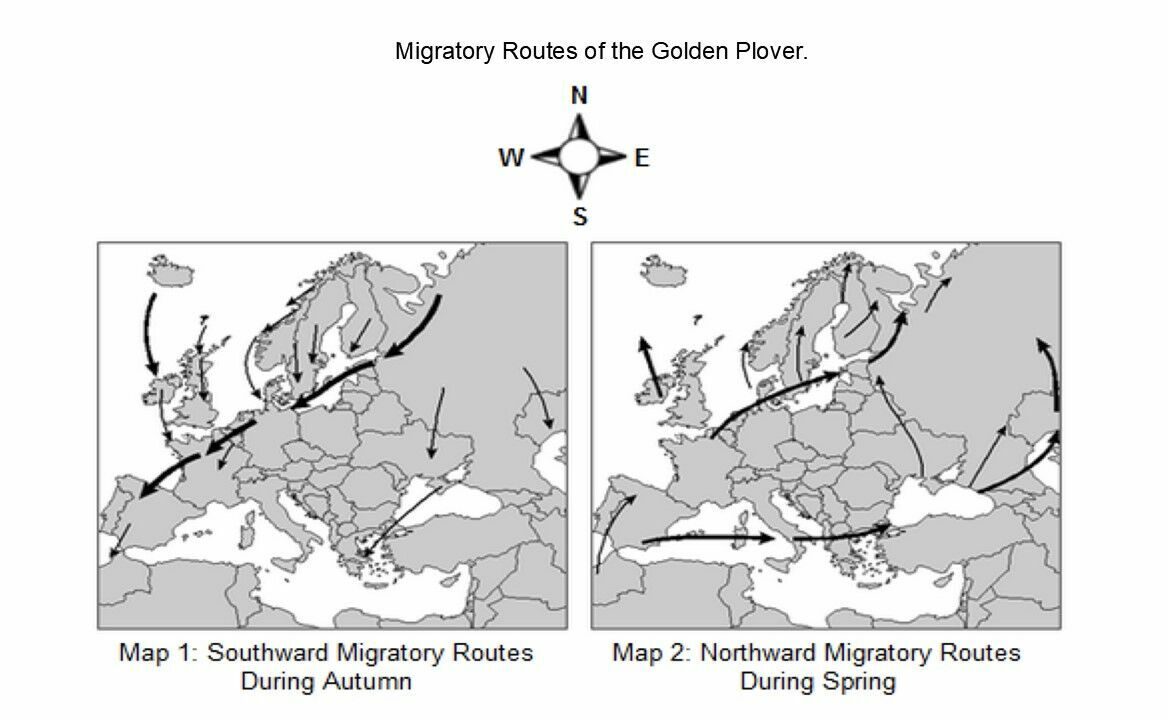
Golden plovers are migratory birds that breed in northern Europe. In autumn, the birds travel to where it is warmer and where more food is available. In spring, the birds travel back to their breeding grounds.
The maps below are based on more than ten years of research on the migration of the golden plover. Map 1 shows the southward migratory routes of the golden plover during autumn, and map 2 shows the northward migratory routes during spring. Areas coloured grey are land, and areas coloured white are water. The thickness of the arrows indicates the size of the migrating groups of birds.
Refer to “Golden Plovers” . Click on one or more boxes to answer the question.
Remember to select one or more boxes
BIRD MIGRATION
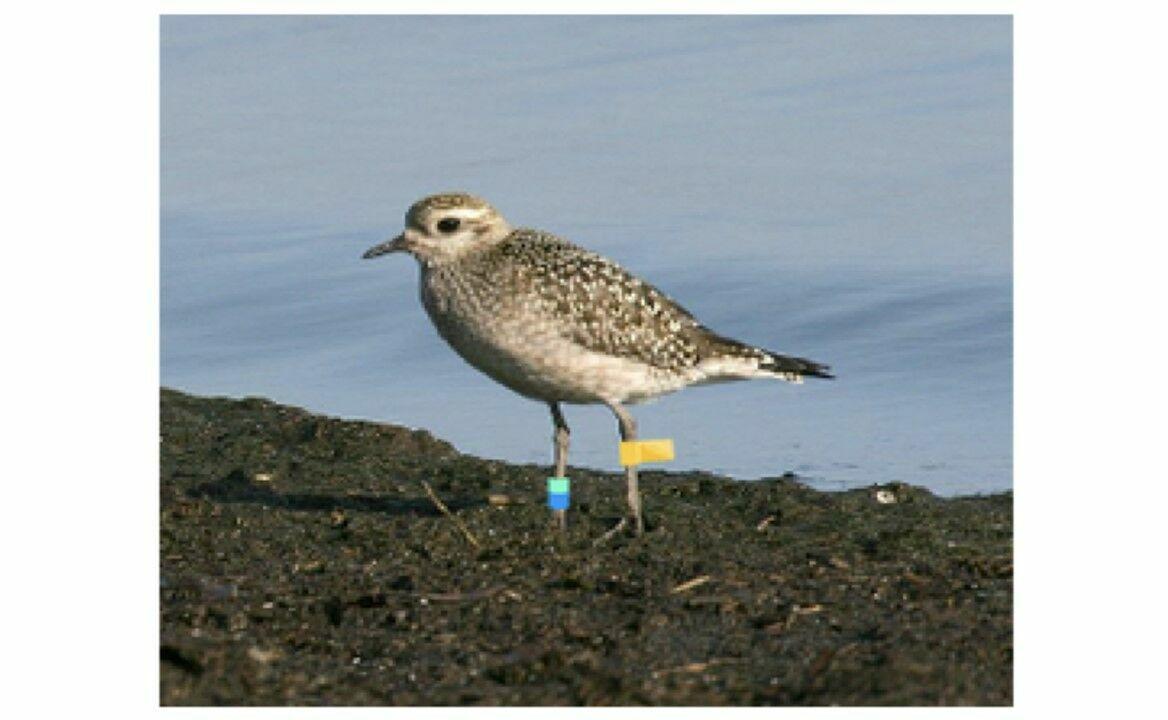
Bird migration is a seasonal large-scale movement of birds to and from their breeding grounds. Every year volunteers count migrating birds at specific locations. Scientists capture some of the birds and tag their legs with a combination of coloured rings and flags. The scientists use sightings of tagged birds together with volunteers' counts to determine the migratory routes of birds.
Refer to “Bird Migration” . Click on a choice to answer the question.
Most migratory birds gather in one area and then migrate in large groups rather than individually. This behavior is a result of evolution. Which of the following is the best scientific explanation for the evolution of this behavior in most migratory birds?
BIRD MIGRATION
Golden Plovers
Golden plovers are migratory birds that breed in northern Europe. In autumn, the birds travel to where it is warmer and where more food is available. In spring, the birds travel back to their breeding grounds.
The maps below are based on more than ten years of research on the migration of the golden plover. Map 1 shows the southward migratory routes of the golden plover during autumn, and map 2 shows the northward migratory routes during spring. Areas coloured grey are land, and areas coloured white are water. The thickness of the arrows indicates the size of the migrating groups of birds.
Refer to “Golden Plovers” . Click on one or more boxes to answer the question.
Remember to select one or more boxes

9.Which one of these questions were Mimi and Dean trying to answer?

SLOPE- FACE INVESTIGATION
Data Analysis
A group of students notices a dramatic difference in the vegetation on the two slopes of a valley: the vegetation is much greener and more abundant on slope A than on slope B. This difference is shown in the illustration on the right.
The students investigate why the vegetation on the slopes is so different from one slope to the other. As part of this investigation, the students measure three environmental factors over a given period of time:
- Solar radiation: how much sunlight falls on a given location
- Soil moisture: how wet the soil is in a given location
- Rainfall: how much rain falls on a given location
The students take the average of the measurements collected over a given period of time from each pair of instruments on each slope and calculate the uncertainty in these averages. Their results are recorded in the following table. The uncertainty is given following the "士 " sign.
Refer to “Data Analysis”. Type an explanation to answer the question.
Two students disagree about why there is a difference in soil moisture between the two slopes.
- Student 1 thinks that the difference in soil moisture is due to a difference in solar radiation on the two slopes
- Student 2 thinks that the difference in soil moisture is due to a difference in rainfall on the two slopes

ACID RAIN
Normal rain is slightly acidic because it has absorbed some carbon dioxide from the air. Acid rain is more acidic than normal rain because it absorbs gases like sulfur oxides and nitrogen oxides.
Where do these sulfur oxides in the air come from?
10. Why was the second sheet of plastics pressed down?
11.Refer to the picture below.
12. The researchers need to decide in which tank each organism should be placed. Drag and drop each of the organisms below to the appropriate tank above to ensure that the Common Sole is fed and that salt water is returned to the ocean unchanged. The micro-algae are already in the correct tank.
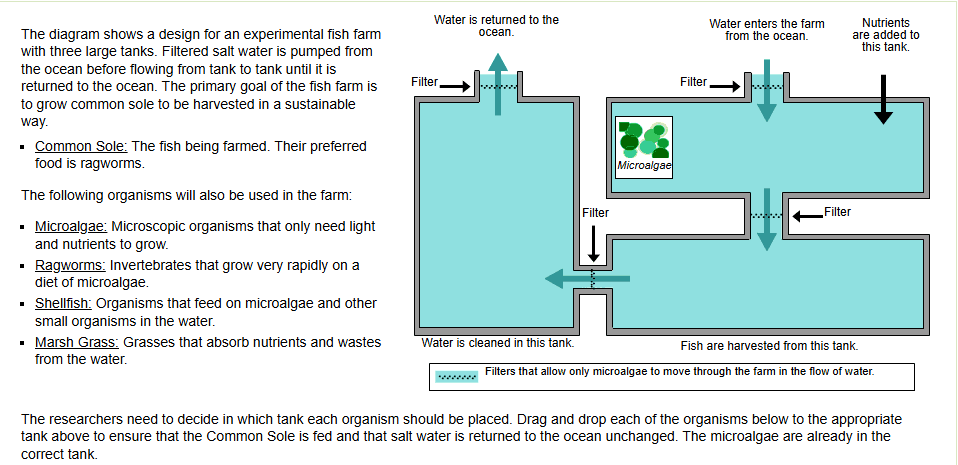
13. Researchers have noticed that the water that is being returned to the ocean contains a large quantity of nutrients. Adding which of the following tothe farm will reduce this problem?
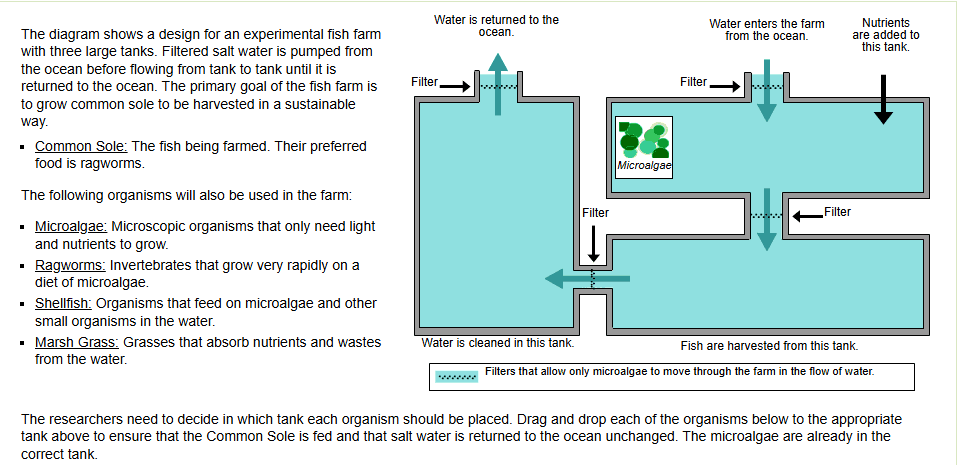
14. Which procedure would make fish farming more sustainable?
15. The researchers need to decide in which tank each organism should be placed. Drag and drop each of the organisms below to the appropriate tank above to ensure that the Common Sole is fed and that salt water is returned to the ocean unchanged. The micro-algae are already in the correct tank.
