Loading...


PISA-LIKE QUESTIONS: (Science: Natural Resources)
Quiz by Christian Joel Alfuerto
Tag the questions with any skills you have. Your dashboard will track each student's mastery of each skill.
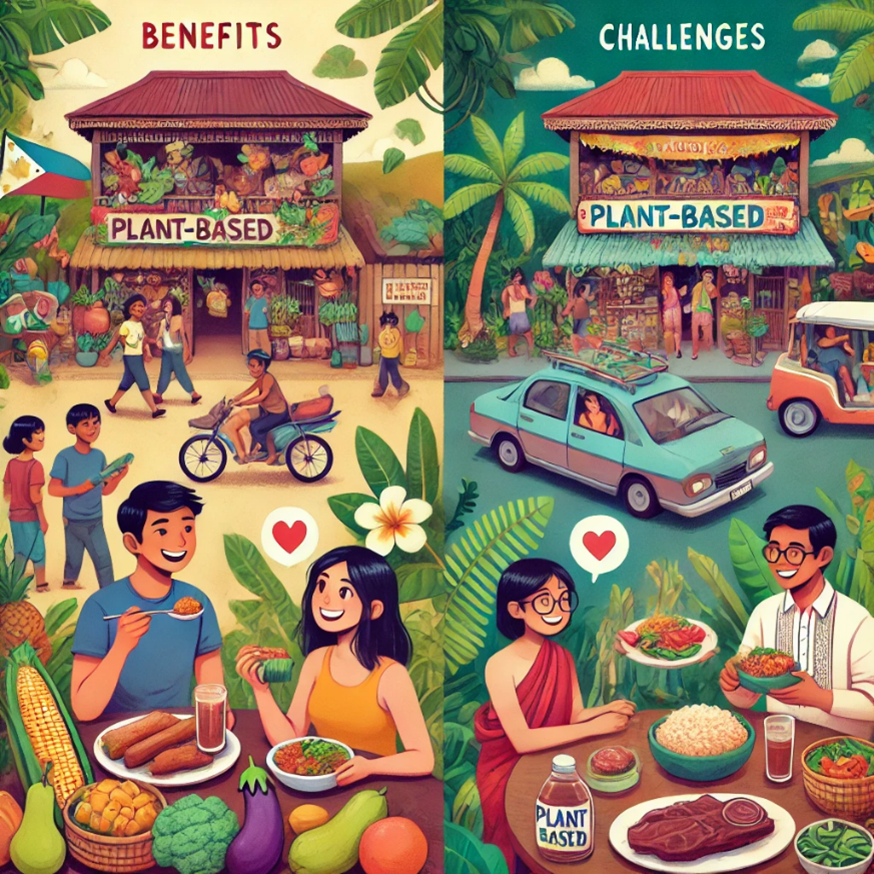
Perceived Benefits and Challenges of Adopting a Plant-Based Diet Among Vegetarian andNon-Vegetarian Adults in the Philippines
A diet focused on plant-based foods has been shown to be effective for overweight patients, as confirmed by several studies. Understanding the perceptions of both vegetarians and non-vegetarians is essential to grasp the effects of such a diet. The study used convenience sampling to recruit 277 participants, consisting of 134vegetarians and 143 non-vegetarians.
The body mass index (BMI) was calculated based on self-reported weight and height, revealing that 63% of participants had anormal BMI, with non-vegetarians having a higher proportion of normal nutritional status (64%). There was a moderate association between adopting a vegetarian diet and achieving normal nutritional status. Vegetarians in the study perceived their diet as beneficial to the environment (100%), quality of life (99.3%), fiber intake (99.3%), and personal contentment (99.3%). Non-vegetarians also acknowledged the benefits of a vegetarian diet for digestion (96.5%), reduced intake of saturated fat (93.7%), fiber intake (92.3%), and overall health (92.3%). However, non-vegetarians did not agree that a vegetarian diet is tasty.
Overall, the majority of adults, regardless of their dietary group, viewed a plant-based diet as beneficial, although a stronger association was observed among vegetarians. Both groups identified barriers related to the availability of information and accessibility of vegetarian options.
Question: What percentage of vegetarians perceive their diet as beneficial to the environment?
92.3%
96.5%
99.3%
100%
Perceived Benefits and Challenges of Adopting a Plant-Based Diet Among Vegetarian andNon-Vegetarian Adults in the Philippines
A diet focused on plant-based foods has been shown to be effective for overweight patients, as confirmed by several studies. Understanding the perceptions of both vegetarians and non-vegetarians is essential to grasp the effects of such a diet. The study used convenience sampling to recruit 277 participants, consisting of 134vegetarians and 143 non-vegetarians.
The body mass index (BMI) was calculated based on self-reported weight and height, revealing that 63% of participants had anormal BMI, with non-vegetarians having a higher proportion of normal nutritional status (64%). There was a moderate association between adopting a vegetarian diet and achieving normal nutritional status. Vegetarians in the study perceived their diet as beneficial to the environment (100%), quality of life (99.3%), fiber intake (99.3%), and personal contentment (99.3%). Non-vegetarians also acknowledged the benefits of a vegetarian diet for digestion (96.5%), reduced intake of saturated fat (93.7%), fiber intake (92.3%), and overall health (92.3%). However, non-vegetarians did not agree that a vegetarian diet is tasty.
Overall, the majority of adults, regardless of their dietary group, viewed a plant-based diet as beneficial, although a stronger association was observed among vegetarians. Both groups identified barriers related to the availability of information and accessibility of vegetarian options.
Question: What percentage of vegetarians perceive their diet as beneficial to the environment?

Perceived Benefits and Challenges of Adopting a Plant-Based Diet Among Vegetarian and Non-Vegetarian Adults in the Philippines
A diet focused on plant-based foods has been shown to be effective for overweight patients, as confirmed by several studies. Understanding the perceptions of both vegetarians and non-vegetarians is essential to grasp the effects of such a diet. The study used convenience sampling to recruit 277 participants, consisting of 134vegetarians and 143 non-vegetarians.
The body mass index (BMI) was calculated based on self-reported weight and height, revealing that 63% of participants had anormal BMI, with non-vegetarians having a higher proportion of normal nutritional status (64%). There was a moderate association between adopting a vegetarian diet and achieving normal nutritional status. Vegetarians in the study perceived their diet as beneficial to the environment (100%), quality of life (99.3%), fiber intake (99.3%), and personal contentment (99.3%). Non-vegetarians also acknowledged the benefits of a vegetarian diet for digestion (96.5%), reduced intake of saturated fat (93.7%), fiber intake (92.3%), and overall health (92.3%). However, non-vegetarians did not agree that a vegetarian diet is tasty.
Overall, the majority of adults, regardless of their dietary group, viewed a plant-based diet as beneficial, although a stronger association was observed among vegetarians. Both groups identified barriers related to the availability of information and accessibility of vegetarian options.
Question: Considering the benefits and perceptions of both vegetarians and non-vegetarians outlined in the study, what do you think is the most important factor in choosing a diet?
Perceived Benefits and Challenges of Adopting a Plant-Based Diet Among Vegetarian and Non-Vegetarian Adults in the Philippines
A diet focused on plant-basedfoods has been shown to be effective for overweight patients, as confirmed byseveral studies. Understanding the perceptions of both vegetarians andnon-vegetarians is essential to grasp the effects of such a diet. The studyused convenience sampling to recruit 277 participants, consisting of 134vegetarians and 143 non-vegetarians.
The body mass index (BMI) was calculated basedon self-reported weight and height, revealing that 63% of participants had anormal BMI, with non-vegetarians having a higher proportion of normalnutritional status (64%). There was a moderate association between adopting avegetarian diet and achieving normal nutritional status. Vegetarians in thestudy perceived their diet as beneficial to the environment (100%), quality oflife (99.3%), fiber intake (99.3%), and personal contentment (99.3%).Non-vegetarians also acknowledged the benefits of a vegetarian diet fordigestion (96.5%), reduced intake of saturated fat (93.7%), fiber intake(92.3%), and overall health (92.3%). However, non-vegetarians did not agreethat a vegetarian diet is tasty.
Overall, the majority of adults, regardless of their dietary group, viewed a plant-based diet as beneficial, although a stronger association was observed among vegetarians. Both groups identified barriers related to the availability of information and accessibility of vegetarian options.
Question: In a future where vegetarian diets are the norm, what would be the most significant change in our food systems?
Banaybanay Mining Crisis: Environmental Degradation and Community Impact in Davao Oriental
The mining operations in Banaybanay, Davao Oriental caused severe siltation and discoloration of the Mapagba and Pintatagan rivers, affecting the Davao Gulf and local fishers.
Following a heavy rain, the rivers turned orange due to nickel laterite from the mining site. The Department of Environment and Natural Resources (DENR) suspended the mining company's operations and issued a cease-and-desist order. Governor Nelson Dayanghirang called for the cancellation of mining permits to protect communities. The Commission on Human Rights (CHR) emphasizes implementing relevant laws to ensure a safe environment and calls for proactive steps by mining companies to respect and protect human rights.
Mining companies have started desilting operations and plan for reforestation and rehabilitation including the Ph level or how acidic or basic the water is; the turbidity or how cloudy-(good for drinking and fish) or clear-(may have pollution or germs) the river is; and the nickel present and concentration in the water-(low concentration -safe for most uses and high concentration-can be toxic to humans and environment). Both national and local governments are encouraged to protect and defend the environment.
Question: How might the increase in nickel concentration in the water affect the local ecosystem as shown in Table1?
Here's a table depicting the pH level, turbidity, and nickel concentration before and after the mining incident:
Table1: water contamination measurement before and after mining activities

Banaybanay Mining Crisis: Environmental Degradation and Community Impact in Davao Oriental
The mining operations in Banaybanay, Davao Oriental caused severe siltation and discoloration of the Mapagba and Pintatagan rivers, affecting the Davao Gulf and local fishers.
Following a heavy rain, the rivers turned orange due to nickel laterite from the mining site. The Department of Environment and Natural Resources (DENR) suspended the mining company's operations and issued a cease-and-desist order. Governor Nelson Dayanghirang called for the cancellation of mining permits to protect communities. The Commission on Human Rights (CHR) emphasizes implementing relevant laws to ensure a safe environment and calls for proactive steps by mining companies to respect and protect human rights.
Mining companies have started desilting operations and plan for reforestation and rehabilitation including the Ph level or how acidic or basic the water is; the turbidity or how cloudy-(good for drinking and fish) or clear-(may have pollution or germs) the river is; and the nickel present in the water-(low concentration -safe for most uses and high concentration-can be toxic to humans and environment). Both national and local governments are encouraged to protect and defend the environment.
Question: What is the primary cause of the discoloration and severe siltation of the Mapagba and Pintatagan rivers in Banaybanay, Davao Oriental?
Here's a table depicting the pH level, turbidity, and nickel concentration before and after the mining incident:
Table1: water contamination measurement before and after mining activities

Banaybanay Mining Crisis: Environmental Degradation and Community Impact in Davao Oriental
The mining operations in Banaybanay, Davao Oriental caused severe siltation and discoloration of the Mapagba and Pintatagan rivers, affecting the Davao Gulf and local fishers.
Following a heavy rain, the rivers turned orange due to nickel laterite from the mining site. The Department of Environment and Natural Resources (DENR) suspended the mining company's operations and issued a cease-and-desist order. Governor Nelson Dayanghirang called for the cancellation of mining permits to protect communities. The Commission on Human Rights (CHR) emphasizes implementing relevant laws to ensure a safe environment and calls for proactive steps by mining companies to respect and protect human rights.
Mining companies have started desilting operations and plan for reforestation and rehabilitation including the Ph level or how acidic or basic the water is; the turbidity or how cloudy-(good for drinking and fish) or clear-(may have pollution or germs) the river is; and the nickel present in the water-(low concentration -safe for most uses and high concentration-can be toxic to humans and environment). Both national and local governments are encouraged to protect and defend the environment.
Question: As a member of the Pollution Adjudication Board, you need to decide on the penalties and corrective actions for the mining company responsible for the environmental damage. Which approach should you take?
Here's a table depicting the pH level, turbidity, and nickel concentration before and after the mining incident:
Table 1: water contamination measurement before and after mining activities

"Renewable Energy's Ascent: Milestones and Projections Towards 2030"
Global renewable electricity generation is forecast to climb to over17 000 TWh (60 EJ) by 2030, an increase of almost 90% from 2023.This would be enough to meet the combined power demand of China and the United States in 2030. Over the next six years, several renewable energy milestones are expected to be reached. Below is the line graph illustrating the projected growth of solar, wind, hydropower, nuclear, and coal-based electricity generation from 2024 to 2030.
In 2030, renewable energy sources are used for 46% of global electricity generation, with wind and solar PV together making up 30%. By 2030, however, solar PV becomes the foremost renewable electricity source, followed by wind, both surpassing hydropower.
Question: By 2030, renewable electricity generation is expected to undergo significant changes. Which of the following milestones is projected to occur in 2026?

"Renewable Energy's Ascent: Milestones and Projections Towards 2030"
Global renewable electricity generation is forecast to climb to over17 000 TWh (60 EJ) by 2030, an increase of almost 90% from 2023.This would be enough to meet the combined power demand of China and the United States in 2030. Over the next six years, several renewable energy milestones are expected to be reached. Below is the line graph illustrating the projected growth of solar, wind, hydropower, nuclear, and coal-based electricity generation from 2024 to 2030.
In 2030, renewable energy sources are used for 46% of global electricity generation, with wind and solar PV together making up 30%. By 2030, however, solar PV becomes the foremost renewable electricity source, followed by wind, both surpassing hydropower.
Question: Given the projections for renewable electricity generation, analyze the following scenario:
If the trends continue beyond 2030, which of the following renewable sources is most likely to have the highest growth rate in electricity generation from 2030 to 2040, considering current technological advancements and projected milestones?

The story about Seaside Snack Haus in Mati City:
Seaside Snack Haus has become a culinary landmark in Mati City, renowned for its scrumptious empanadas. The business started humbly in the late 1960s, with Miguela “Gelang” Ineda from Pampanga selling lumpia door-to-door. Due to the overwhelming popularity of lumpia, the family introduced empanadas when lumpia stocks ran out. The empanada recipe, passed down through generations, quickly gained a loyal following.
In 1979, due to increasing customer demand, the family opened a small kiosk by the seaside, which inspired the name "Seaside." Over the years, the business grew and expanded into a restaurant at Quezon Street, serving not just empanadas but a variety of snacks and delicacies. The Abayon family attributes their success to the unique dough, which is soft yet crunchy and best served hot, available in flavors like pork asado, vegetable, and chicken.
On regular days, Seaside Snack Haus sells between 3,000 to 5,000 empanadas, and during special events or holidays, sales can reach up to 10,000 pieces. Each empanada is sold for justP12. The empanadas have also become a popular pasalubong (gift) item, reaching places as far as Japan and Dubai. In 2017, the business moved to a new location on Quezon Street, focusing on snacks and delicacies while continuing to uphold the high standards set by their founder.
The business has since expanded, opening a branch in Lupon, Davao Oriental, managed by the next generation of the family. The Abayon family plans to continue this legacy by exploring franchising opportunities and establishing branches in other cities within the Davao Region. Their story is a testament to the resilience and dedication of a family business that has become an integral part of Mati City's culinary heritage.
Question: How did Seaside Snack Haus adapt to increasing customer demand in 1979?

The story about Seaside Snack Haus in Mati City:
Seaside Snack Haus has become a culinary landmark in Mati City, renowned for its scrumptious empanadas. The business started humbly in the late 1960s, with Miguela “Gelang” Ineda from Pampanga selling lumpia door-to-door. Due to the overwhelming popularity of lumpia, the family introduced empanadas when lumpia stocks ran out. The empanada recipe, passed down through generations, quickly gained a loyal following.
In 1979, due to increasing customer demand, the family opened a small kiosk by the seaside, which inspired the name "Seaside." Over the years, the business grew and expanded into a restaurant at Quezon Street, serving not just empanadas but a variety of snacks and delicacies. The Abayon family attributes their success to the unique dough, which is soft yet crunchy and best served hot, available in flavors like pork asado, vegetable, and chicken.
On regular days, Seaside Snack Haus sells between 3,000 to 5,000 empanadas, and during special events or holidays, sales can reach up to 10,000 pieces. Each empanada is sold for justP12. The empanadas have also become a popular pasalubong (gift) item, reaching places as far as Japan and Dubai. In 2017, the business moved to a new location on Quezon Street, focusing on snacks and delicacies while continuing to uphold the high standards set by their founder.
The business has since expanded, opening a branch in Lupon, Davao Oriental, managed by the next generation of the family. The Abayon family plans to continue this legacy by exploring franchising opportunities and establishing branches in other cities within the Davao Region. Their story is a testament to the resilience and dedication of a family business that has become an integral part of Mati City's culinary heritage.
Question: What environmental benefit is associated with consuming locally produced foods like the empanadas from Seaside Snack Haus?
