Determine or calculate time and elapsed time.
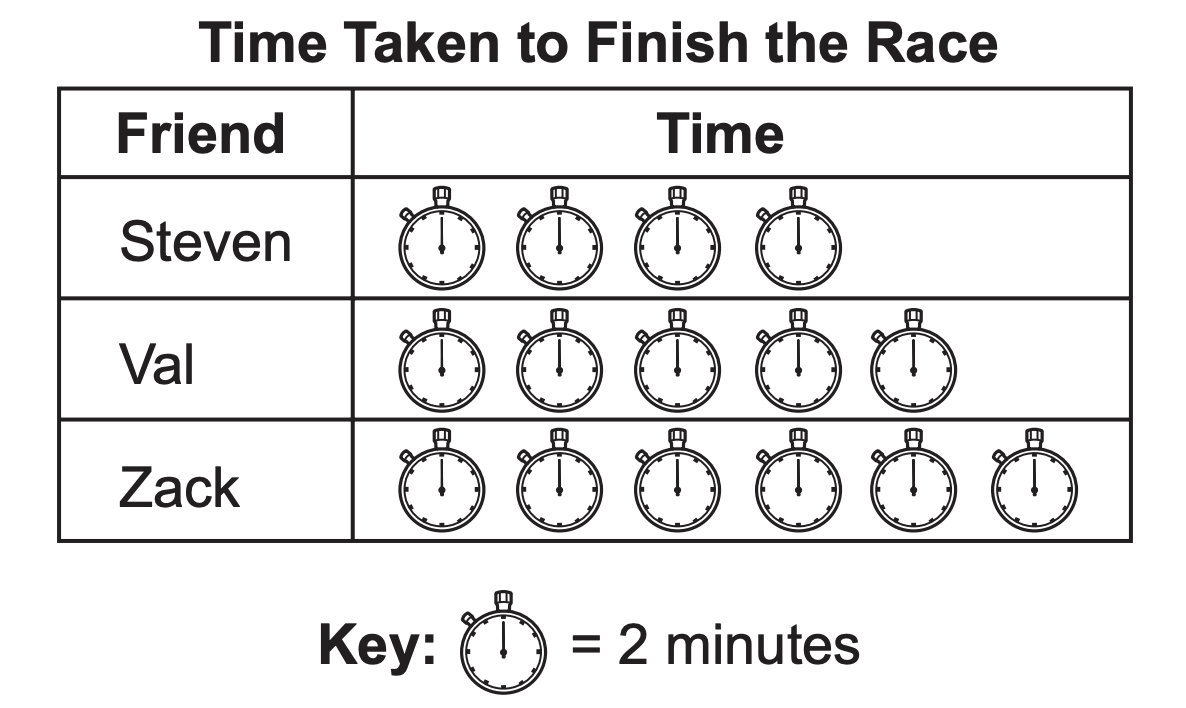
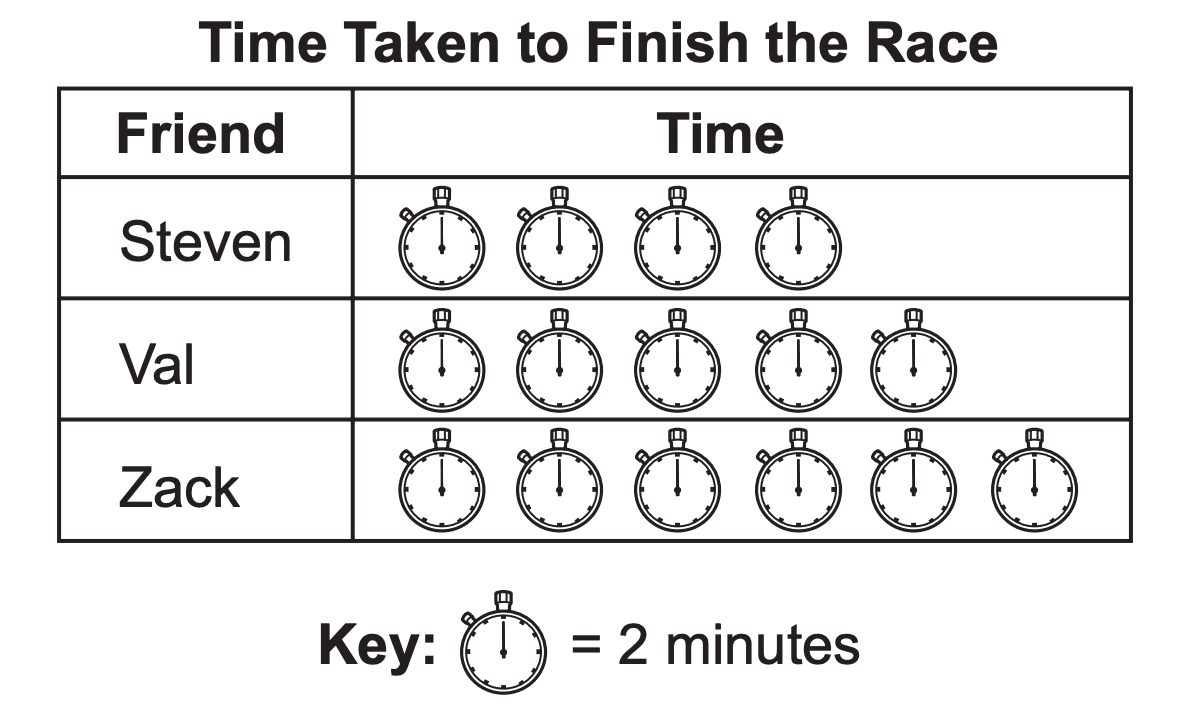
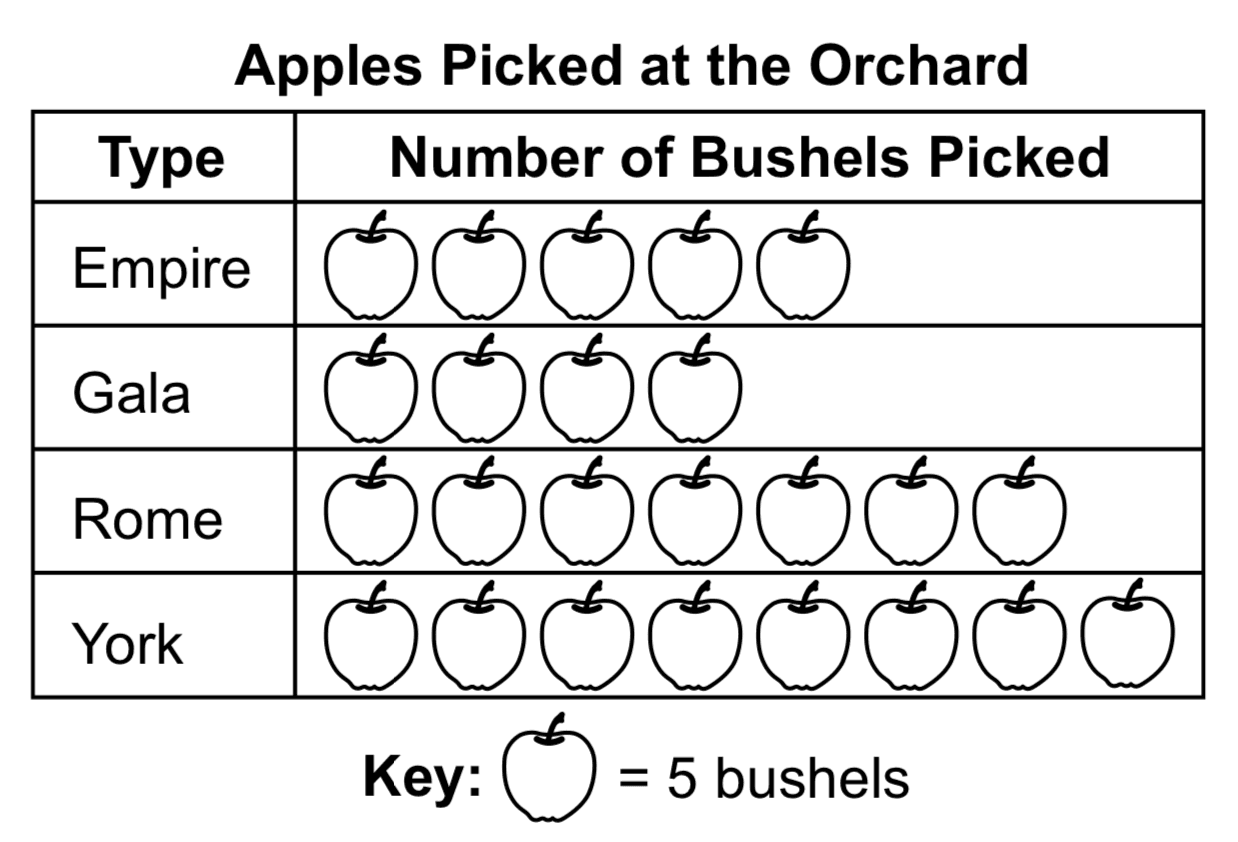
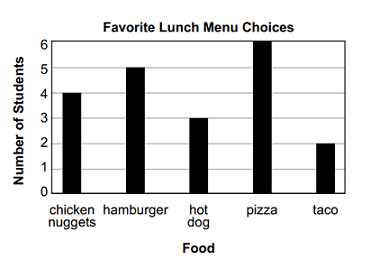
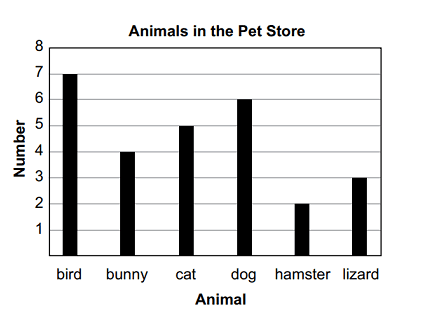
Solve one- and two-step problems using information to interpret data presented in scaled pictographs and scaled bar graphs (scales limited to 1, 2, 5, and 10). Example 1: (One-step) “Which category is the largest?” Example 2: (Two-step) “How many more are in category A than in category B?”
Calculate elapsed time to the minute in a given situation (total elapsed time limited to 60 minutes or less).
Make change for an amount up to $5.00 with no more than $2.00 change given (penny, nickel, dime, quarter, and dollar).
Round amounts of money to the nearest dollar.
Translate information from one type of display to another. Limit to pictographs, tally charts, bar graphs, and tables. Example: Convert a tally chart to a bar graph.
Find the areas of plane figures.
Multiply side lengths to find areas of rectangles with whole-number side lengths in the context of solving real-world and mathematical problems, and represent whole-number products as rectangular areas in mathematical reasoning.
Solve real-world and mathematical problems involving perimeters of polygons, including finding the perimeter given the side lengths, finding an unknown side length, exhibiting rectangles with the same perimeter and different areas, and exhibiting rectangles with the same area and different perimeters. Use the same units throughout the problem.
Use a ruler to measure lengths to the nearest quarter inch or centimeter.
Generate measurement data by measuring lengths using rulers marked with halves and fourths of an inch. Display the data by making a line plot, where the horizontal scale is marked in appropriate units—whole numbers, halves, or quarters.
Organize, display, and answer questions based on data.
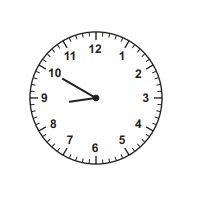
Tell, show, and/or write time (analog) to the nearest minute.
Find and use the perimeters of plane figures.
Track each student's skills and progress in your Mastery dashboards