Solve problems involving length, weight (mass), liquid volume, time, area, and perimeter.
Use the four operations to solve word problems involving distances, intervals of time (such as elapsed time), liquid volumes, masses of objects; money, including problems involving simple fractions or decimals; and problems that require expressing measurements given in a larger unit in terms of a smaller unit.
Identify time (analog or digital) as the amount of minutes before or after the hour. Example 1: 2:50 is the same as 10 minutes before 3:00. Example 2: Quarter past six is the same as 6:15.
Solve problems involving addition and subtraction of fractions by using information presented in line plots (line plots must be labeled with common denominators, such as 1/4, 2/4, 3/4).
Make a line plot to display a data set of measurements in fractions of a unit (e.g., intervals of 1/2, 1/4, or 1/8).
Use appropriate tools and units to sketch an angle and determine angle measurements.
Solve addition and subtraction problems to find unknown angles on a diagram in real-world and mathematical problems. (Angles must be adjacent and non-overlapping.)
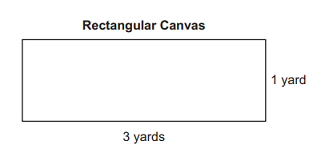
Apply the area and perimeter formulas for rectangles in real-world and mathematical problems (may include finding a missing side length). Whole numbers only. The formulas will be provided.
Translate information from one type of display to another (table, chart, bar graph, or pictograph).
Measure angles in whole-number degrees using a protractor. With the aid of a protractor, sketch angles of specified measure.
Organize, display, and answer questions based on data.
Know relative sizes of measurement units within one system of units including standard units (in., ft, yd, mi; oz., lb; and c, pt, qt, gal), metric units (cm, m, km; g, kg; and mL, L), and time (sec, min, hr, day, wk, mo, and yr). Within a single system of measurement, express measurements in a larger unit in terms of a smaller unit. A table of equivalencies will be provided. Example 1: Know that 1 kg is 1,000 times as heavy as 1 g. Example 2: Express the length of a 4-foot snake as 48 in.
Track each student's skills and progress in your Mastery dashboards