Identify basic cloud types (i.e., cirrus, cumulus, stratus, and cumulonimbus) and make connections to basic elements of weather (e.g., changes in temperature, precipitation).
Identify weather patterns from data charts or graphs of the data (e.g., temperature, wind direction, wind speed, cloud types, precipitation).
Track each student's skills and progress in your Mastery dashboards
Give this quiz to my class
Q 1/5
Score 0
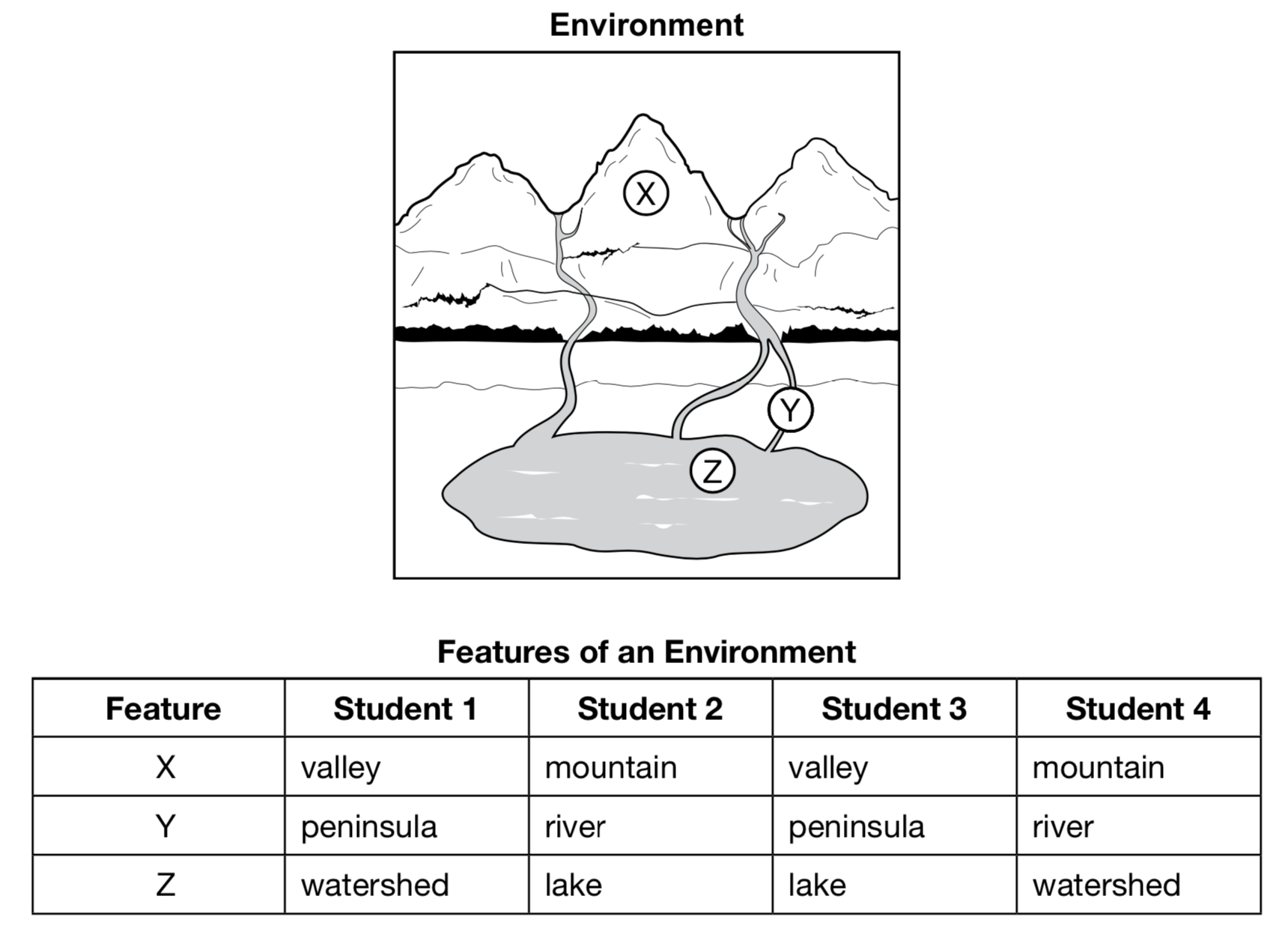
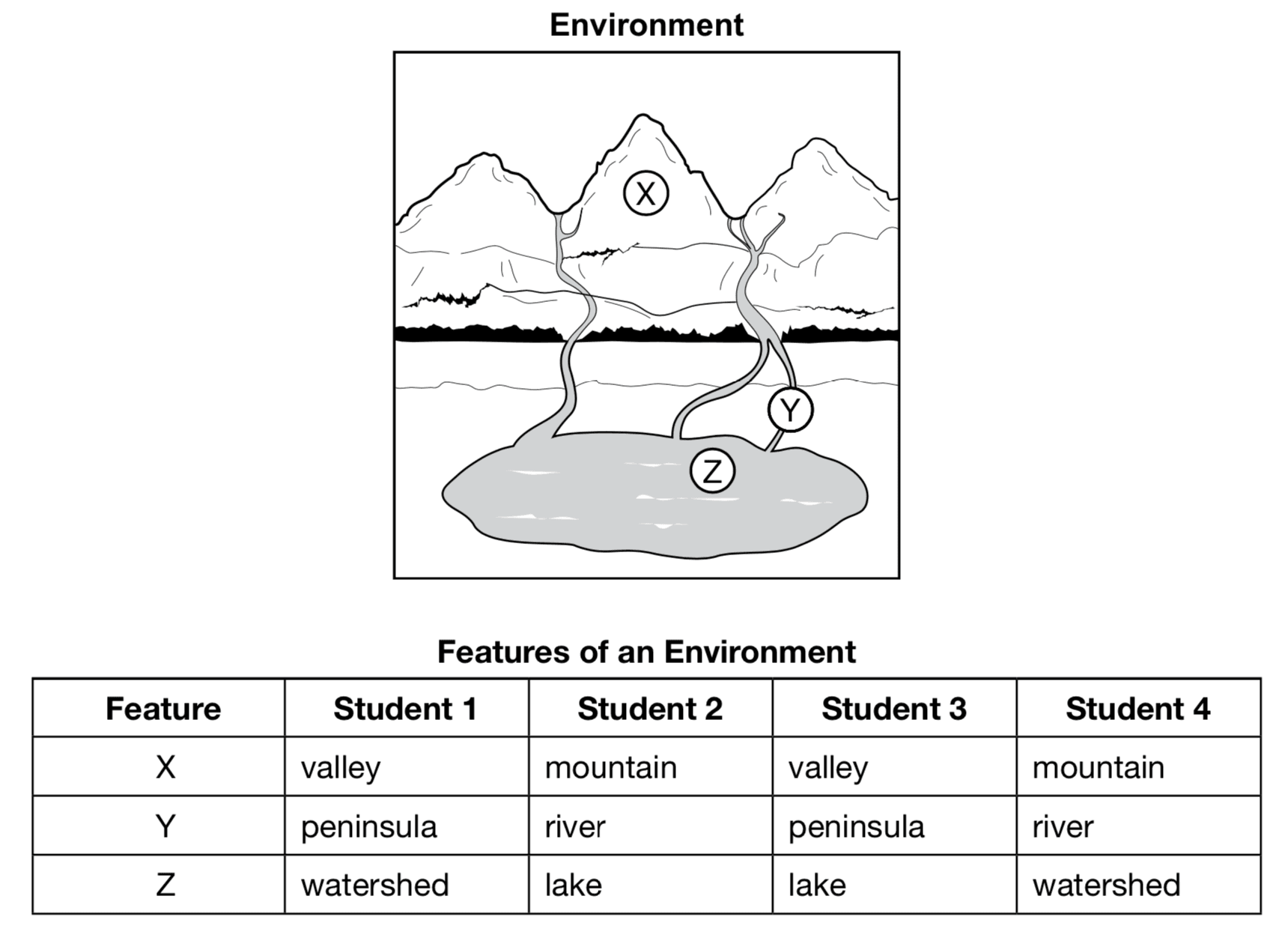
Use the drawing and chart below to answer the question.
Which student correctly labeled the environmental features?
60
student 1
student 4
student 3
student 2
Q 2/5
Score 0
Which statement BEST describes a pond?
60
It is made of fresh water that does not freeze.
It is made of fresh water that does not flow.
It is made of salt water that is frozen.
It is made of salt water that is flowing.
5 questions
Q.
Use the drawing and chart below to answer the question.
Which student correctly labeled the environmental features?
1
60 sec
S4.D.1.1.2
Q.
Which statement BEST describes a pond?
2
60 sec
S4.D.1.3.3
Q.
In late spring, a student notices very tall, puffy clouds forming quickly in the sky. The clouds seem to be getting taller and are turning dark gray. Which weather forecast can BEST be made from these observations?
3
60 sec
S4.D.2.1.1
Q.
A student lives near a lake. Which observation is the student MOST LIKELY to make about the lake?
4
60 sec
S4.D.1.3.1
Q.
Use the weather map below to answer the question.
Which type of front is likely to arrive soon in Philadelphia?