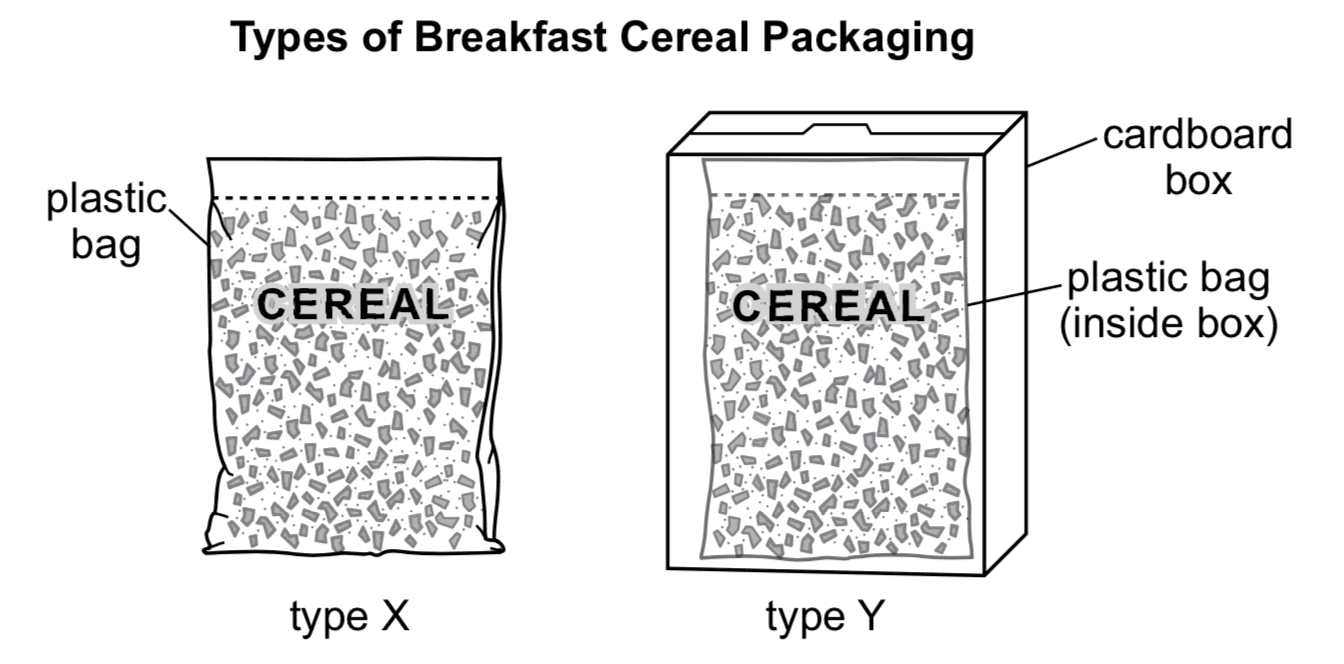
Identify and describe examples of common technological changes past to present in the community (e.g., energy production, transportation, communications, agriculture, packaging materials) that have either positive or negative impacts on society or the environment.
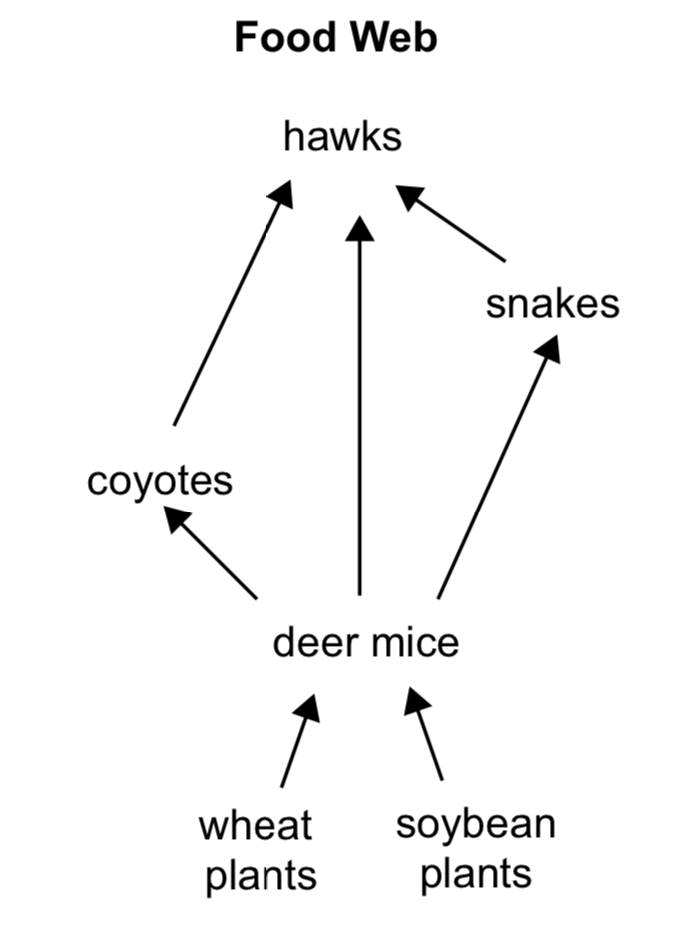
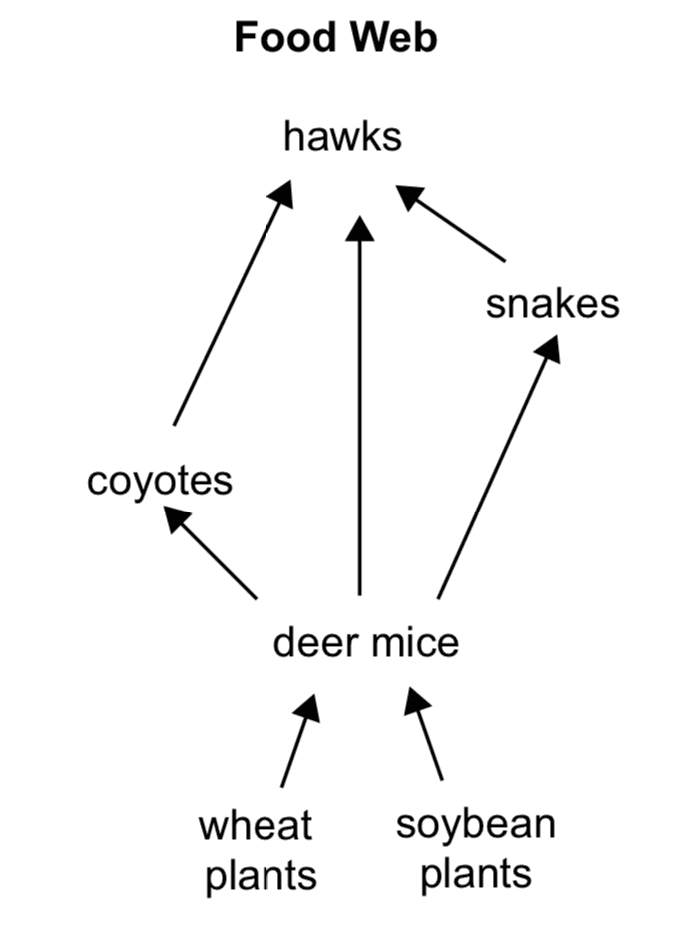
Explain what happens to a living organism when its food supply, access to water, shelter, or space is changed (e.g., it might die, migrate, change behavior, eat something else).
Provide examples, predict, or describe how everyday human activities (e.g., solid waste production, food production and consumption, transportation, water consumption, energy production and use) may change the environment.
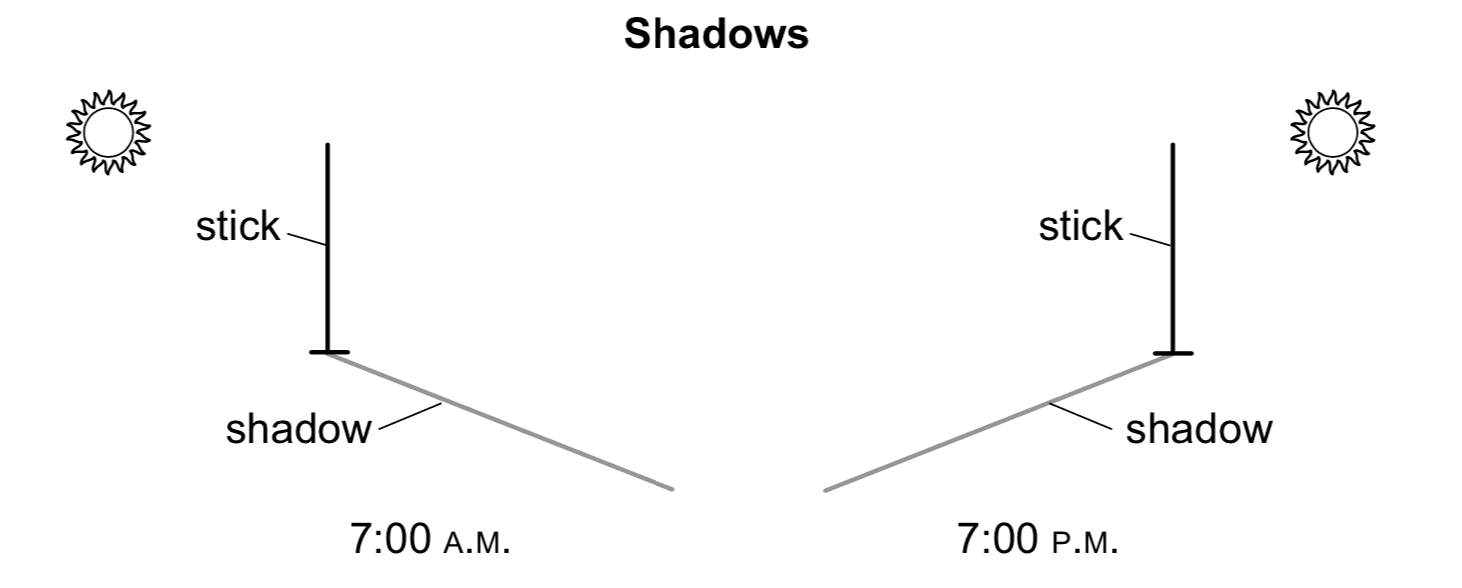
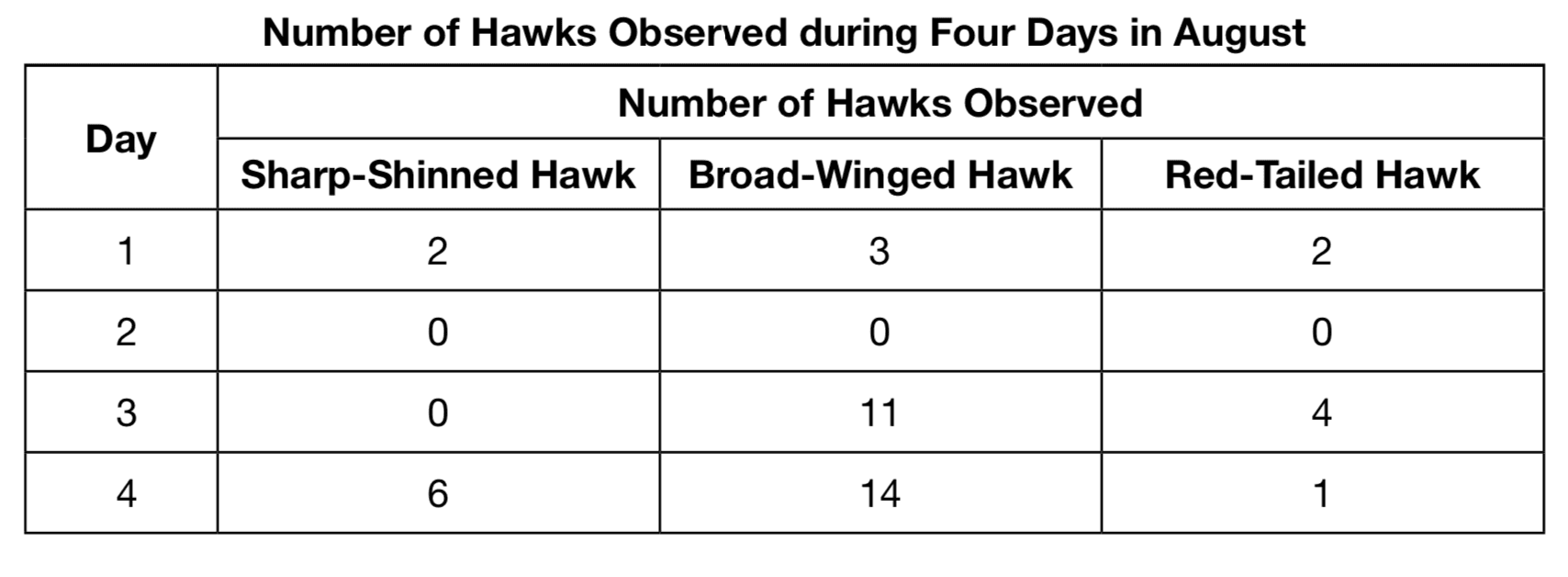
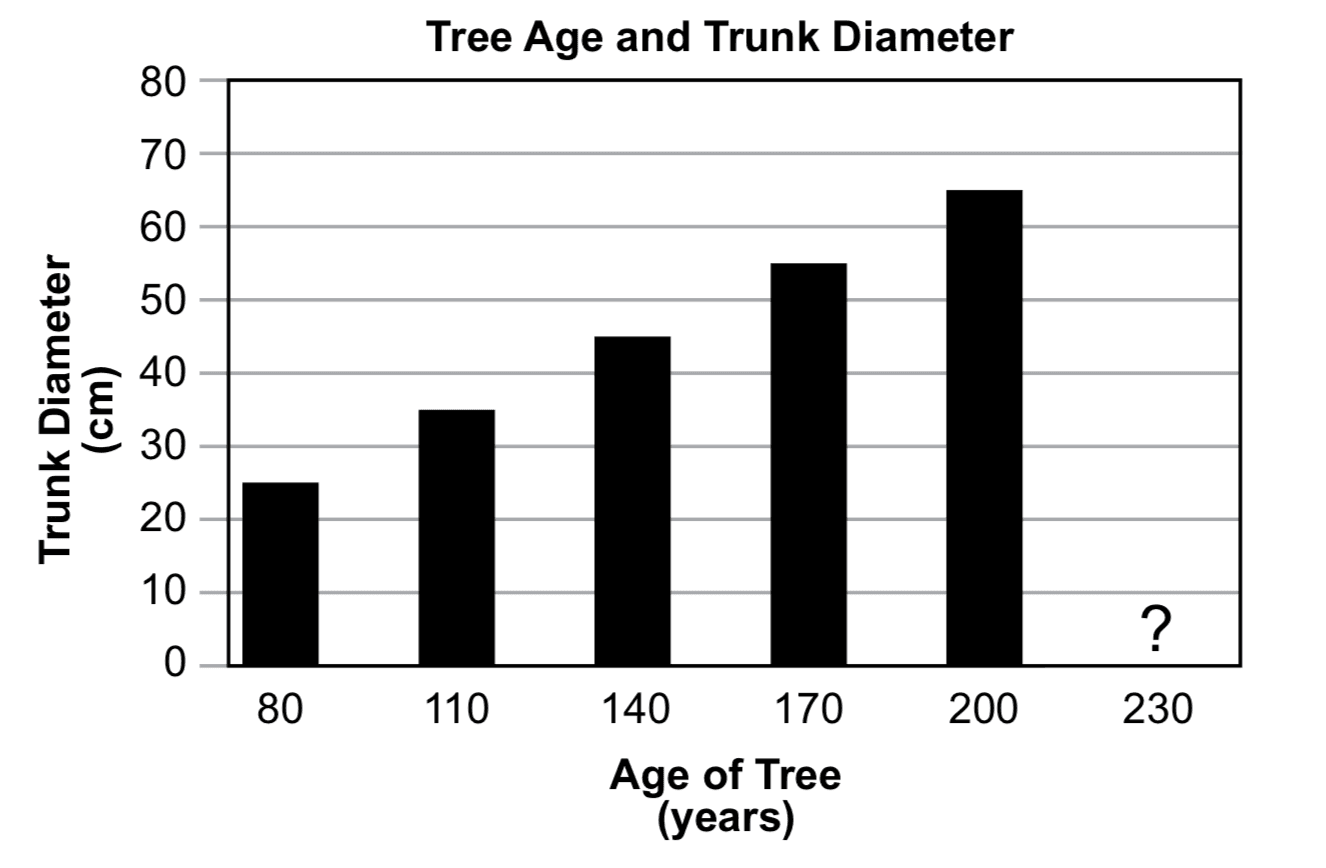
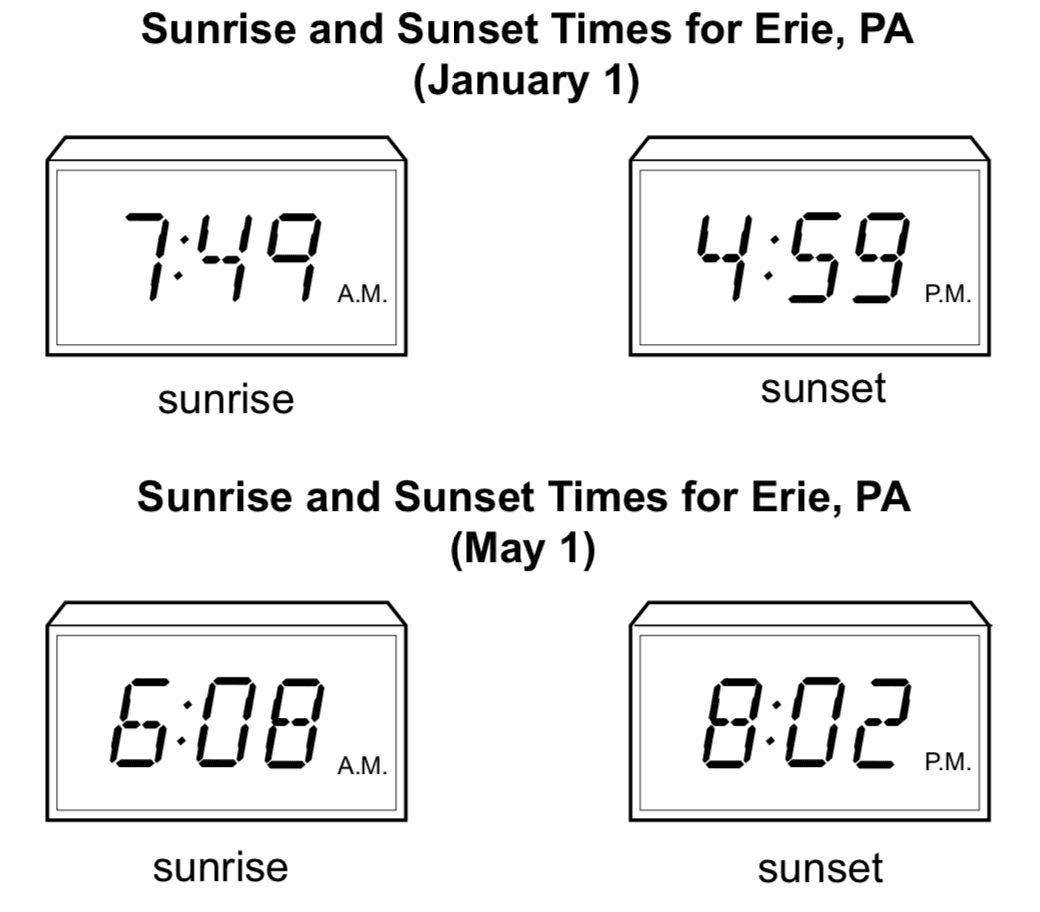
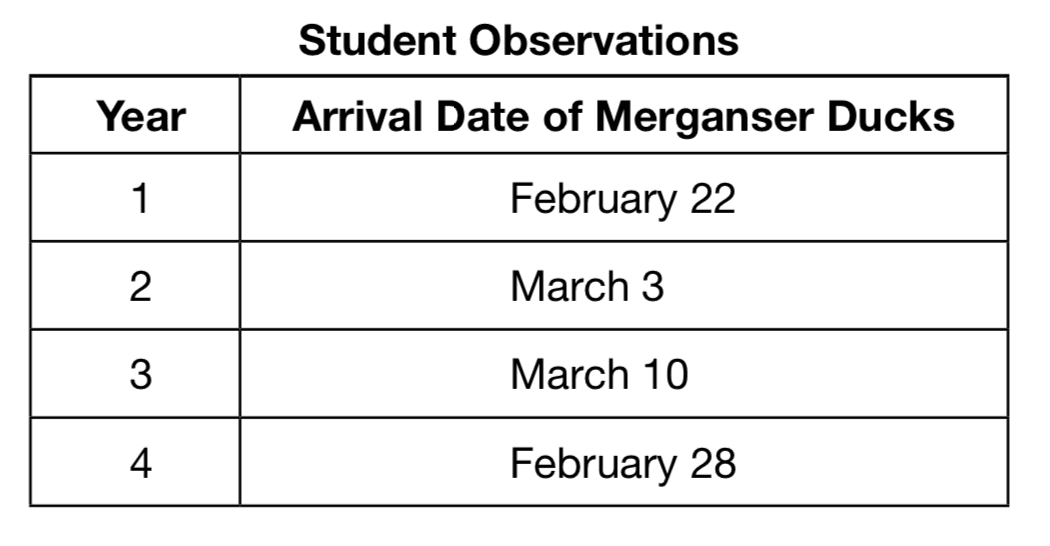
Observe a natural phenomenon (e.g., weather changes, length of daylight/night, movement of shadows, animal migrations, growth of plants), record observations, and then make a prediction based on those observations.
State a conclusion that is consistent with the information/data.
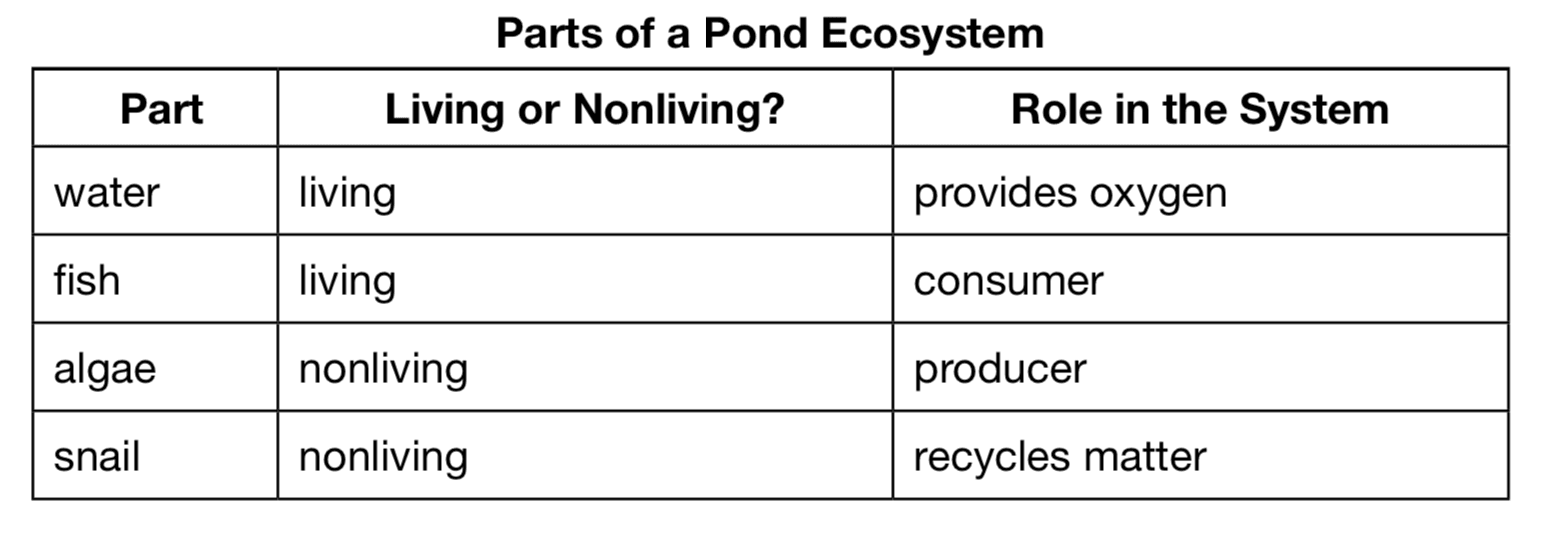
Categorize the parts of an ecosystem as either living or nonliving and describe their roles in the system.
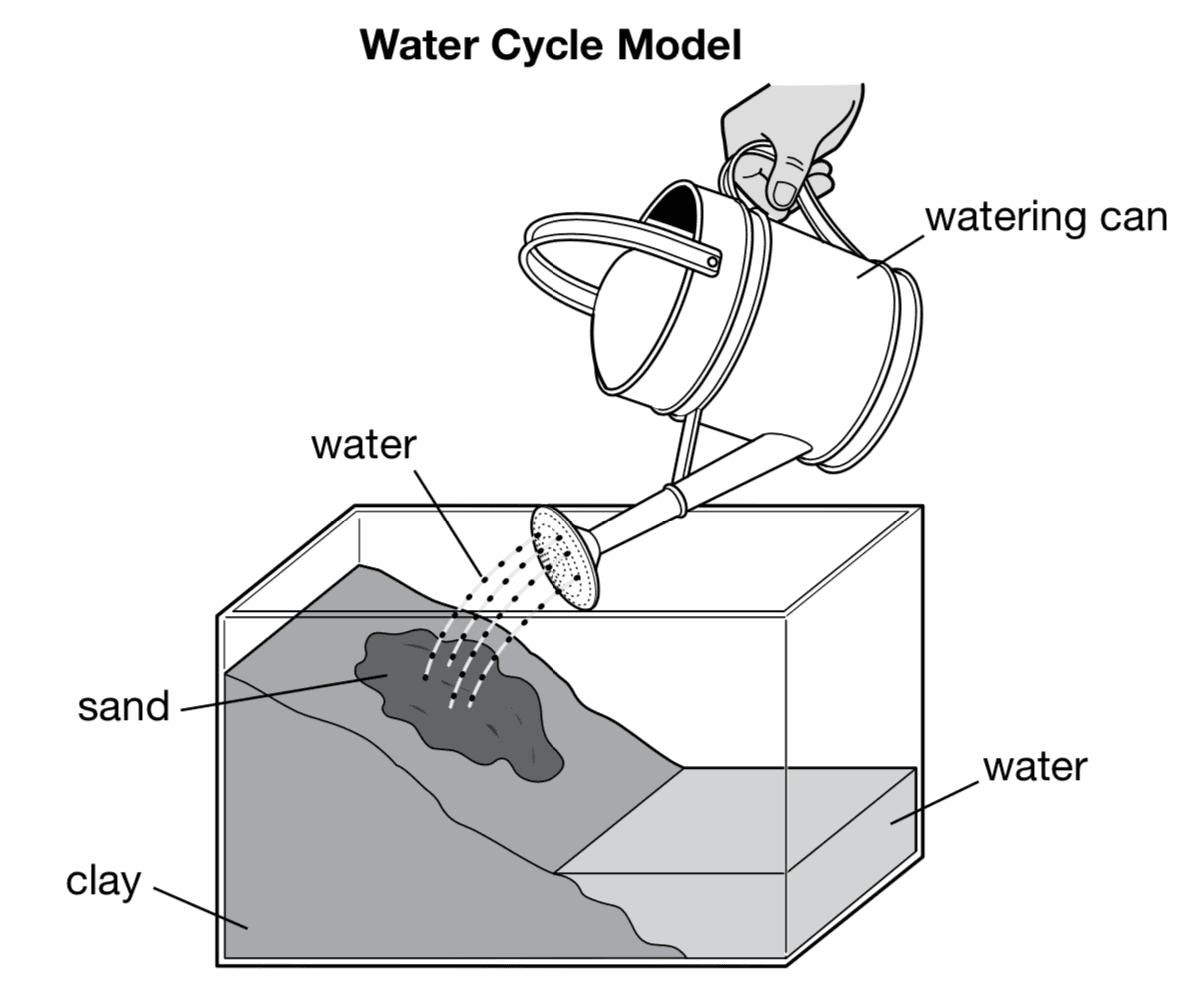
Use models to make observations to explain how systems work (e.g., water cycle, Sun-Earth-Moon system).
Predict future conditions/events based on observable patterns (e.g., day/night, seasons, sunrise/sunset, lunar phases).
Observe and record change by using time and measurement.
Design and describe an investigation (a fair test) to test one variable.
Categorize systems as either natural or human-made (e.g., ballpoint pens, simple electrical circuits, plant anatomy, water cycle).
Explain a relationship between the living and nonliving components in a system (e.g., food web, terrarium).
Track each student's skills and progress in your Mastery dashboards