Solve problems involving operations (+, –, ×, and ÷) with whole numbers, decimals (through thousandths), straight computation, or word problems.
Solve real-world and mathematical problems involving division of fractions.
Find the greatest common factor of two whole numbers less than or equal to 100 and the least common multiple of two whole numbers less than or equal to 12.
Determine the opposite of a number and recognize that the opposite of the opposite of a number is the number itself (e.g., – ( – 3) = 3; 0 is its own opposite).
Interpret the absolute value of a rational number as its distance from 0 on the number line and as a magnitude for a positive or negative quantity in a real-world situation. Example: For an account balance of – 30 dollars, write |– 30| = 30 to describe the size of the debt in dollars, and recognize that an account balance less than – 30 dollars represents a debt greater than 30 dollars.
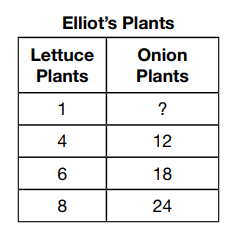
Construct tables of equivalent ratios relating quantities with whole-number measurements, find missing values in the tables, and/or plot the pairs of values on the coordinate plane. Use tables to compare ratios.
Write and evaluate numerical expressions involving whole-number exponents.
Evaluate expressions at specific values of their variables, including expressions that arise from formulas used in real-world problems. Example: Evaluate the expression b2 – 5 when b = 4.
Create, solve, and interpret onevariable equations or inequalities in real-world and mathematical problems.
Solve real-world and mathematical problems by writing and solving equations of the form x + p = q and px = q for cases in which p, q, and x are all non-negative rational numbers.
Analyze the relationship between the dependent and independent variables using graphs and tables and/or relate these to an equation.
Find a percent of a quantity as a rate per 100 (e.g., 30% of a quantity means 30/100 times the quantity); solve problems involving finding the whole, given a part and the percentage.
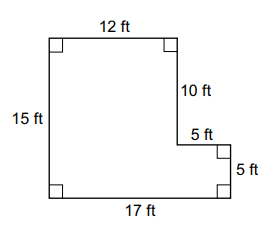
Determine the area of irregular or compound polygons. Example: Find the area of a room in the shape of an irregular polygon by composing and/or decomposing.
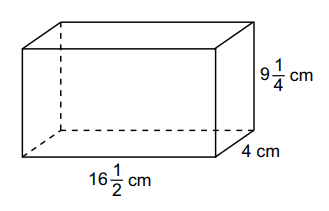
Determine the volume of right rectangular prisms with fractional edge lengths. Formulas will be provided.
Represent three-dimensional figures using nets made of rectangles and triangles.
Determine quantitative measures of center (e.g., median, mean, mode) and variability (e.g., range, interquartile range, mean absolute deviation).
Track each student's skills and progress in your Mastery dashboards