Estimate the value of irrational numbers without a calculator (limit whole number radicand to less than 144). Example: √5 is between 2 and 3 but closer to 2.
Apply concepts of rational and irrational numbers.
Use rational approximations of irrational numbers to compare and order irrational numbers.
Locate/identify rational and irrational numbers at their approximate locations on a number line.
Perform operations with numbers expressed in scientific notation, including problems where both decimal and scientific notation are used. Express answers in scientific notation and choose units of appropriate size for measurements of very large or very small quantities (e.g., use millimeters per year for seafloor spreading). Interpret scientific notation that has been generated by technology (e.g., interpret 4.7EE9 displayed on a calculator as 4.7 × 10^9 ).
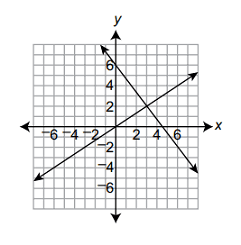
Interpret solutions to a system of two linear equations in two variables as points of intersection of their graphs because points of intersection satisfy both equations simultaneously.
Solve real-world and mathematical problems leading to two linear equations in two variables. Example: Given coordinates for two pairs of points, determine whether the line through the first pair of points intersects the line through the second pair.
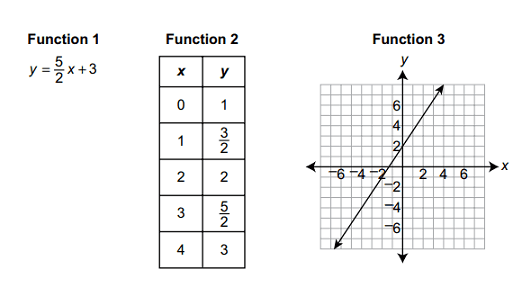
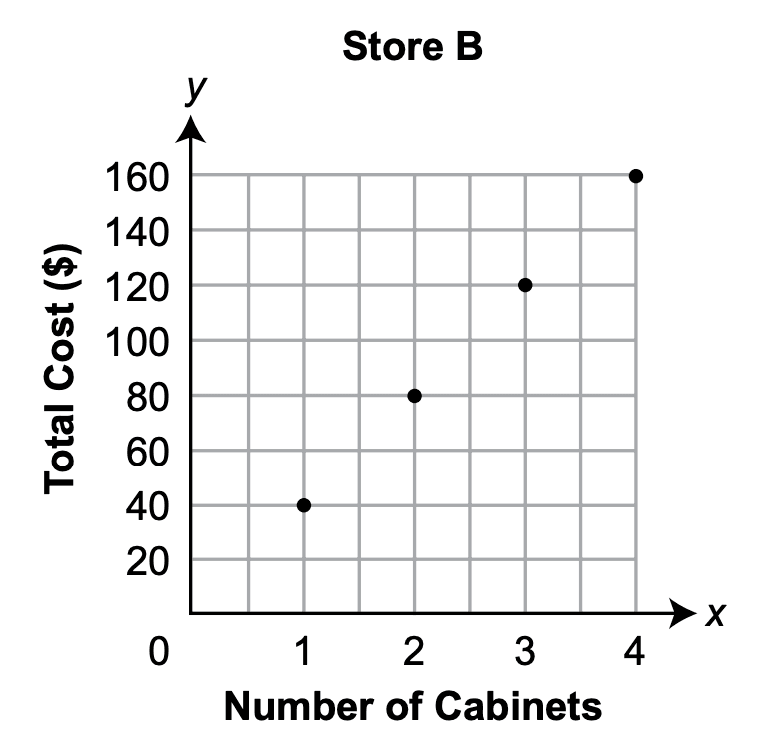
Define, evaluate, and compare functions displayed algebraically, graphically, or numerically in tables or by verbal descriptions.
Determine whether a relation is a function.
Compare properties of two functions, each represented in a different way (i.e., algebraically, graphically, numerically in tables, or by verbal descriptions). Example: Given a linear function represented by a table of values and a linear function represented by an algebraic expression, determine which function has the greater rate of change.
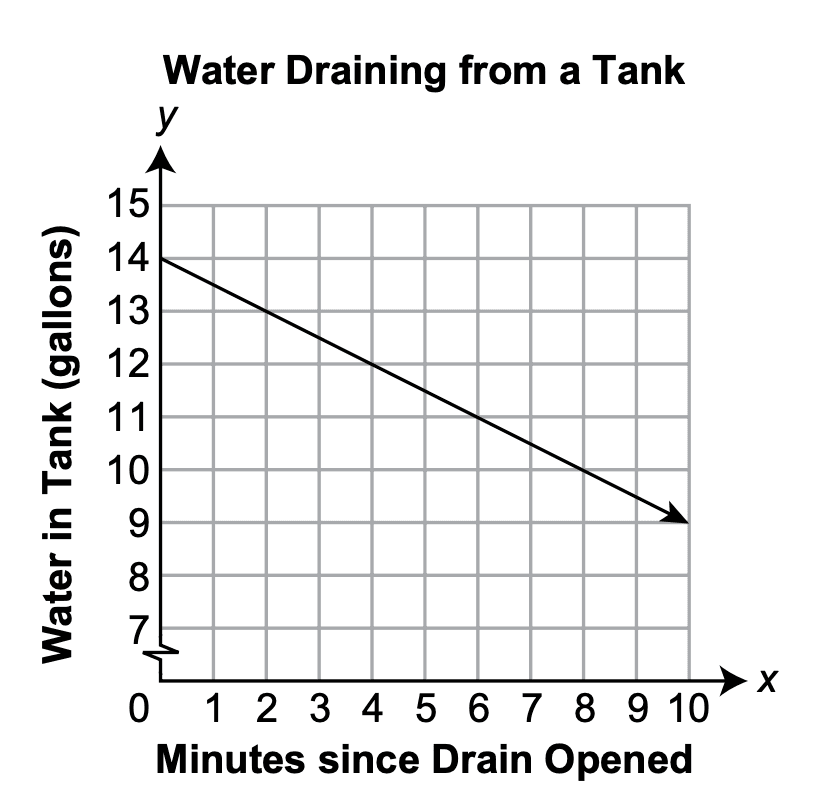
Describe qualitatively the functional relationship between two quantities by analyzing a graph (e.g., where the function is increasing or decreasing, linear or nonlinear). Sketch or determine a graph that exhibits the qualitative features of a function that has been described verbally.
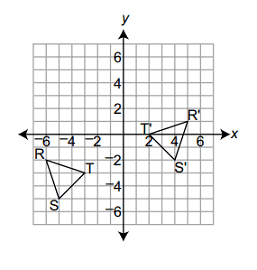
Apply properties of geometric transformations to verify congruence or similarity.
Apply the Pythagorean theorem to determine unknown side lengths in right triangles in real-world and mathematical problems in two and three dimensions. (Figures provided for problems in three dimensions will be consistent with Eligible Content in grade 8 and below.)
Apply formulas for the volumes of cones, cylinders, and spheres to solve real-world and mathematical problems. Formulas will be provided.
Track each student's skills and progress in your Mastery dashboards