Loading...


SCI7_1Q_PRE-TEST 06.16.25
Quiz by Marvin Velasco
Track each student's skills and progress in your Mastery dashboards
Why do scientists use models?
What happens to the particles of a material being heated?
Which of the following shows how particles behave when heated?
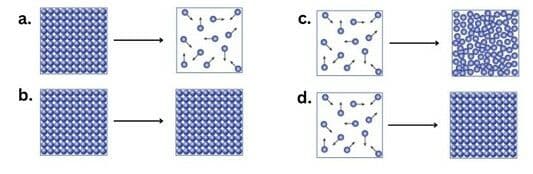
What is the characteristic of solid particles as seen in its particle model?
An unknown white substance is heated and produced white smoke and black solid. What do you think is this substance?
What is the movement of the particles in a gas?
Which has a direct relationship with temperature?
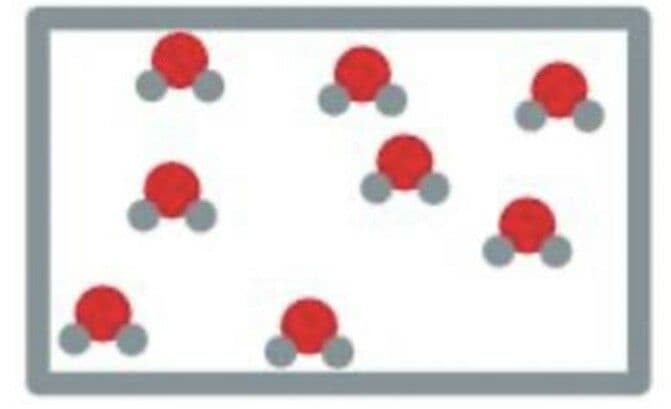
Given this particle model of water, what do you think is the state it is in?
Which of the following states of matter has particles arranged most closely together?
What term describes the process of a liquid changing into a gas at its surface?
What is the opposite process of freezing?
What process is involved in everyday fog formation?
It is define as a step-by-step process scientists use to answer questions about the world.
A compinent of Scientific Investigation that answer the question you want to answer through your experiment.
A component of Scientific Investigation that pertains to the tools and supplies you need to conduct your experiment.
A component of Scientific Investigation that deals with your explanation of what your results mean and how they answer your initial question.
Which is the dependent variable?
Which are the controlled variables?
I. water temperature
II. amount of water
III. amount of sugar
IV. dissolving time of sugar
V. stirring time
Mary wants to know at which temperature does the salt dissolve faster in water.
What is the dependent variable in the situation?
How can a scientist know if his/her hypothesis is effective or not?
Which is an example of a solution?
The two components of a solution are solute and solvent. Which statement describes the solute?
Which happens if you mix juice powder with water?
What is the solvent in a cup of milk?
In a solution, what do you call the substance in a larger amount?
What type of solution has small amount of solute and more solute would dissolve if added?
When a solution cannot dissolve no more solute because it is at its maximum solute level, how can the solution be described?
Which type of solution contains too much solute and will not dissolve but appears to be thick and crystallizes rapidly?
You are given 40mL solution in a beaker. You add more solute and observed that some particles did not dissolve. What type of solution is it?
How will you prepare an unsaturated solution?
Which of the following refers to the amount of matter in an object?
Which of the following refers to the amount of space occupied by matter?
Which process or processes affects the speed of dissolving?
Which factor would not affect the solubility of sugar in water?
How does shaking or stirring a mixture of solute and solvent affect a solution?
These are the factors affecting the solubility of the substance EXCEPT:
Acids gives some foods a/an ________ taste.
Which among the following solutions are acid?
Which of the following solutions are base?