Compare and contrast potential and kinetic energy;
Track each student's skills and progress in your Mastery dashboards
Give this quiz to my class
Q 1/6
Score 0
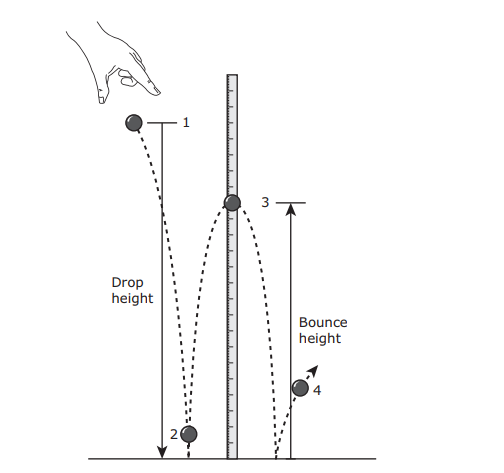
In the classroom demonstration shown below, a rubber ball is dropped from Position 1. The ball bounces as shown. At which of these positions does the ball have both the greatest kinetic energy and the least potential energy?
60
Position 3
Position 1
Position 4
Position 2
Q 2/6
Score 0
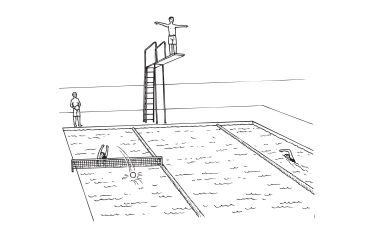
Four students were asked to classify the activities of the people in the picture below as examples of either potential or kinetic energy. Which student correctly classified the activities?
60
6 questions
Q.
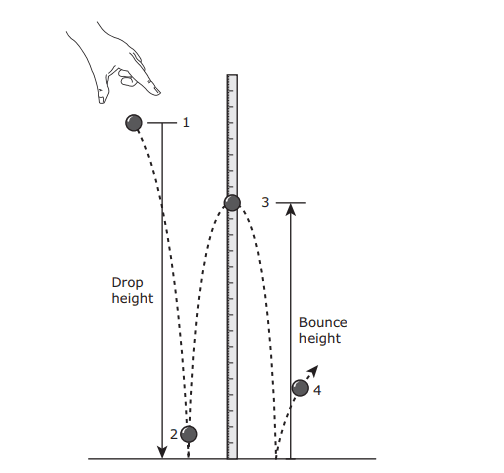
In the classroom demonstration shown below, a rubber ball is dropped from Position 1. The ball bounces as shown. At which of these positions does the ball have both the greatest kinetic energy and the least potential energy?
1
60 sec
6.8a
Q.
Four students were asked to classify the activities of the people in the picture below as examples of either potential or kinetic energy. Which student correctly classified the activities?
2
60 sec
6.8a
Q.
A student drew the diagram below to show the movement of water through a hydroelectric dam. The student used the diagram to describe changes in the potential and kinetic energy of the water. At which location is the gravitational potential energy of the water the greatest?
3
60 sec
6.8a
Q.
The drawing shows two identical airplanes at an air show. The airplanes are flying at the same speed. Airplane W is flying 50 m higher than Airplane X. Which statement best describes the energy of the two airplanes?
4
60 sec
6.8a
Q.
A bicycle rider is traveling up a hill. When the rider reaches the top of the hill, she stops to rest. Then she travels down the hill. The diagram shows the rider in the three different positions. Which of these correctly describes the potential energy and the kinetic energy of the bicycle rider?
5
60 sec
6.8a
Q.
A demonstration helps students understand a principle of roller coaster design.
Which answer choice correctly describes the ball’s kinetic and potential energy?