Loading...


Waves Intro GCSE
Quiz by Kirstin Valente
Customize this quiz to suit your class
Instantly translate to 100+ languages
Tag the questions with any skills you have. Your dashboard will track each student's mastery of each skill.
Give this quiz to my class
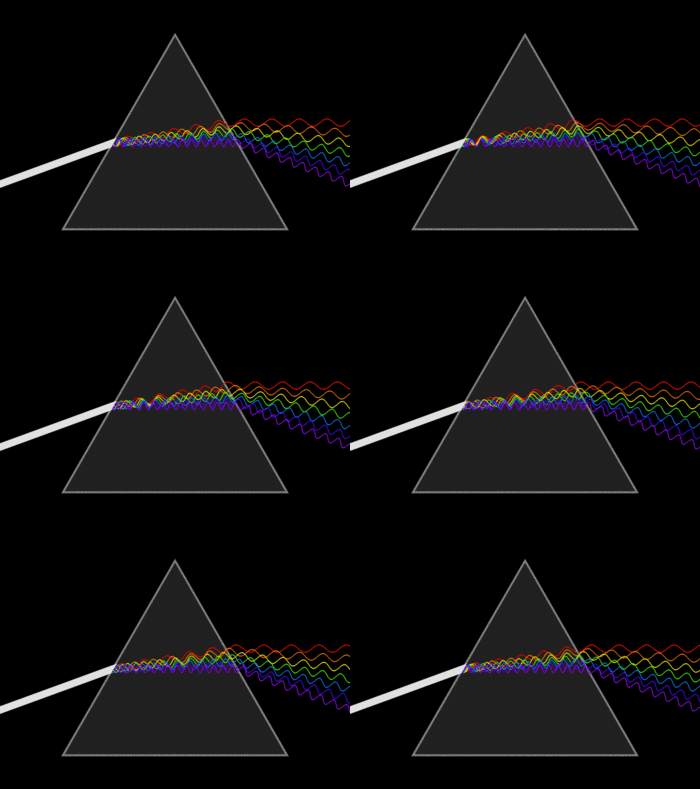
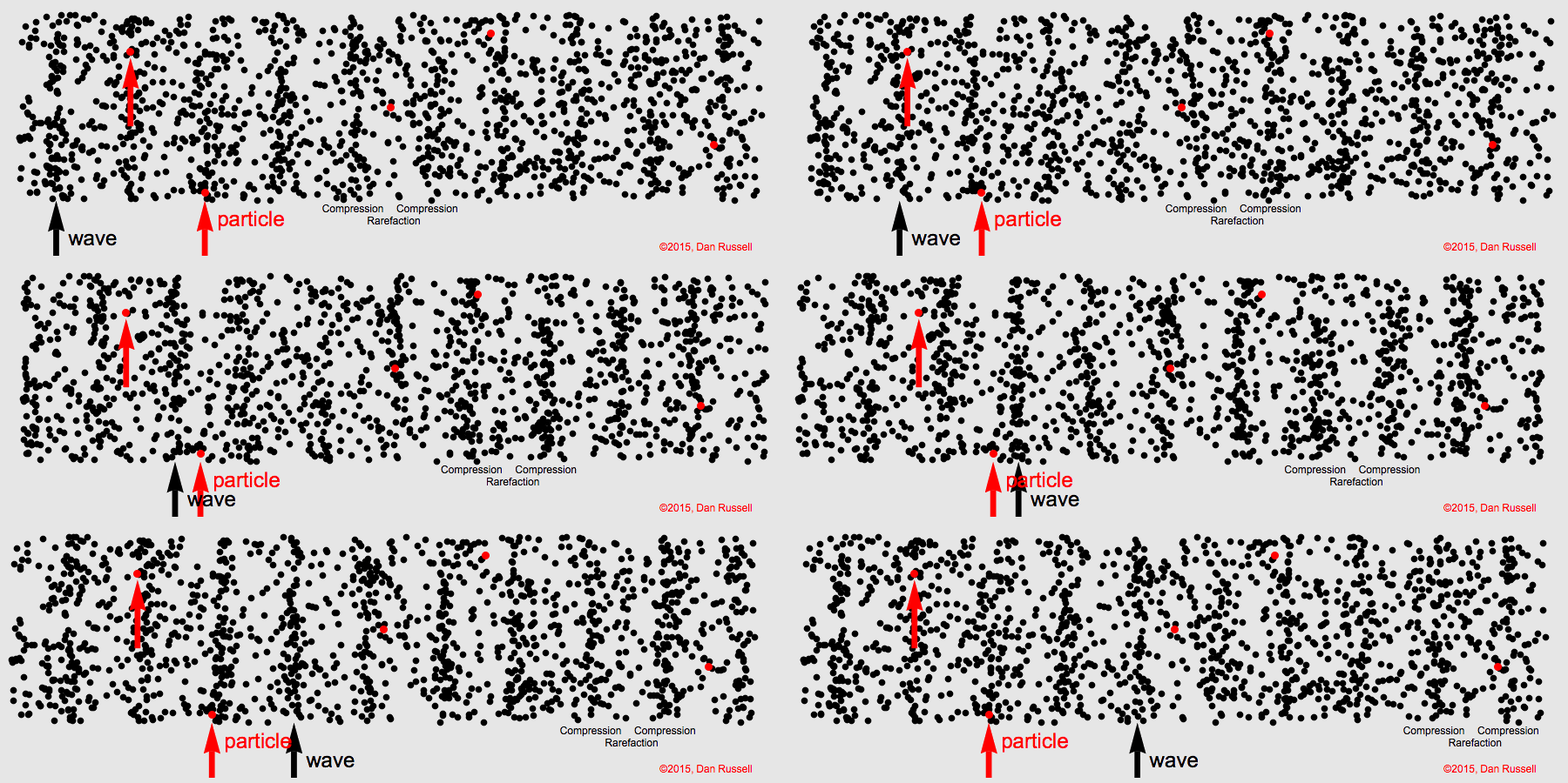
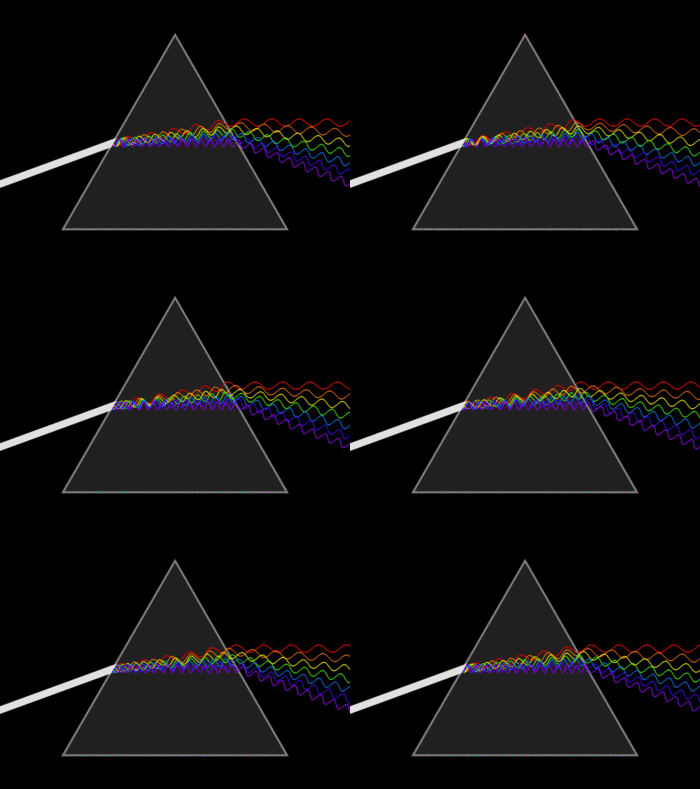

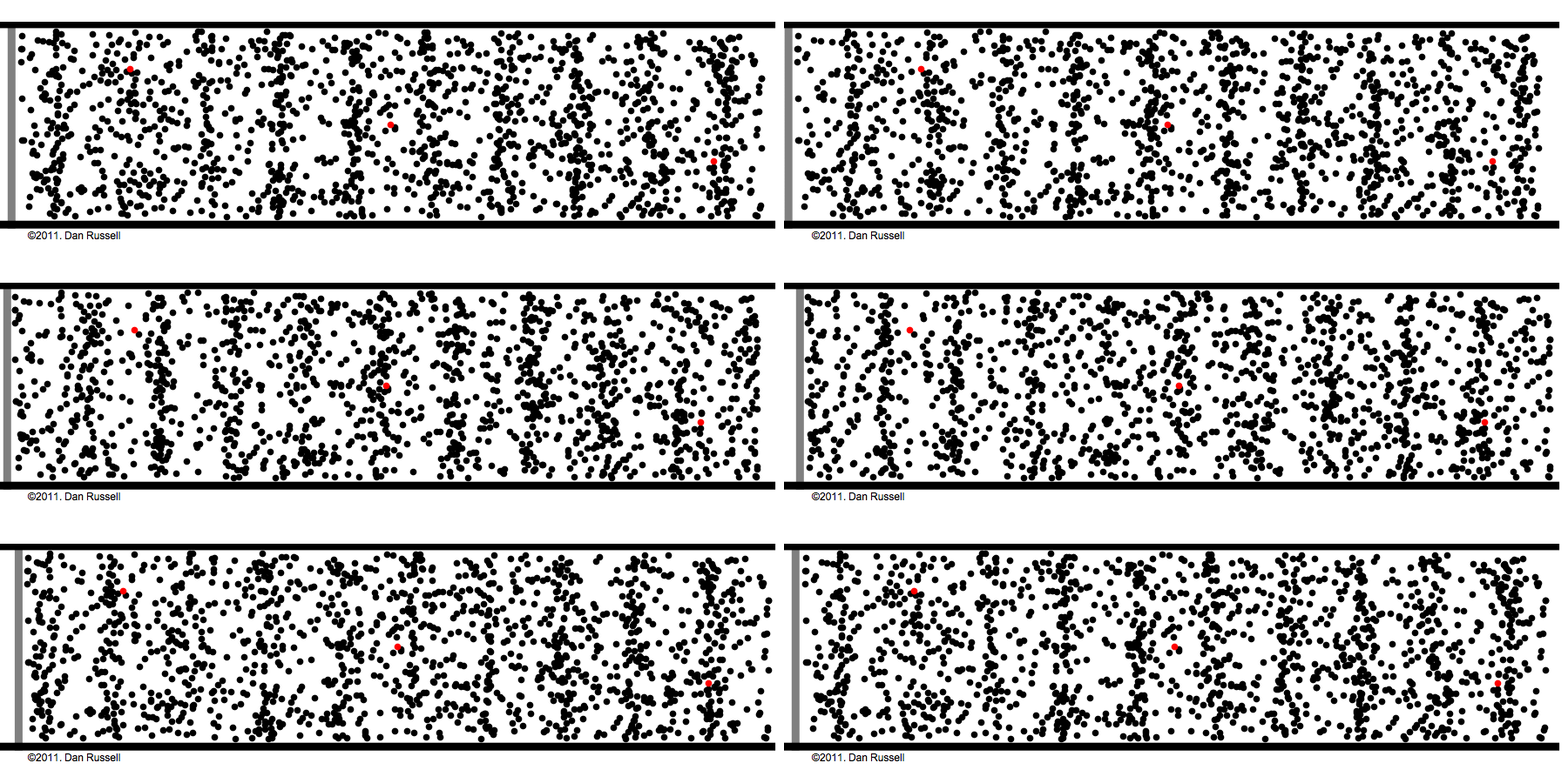 Waves IntroWaves Intro Quiz HL MSIntro to WavesInto the Sea What Is Erosion? Have you ever made a sand castle at the beach? You must pick a good spot for it. If it is too close to the water, waves will quickly wash it away. Ocean waves and wind can also wash away land. They can change the shape of an island, which is land circled by water. When wind and water change the shape of Earth, it is called erosion. Waves are the biggest cause of erosion at the beach. Ocean waves are always active and moving onto the shore. They carry the sand away bit by bit. Strong waves are one of the properties of big storms. These waves explode as they crash onto the beach. Storm waves can move a lot of sand quickly. Erosion of Beaches. Some people build houses near the ocean. Waves take away the sand between the houses and the sea. As the beach disappears, the water gets closer to houses and other solid buildings on the beach. Some buildings can even be washed away. Erosion of Rocks. Erosion also happens on steep, rocky cliffs or sharp slopes. First, waves smash into the bottom of the cliffs. Then they carry away tiny pieces of rock. Over time, many small pieces of rock wash away from the bottom of the cliff. This makes the top of the cliff weak.The cliff can crumble and fall into the sea. Stopping Erosion. Some local communities work to stop erosion to nearby beaches. These towns have built sea walls of large boulders or rocks. The rocks are placed in a row in the sea. When waves hit the sea wall, they slow down. Then the waves can't pull sand away.Some towns make rules about buildings on the beach. New buildings must be far from the water. Then they won't wash away like a sand castle.Intro to Wave PropertiesLakes and Ponds Fractions Imagine that Some streams and rivers feed into lakes. Most lakes have fresh water. There are also some salt water lakes. Lakes are very large bodies of water ~ fhe pie info four equal that have land around them on all P . i heleirfacelofEarth is a pie. You can cut o Alnoittiee t sides, except where streams flow into and out of them. They are usually deeper than rivers. You can see waves when the wind blows on the water. Some lakes are called ponds.When television first started, the system of broadcasting was analogue. This meant that a TV aerial received radio waves from the TV companies. These transformed into sound and images on the TV screen. At the time, the system was revolutionary, but it wasn't perfect. It couldn't transmit many channels and the quality of the pictures was sometimes poor because of interference. For a long time there was only analogue I, but at the end of the 1990s, digital television arrived. Digital TV doesn't use radio waves. Instead, it converts sound and images into binary code. This is a computer language which only consists of zeros and ones and broadcasters can use it to send a lot of information very quickly. This digital information arrives at a TV via an aerial, a cable, a satellite dish, or broadband. Then a decoder converts the information back to sound and images. Decoders are either inside a TV or computer, or in a separate box which is connected to it. Digital broadcasting is much better than the analogue system. There are a lot more channels because the TV companies can transmit much more information. The quality of the images and sound is much higher because there is less interference. Picture quality is even better on a high definition TV (an HDTV) than on a standard TV, so viewers can enjoy cinema-quality pictures in their own home.How to Stop Avalanchesnow with explosives, or by erecting snow fences. Explosives Explosives are primarily used to prevent avalanches, especially at ski resorts where other methods are often impractical. Maintenance staff from the ski resort travel to potential avalanche areas and areas with steep slopes. First, they measure the depth of the snow and its quality. They want to check for hard, loose, wet or icy snow layers. If an area is considered dangerous, small explosives are fired into the side of the steep terrain. The explosion loosens the top layer of snow, which tumbles harmlessly down the mountainside. But using explosives is costly and dangerous. Some researchers are currently experimenting with the cheaper and safer method of using ultrasonic sound waves that shock the snow into falling, averting an avalanche and saving lives. Snow Fences It is very common to put up snow nets or snow fences. These nylon nets or wooden and steel fences are placed at the top of slopes. They prevent the buildup of snow on the downwind side, thereby lessening the chance of a slab avalanche. Beacons and Radio Devices Fortunately, there are companies that specialize in making rescue beacons. These are small electronic devices that send out a radio signal to search and rescue crews. Most people who venture into the backcountry carry some sort of beacon or GPS device. They can help locate a buried victim up to 80 meters away. However, these beacons and GPS devices only send out a signal if the victim turns it on. Often, the victim is too injured to think clearly and press the 'on button.' If search and rescue crews do not quickly reach the victims, the skiers will not be discovered in time. Surviving an Avalanche If you are ever caught in an avalanche, the chances are slim that you will survive. If you are not killed instantly, you only have a short time (15~35 minutes) before your oxygen runs out. Take off your ski, boots and poles. Use a swimming motion to claw your way to the surface. Often people do not know which way is up or down. The effect of this is disorientation. It is not uncommon for avalanche victims to dig in the wrong direction. With proper precautions, both skiers and ski resorts can avoid the tragedy of an avalanche.