Loading...


🚀5.11.26
Quiz by MsKHickson
Tag the questions with any skills you have. Your dashboard will track each student's mastery of each skill.
An observer in a coastal village notices that the Japanese word for this disaster translates to "harbor wave." The disaster is characterized by a massive displacement of ocean water that radiates outward in all directions. Which term describes this specific type of event?
Sudden surge
Fast ripples
Harbor waves
Water bursts
A commercial jet airplane is flying over the open ocean at its standard cruising
speed. Far below, a tsunami wave is traveling through the deep water toward a distant coastline. At what maximum speed is this wave likely traveling?
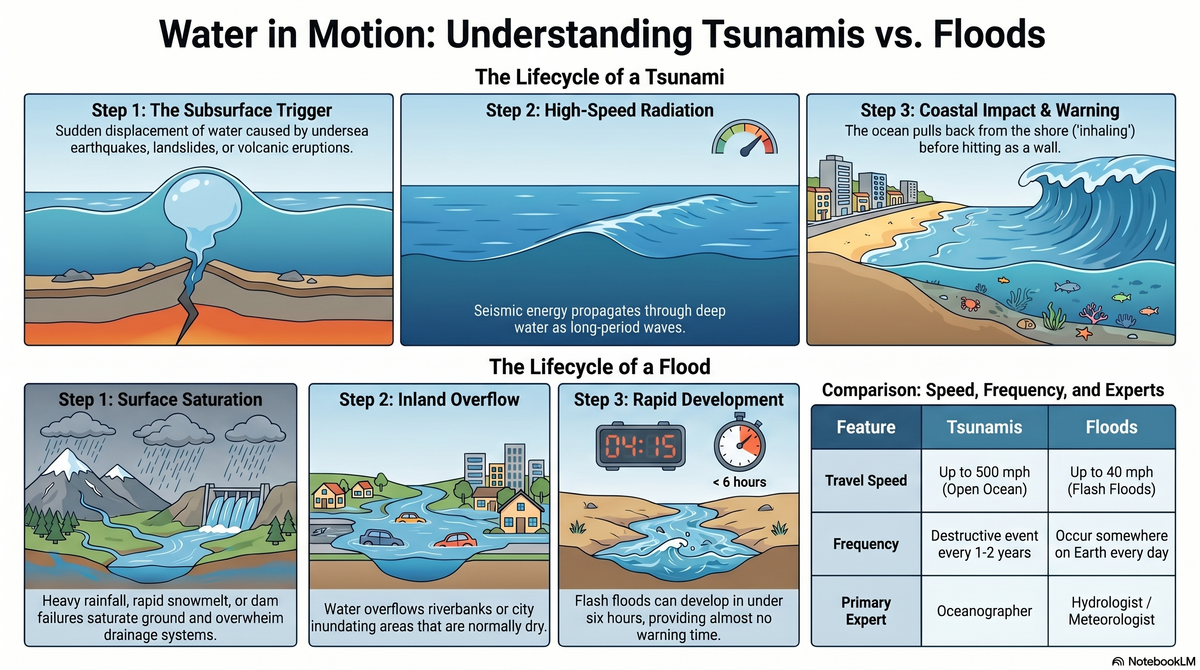
200 mph
500 mph
100 mph
800 mph
An observer in a coastal village notices that the Japanese word for this disaster translates to "harbor wave." The disaster is characterized by a massive displacement of ocean water that radiates outward in all directions. Which term describes this specific type of event?
A commercial jet airplane is flying over the open ocean at its standard cruising
speed. Far below, a tsunami wave is traveling through the deep water toward a distant coastline. At what maximum speed is this wave likely traveling?

Geologists are monitoring the seafloor and notice a sudden vertical shift in the
tectonic plates. This type of event is recognized as the most common trigger for the displacement of water that creates tsunamis. What is this common cause?

A tourist on a beach in a high-risk zone notices the water suddenly pulling far away from the shore as if the ocean is "inhaling." This rare visual phenomenon is a critical sign that a massive wave is about to strike. What is this warning sign?

In 2004, a massive 9.1 magnitude earthquake occurred in the Indian Ocean, triggering a catastrophic series of waves. This event remains one of the deadliest natural disasters in modern history, affecting 14 different countries. How many people lost their lives in this
event?

A researcher is mapping the most dangerous zones for seismic activity and water
displacement. They focus on the area where tectonic plates constantly grind and shift around the Pacific Ocean. What is the name of this high-risk zone?
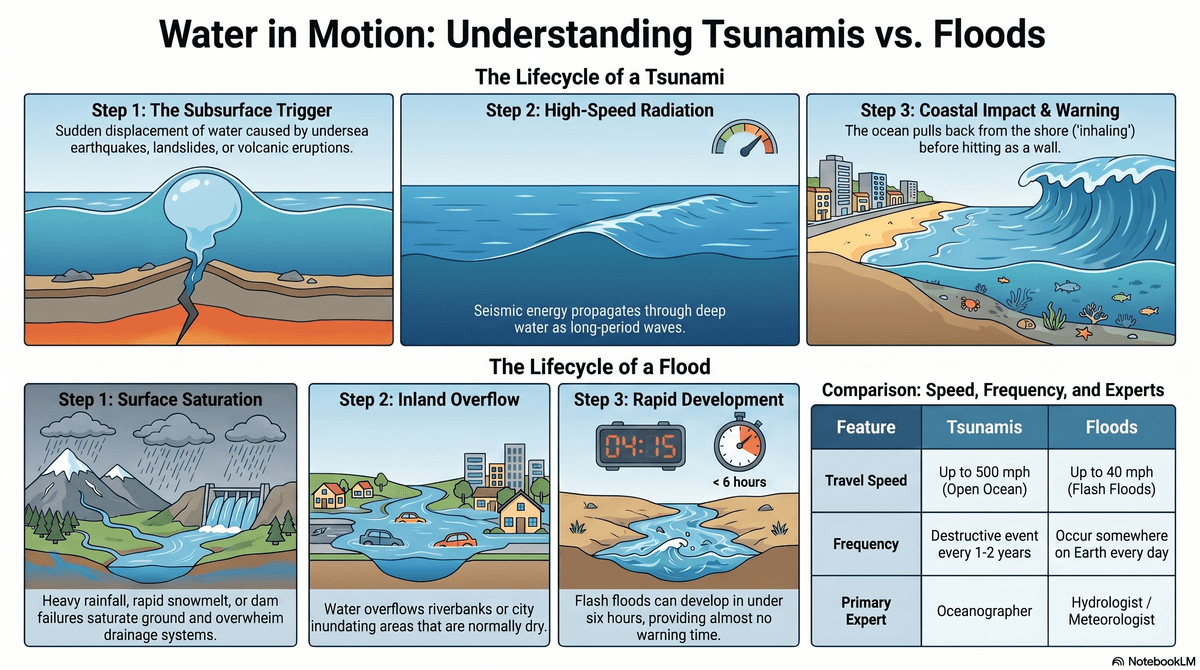
Emergency management agencies track the frequency of natural disasters to prepare for future occurrences. While major catastrophic tsunamis happen about once a decade, destructive tsunamis occur much more frequently. How often does a destructive tsunami happen somewhere in the world?
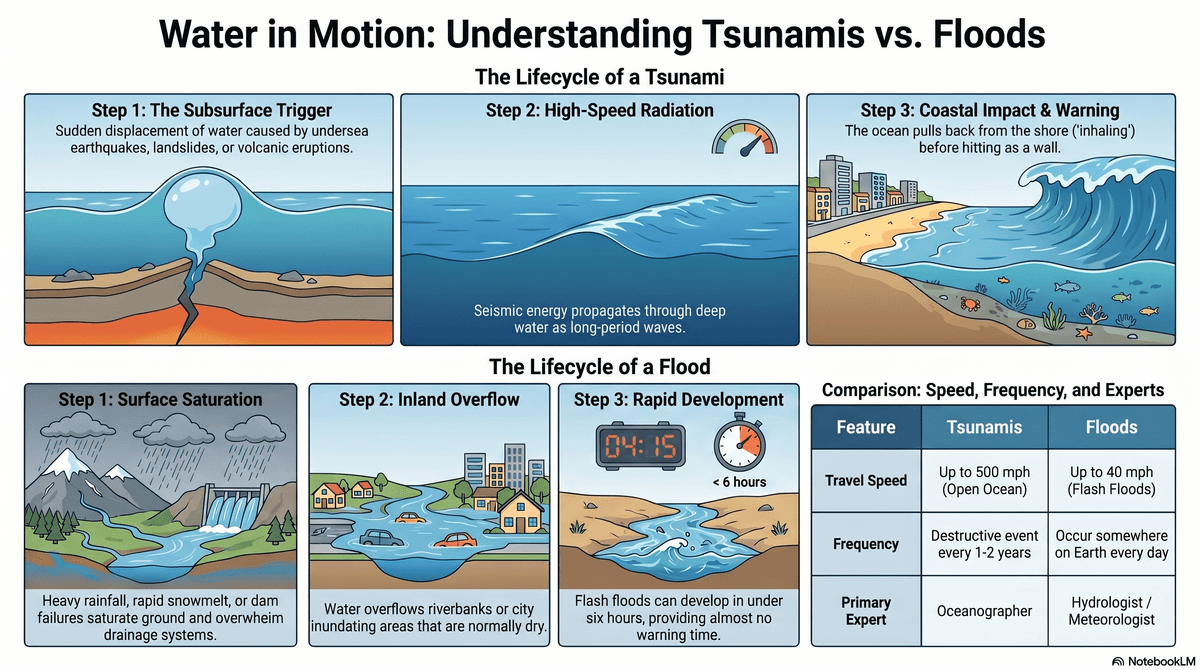
A student is interested in a career that involves tracking how water moves and studying the physical properties of the ocean. This profession is essential for understanding how tsunami waves form and travel across the globe. Which career title fits this description?
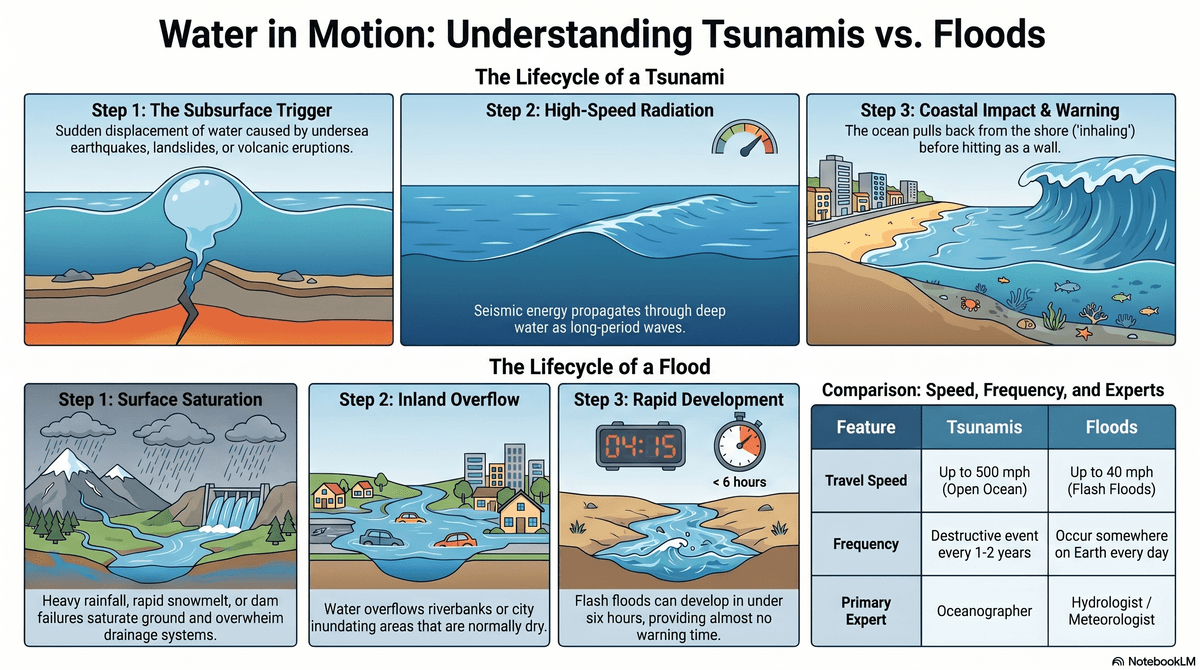
An environmental report describes a situation where water overflows onto land that
is usually dry. This event is cited as the most common and deadliest natural disaster on Earth.
What is the general term for this phenomenon?
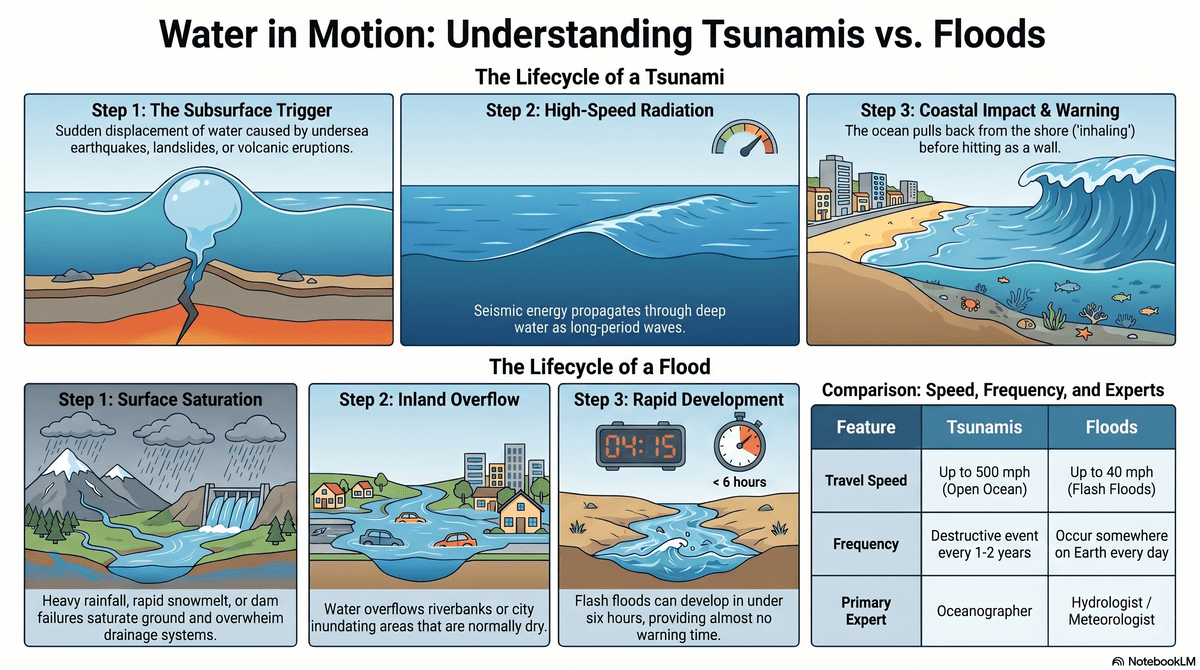
A safety training manual warns pedestrians about the hidden dangers of moving water during a storm. It explains that a surprisingly small amount of fast-moving water can knock an adult off their feet. How much water is required to do this?
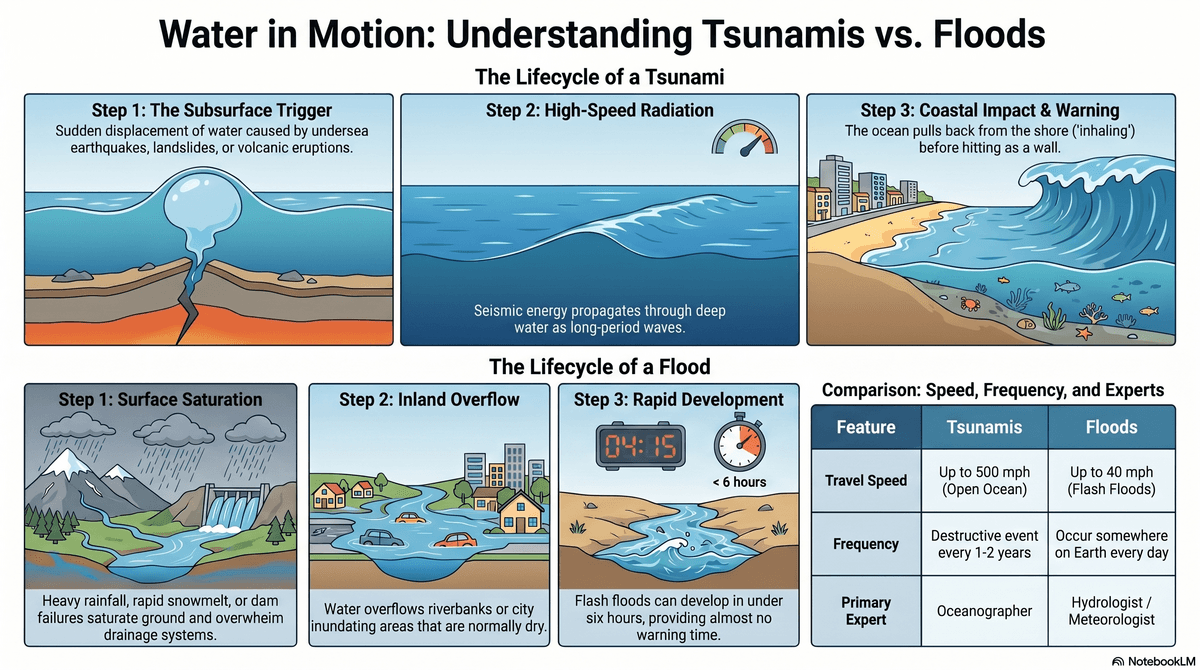
In the United States, various weather-related hazards cause significant property damage and loss of life every year. Statistics show that one specific hazard causes more deaths on average than any other weather event. Which hazard is the deadliest in the U.S.?
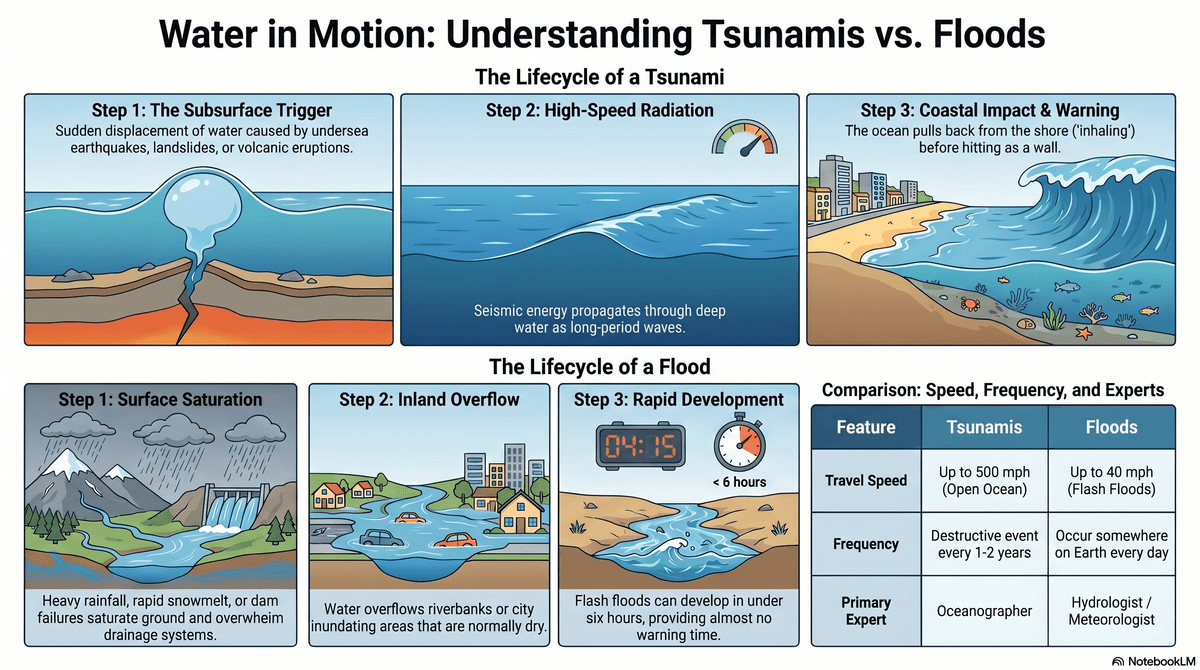
Residents in a mountain canyon are warned that a wall of water is approaching after a heavy downpour. These events give almost no warning and are sometimes referred to as "walls of boulders." Within what timeframe do these flash floods typically develop?

City planners are concerned that replacing natural soil with roads and parking lots is making the city more dangerous. These man-made surfaces prevent water from absorbing into the ground, leading to overwhelmed drainage systems. What is the primary cause of this increased flood risk?

Historical records indicate that the deadliest natural disaster ever recorded occurred in China in 1931. This event involved massive river overflows that led to an unthinkable loss of life. Approximately how many people died in these floods?

In 1889, the town of Johnstown, Pennsylvania, was devastated when a local dam failed. This failure released a massive wall of water that traveled at 40 miles per hour. How high was the wall of water that hit the town?

Nashville experienced a devastating "1,000-year flood" that caused over $2 billion in damage. During this event, the Cumberland River crested 12 feet above its normal flood stage. In what year did this specific disaster take place?
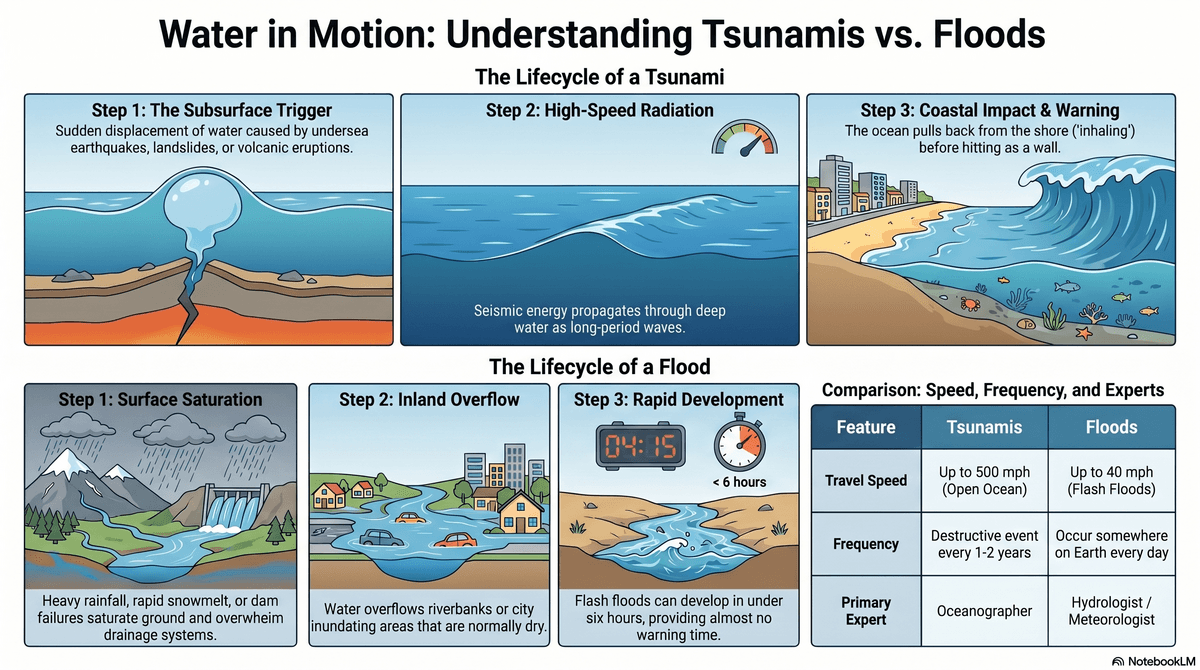
A professional is tasked with monitoring the atmosphere and tracking heavy rainfall events. By identifying storm systems that lead to flooding, they are able to issue critical flash flood warnings. What is the title of this career?

A scientist is studying how water moves through the local river systems and soil. By understanding these patterns, they can predict when a river might overflow its banks and flood the surrounding area. What is the name of this profession?
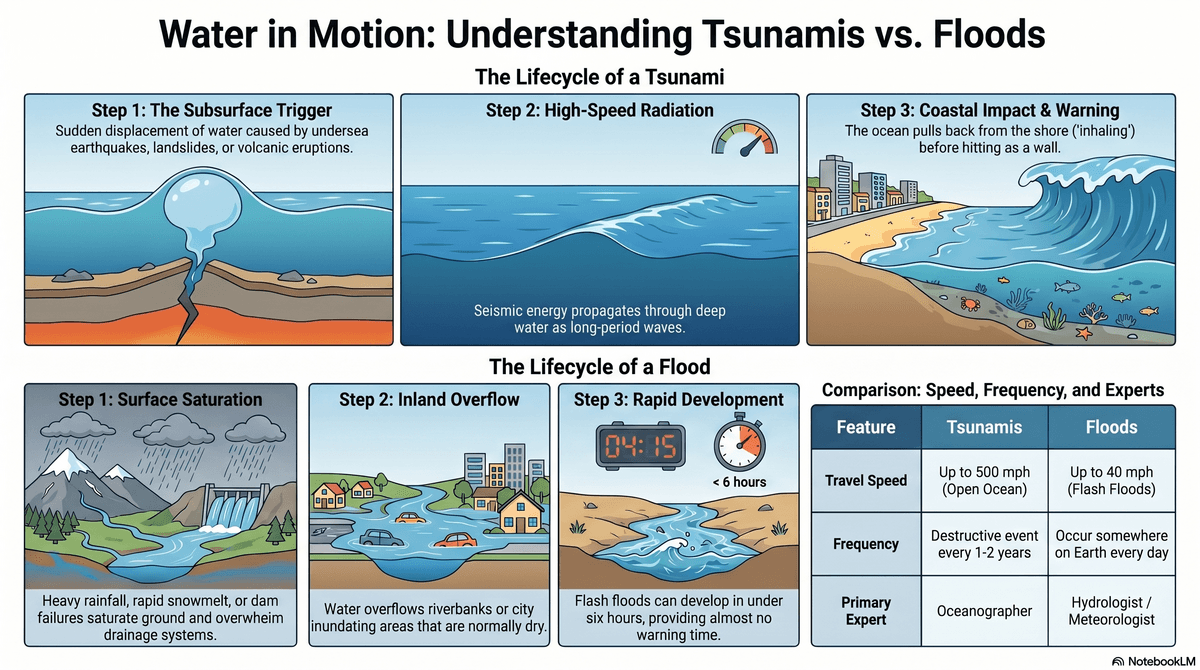
A local government official is hiring someone to help them make smart land-use decisions. This person will ensure that new homes are not built in areas with a high risk of being underwater. Which specialist are they looking for?
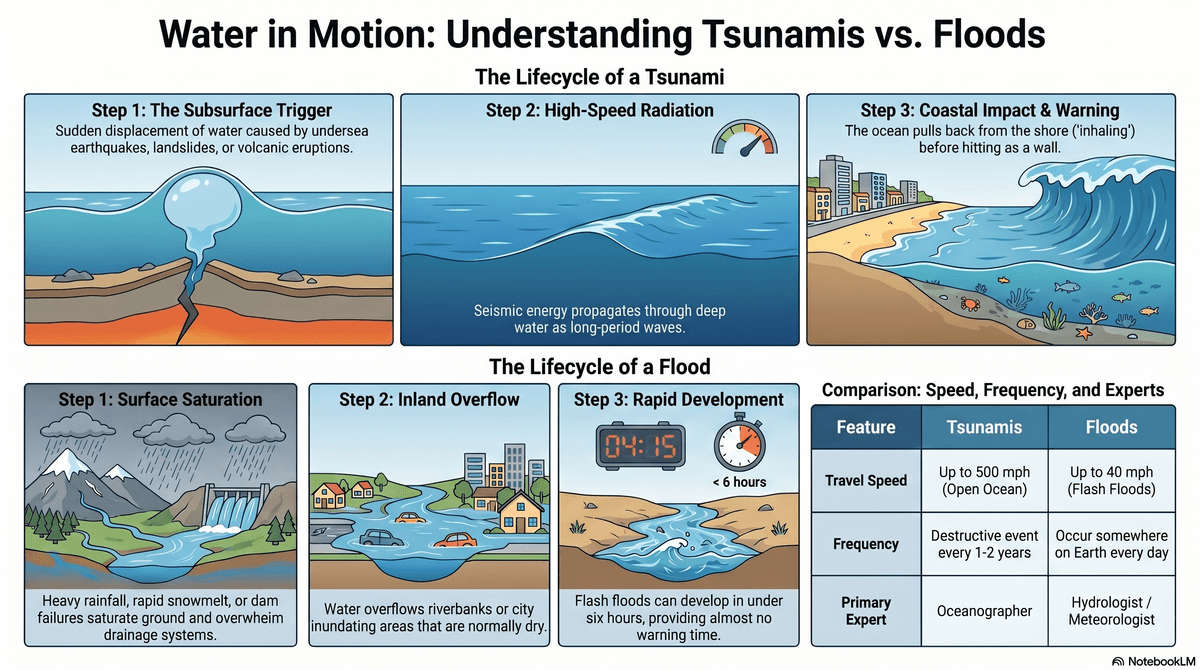
The term for a tsunami originates from a language that reflects the disaster's impact on coastal infrastructures. It specifically combines the words for "harbor" and "wave." Which phrase represents the literal Japanese translation?

