Loading...


ASSESSMENT (ALLIED HEALTH SCIENCE GROUP)
Quiz by Jayrald Cruzada
Tag the questions with any skills you have. Your dashboard will track each student's mastery of each skill.
What is the heart’s primary pacemaker?
How does the myocardium receive its blood supply?
The innermost layer of blood vessels is composed of what type of material?
What is the purpose of the valves in veins?
What are the exchange vessels of the circulatory system, where nutrients, wastes, and hormones are transferred between blood and tissues?
The most important mechanism for capillary exchange is
The tricuspid valve is located between the
Which one is the correct sequence going from the outermost to
the innermost layer of a blood vessel wall?
The thick layer of the heart wall that contains
contractile cardiac muscle tissue is the:
The volume of blood pumped out by each ventricle with each
beat of the heart is called the
Veins:
In which one of the following blood vessels is blood pressure the
highest?
What is the name of the great vessels that delivers blood to the right atrium?
The sinoatrial node is located in the
The path of blood flow within the systemic vascular system is:
When the ventricles contract, the bicuspid (mitral) valve
prevents blood from flowing back
Which one of the following represents the correct path for the
transmission of an impulse in the intrinsic conduction
system of the heart:
Which of the following blood vessels is a direct branch of the ascending aorta:
Which of the following is a blood clotting disorder
Excessive erythrocytes result in:
Which type of leukocyte contains heparin, an anticoagulant?
A substance that stimulates the immune system to release antibodies:
Which blood type(s) can a person with blood type O receive
The most numerous white blood cells are the:
The ion essential for blood clotting is
Which one of the following does NOT describe blood plasma:
Which one of the following groups consist of granulocytes
The type of leukocytes that would increase rapidly during allergy attacks and infections of parasitic worms are:
The average functional lifespan of an RBC is:
Which of these blood types carries no antigens
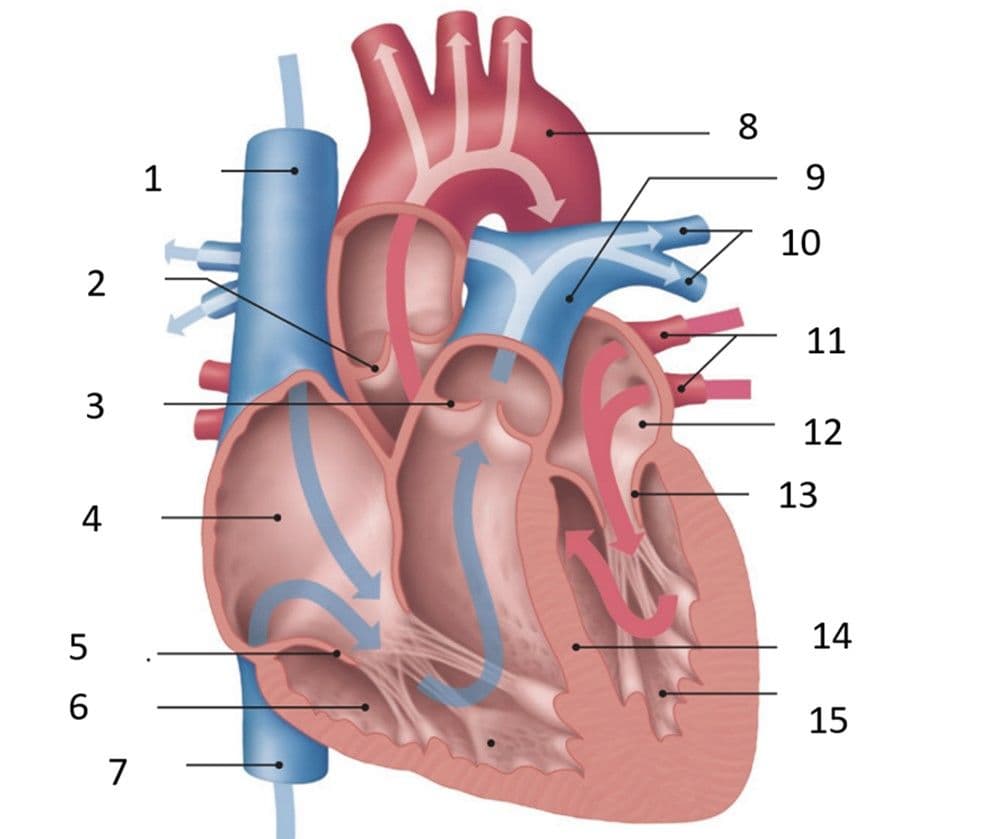
What structure of the heart is indicated in number 8
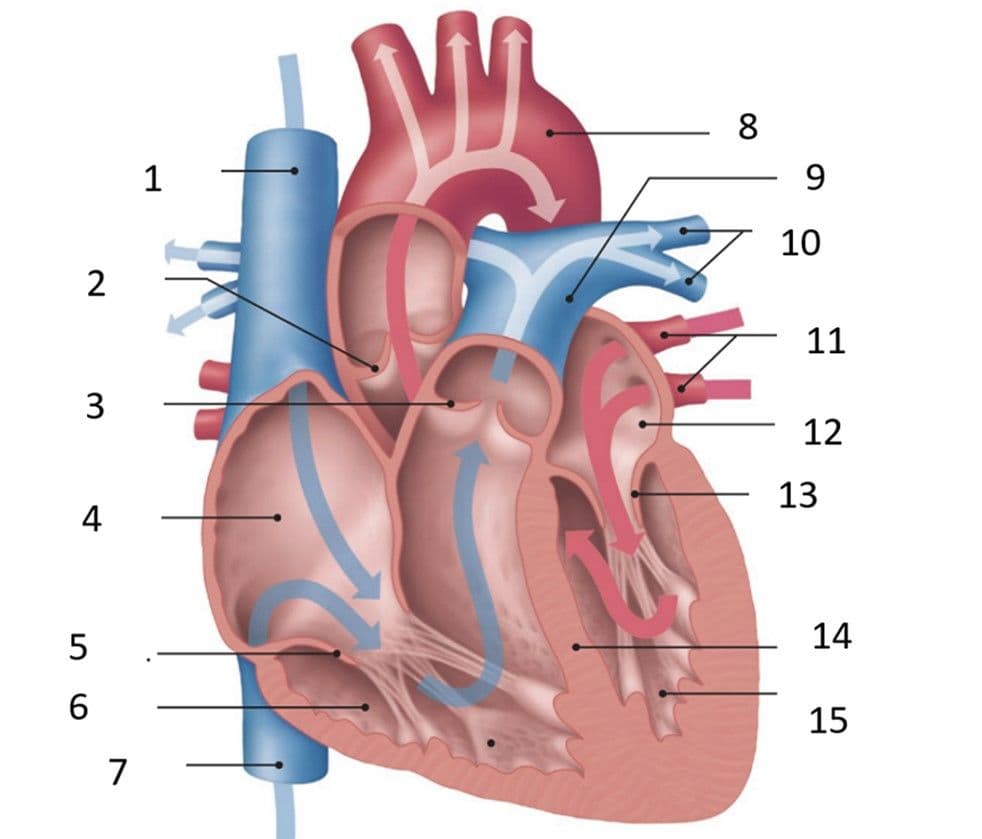
What structure of the heart is indicated in number 2
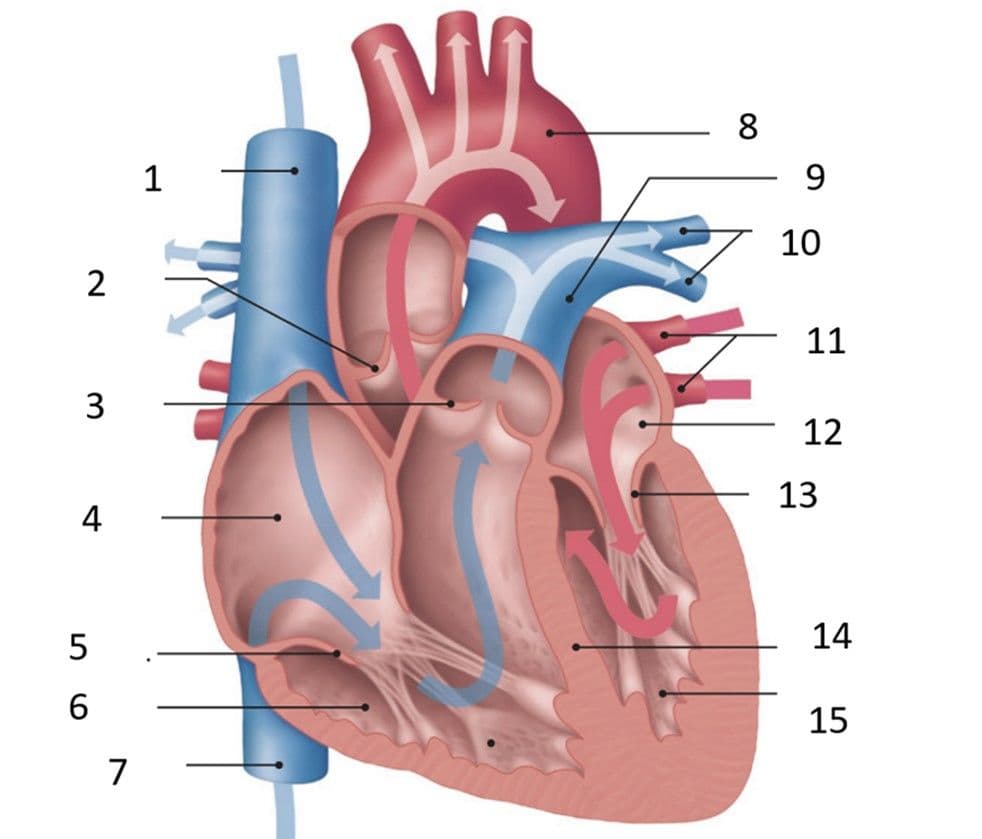
What structure of the heart is indicated in number 11
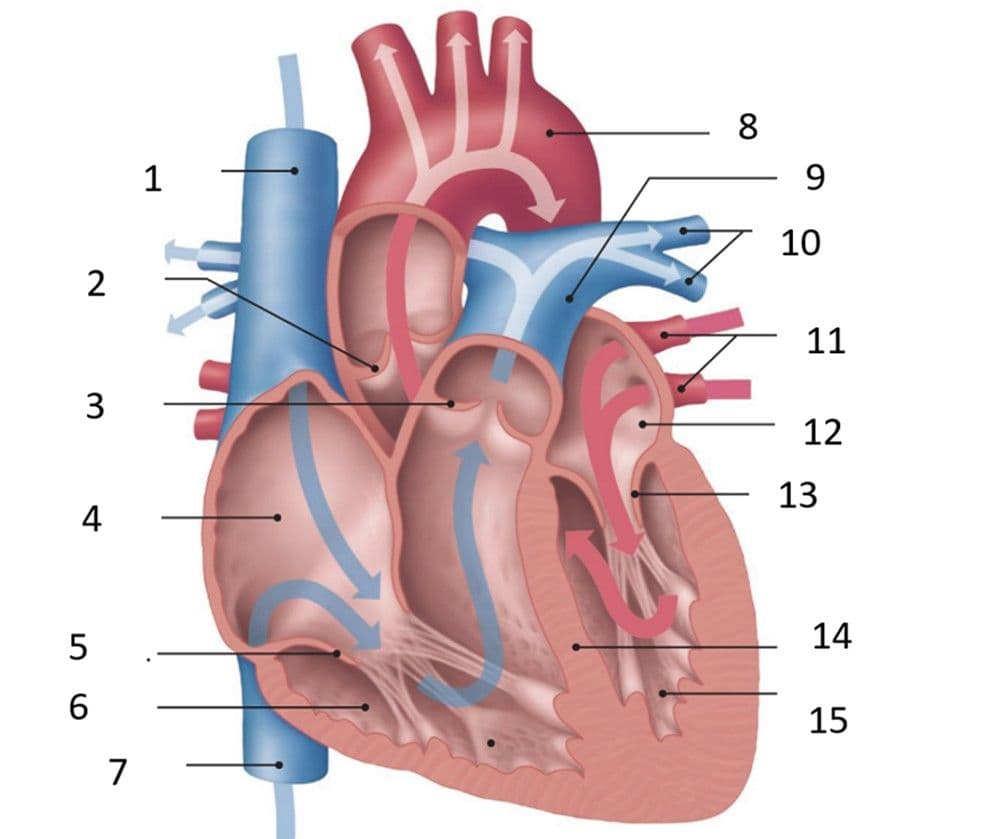
What structure of the heart is indicated in number 3
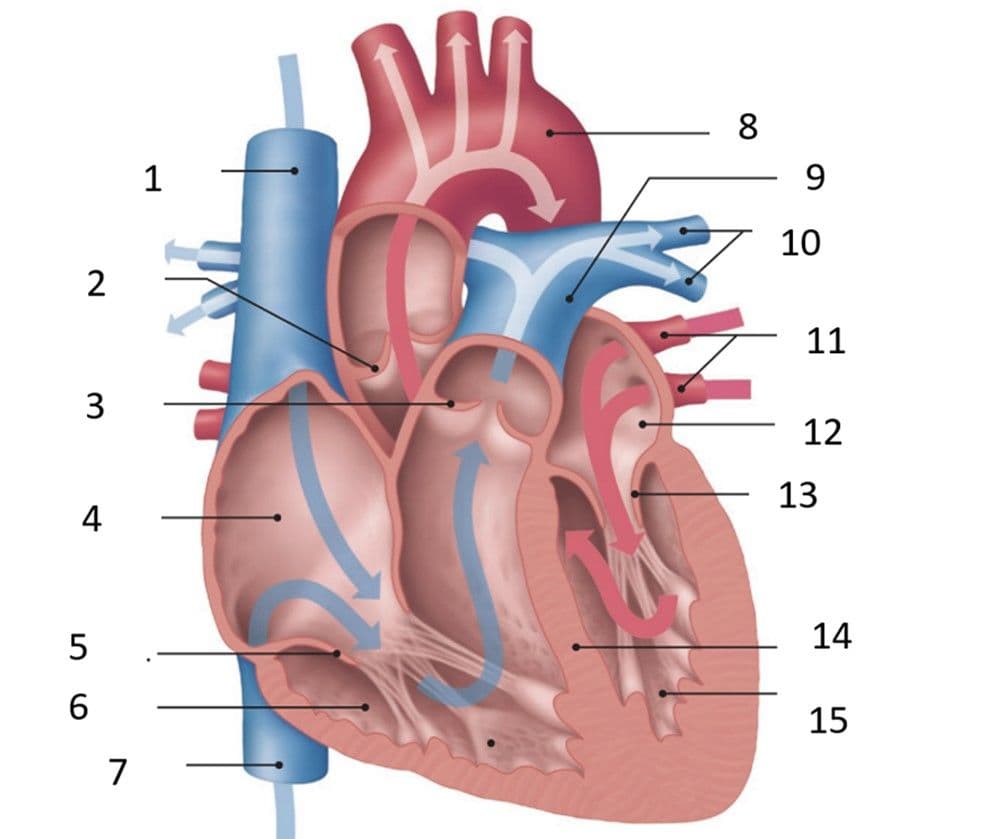
What structure of the heart is indicated in number 10
Embryonic ectoderm develops into which of the following major tissue types?
What type of tissue forms tendons?
The basement membrane is located between which of the following tissue types?
Which of the following epithelial tissue types is best adapted for the rapid transport of materials across its membranes?
Which of the following are functional characteristics of epithelial
tissue?
Connective tissue arises from which of the following embryonic tissue?
What is the chief purpose of the Golgi apparatus?
Which tissue is the most widespread and varied of all the tissues?
Which type of cartilage makes up the discs in the vertebrae?
These are microbodies that carry out oxidation reactions and produce hydrogen peroxide as a by-product
Specialized internal structures in the cytosol that provide the “bones and muscles” of the cell.
It forms naturally during the processes of secretion (exocytosis), uptake (endocytosis) and transport of materials within the plasma membrane.
It modifies foreign substances to make them less toxic and it is abundant in the liver.
Characterized by the presence of numerous ribosomes located on the outer surface of the membranes
These are two strands of intertwined protein and also known as actin filament