Loading...

Biomolecule and Enzyme Exam
Quiz by Shelby Reagan
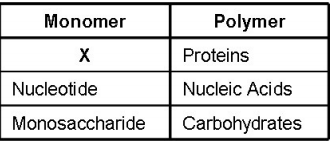
Complete the chart by identifying the correct monomer at X
amino acids
enzyme
glycerols
fatty acids
What is the correct relationship between monomers and polymers?
Complete the chart by identifying the correct monomer at X

A molecule is composed of chains of amino acids. The sequence of the amino acids determines the shape and the function of the molecule. Identify the molecule.
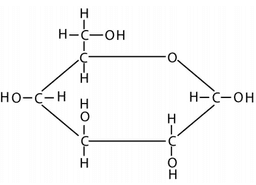
The diagram shows a molecule made up of chains of hydrogen, carbon, and oxygen. This molecule performs numerous roles in living organisms. What type of molecule does the diagram represent?
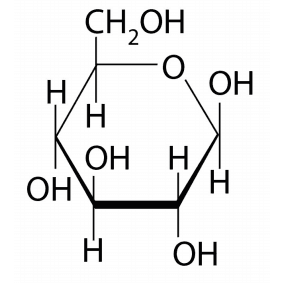
Which of the following is not a lipid?
The enzymes that catalyze cellular reactions are macromolecules made of organic compounds composed of carbon, hydrogen, oxygen, and nitrogen. These types of macromolecules are known as –
A biomolecule that is a large, complex set of chains composed of alternating subunits called nucleotides has which of these functions in the cell?
Which of these substances stores the most energy?
A student preparing for a hike wants to pack a snack that has biomolecules that provide quickly available energy but few excess calories. Which nutrition label lists the best combination of biomolecules that provide quickly available energy while providing the fewest calories from other types of biomolecules?
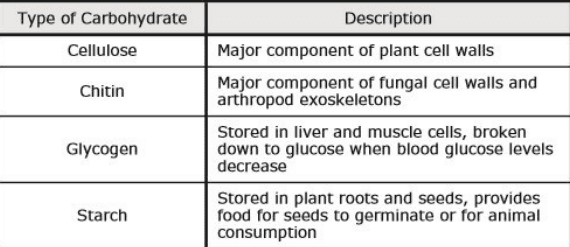
A table of four types of carbohydrates is shown. Which list correctly matches the functions to the types of carbohydrates?
An advertisement for a health supplement for dogs claims to build lean muscle and strengthen tendons and ligaments, as well as provide energy. Which two biomolecules must the supplement contain to provide these benefits?
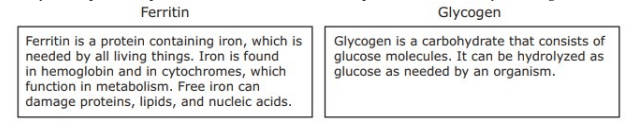
Proteins and carbohydrates have many functions in the body of an organism. Specific proteins and carbohydrates perform specific tasks. Information about a protein and a carbohydrate is given below. How are ferritin and glycogen similar in their primary functions for an organism?
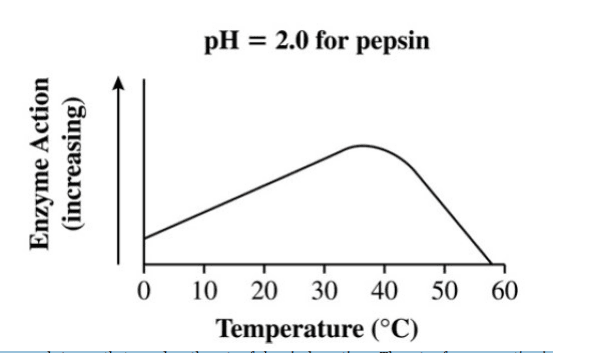
Enzymes are substances that speed up the rate of chemical reactions. The rate of enzyme action is affected by several factors. A researcher studying these factors made this graph. According to the graph, what is the best temperature range for the enzyme activity?
A student measured the time required for a protein sample to be completely digested in the presence of an enzyme under different pH levels. At which pH is the enzyme most active?

Lactose is found in milk products. It is converted by the body into a usable form in a series of chemical reactions. The diagram shows the series of reactions that convert lactose into a usable form. If Enzyme 2 is denatured (broken down), the levels of which substance will increase?

Enzymes are proteins that have a three-dimensional shape that is specific to a particular substrate. Environmental conditions can change the shape of the protein.
Which temperature and pH does the enzyme work best in?

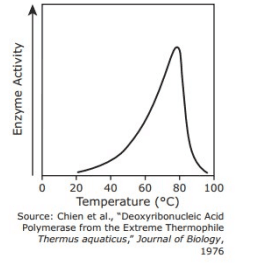
Taq polymerase is an enzyme used in the polymerase chain reaction (PCR) to replicate fragments of DNA. A study published in 1976 examined the properties of Taq polymerase after the enzyme was isolated from Thermus aquaticus, a thermophilic bacterium that lives in the hot springs of Yellowstone NationalPark. The graph shows one of the results of the study.
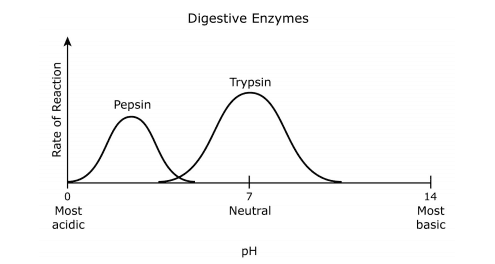
Pepsin and trypsin are two of the digestive enzymes that break down protein. A group of students studied the pH requirements of these enzymes. The graph below shows the results. The students found that pepsin functions best in an acid environment and trypsin functions best in a neutral environment. Based on their observations, pepsin most likely aids in digestion in which part of the human body?
Ribulose biphosphate carboxylase is a chemical that aids in the process of photosynthesis. Ribulose biphosphate carboxylase breaks down carbon dioxide and bonds carbon atoms together to begin the formation of sugars. Without ribulose biphosphate carboxylase, photosynthetic organisms would not be able to produce as much food. Even though ribulose biphosphate carboxylase is involved in assisting chemical reactions, its chemical structure is unchanged. Based on the information about the function of ribulose biphosphate carboxylase, what is the best classification of the chemical?
