Loading...


DMBK3: Data Quality Management (chapter 13)
Quiz by Виктория Инзина
Tag the questions with any skills you have. Your dashboard will track each student's mastery of each skill.
According to the DMBoK, Data Quality Management is the planning, implementation, and control of activities that apply quality management techniques to data, in order to assure it is fit for consumption and meets the needs of data consumers.
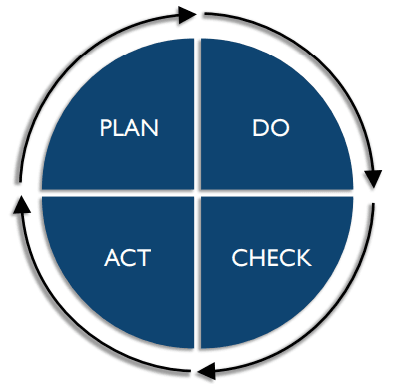
When discussing the Data Quality Management Cycle, what part of the cycle typically deals with: acting to resolve any identified issues to improve Data Quality and better meet business expectations?
A Data Quality program should limit its scope to?
The identification of possible out-of-range values or anomalous records is often a typical output of outlier analysis.
Data Quality can help with many different aspects of data within an organization. What can Data Quality do or achieve?
The Data Quality attribute that most closely matches the description “the difference between when the data is available and needed” is what?
Data Quality measurements can be taken at three levels of granularity. They are?
A Business Process Impact of Data Quality will illustrate the effect of poor-quality data on business processes.
The Data Quality Indicator (DQI) of “Controllability” is often defined as having what characteristic?
Root Cause Analysis (RCA) is a technique that helps answer the question of WHY the problem occurred in the first place.
The first step in Root Cause Analysis is?
The 5-Why Approach is an example of basic cause-and-effect analysis. Every investigation, regardless of size, begins with one “why” question.
What is NOT a common Data Quality mistake?
Which of the following is NOT a stage in the Shewhart – Deming Cycle that drives the Data Quality Improvement Lifecycle?
A Data Quality dimension is?
'Top-down' and 'Bottom-up' data analysis and profiling are best done in concert because?
Which of these is a key process in defining Data Quality business rules?
What is the definition of a root cause of a problem?
When the DMBoK calls Data Quality Management a program, not a project, it means?
The sequence for the Shewhart – Deming Improvement Cycle in DMBoK is?
You are facilitating a committee that is developing data quality metrics. Some of the committee members think that SMART (Specific, Measurable, Accountable, Results-Focused, Time-Bound) is a good model. Select the statement that best describes why business relevance needs to be considered as a characteristic of Data Quality metrics?
What is manual directed Data Quality correction?
Which of the following is not a goal of Data Quality?
Whose responsibility should it be to identify and report occurrences of defects in information and data?
Which of the following is NOT usually a feature of Data Quality improvement tools?
Which of these is NOT a primary deliverable of Data Quality Management?
Which of the following is the best example of the Data Quality dimension of 'consistency'?
When defining Data Quality indicators, care must be taken to ensure that they have what?
Which of these statements is true?
The Data Quality Lifecycle has 4 stages. Three are Plan, Monitor and Act. What is the 4th stage?
Which of these is NOT a typical activity in Data Quality Management?
Which of these is NOT an expected role of a Data Quality Oversight Board?
According to DMBoK, which of these is NOT a valid dimension of Data Quality?
A Data Quality Service Level Agreement (SLA) would normally include which of these?
Name the chart