Loading...


DMBK4: Master and Reference Data Management (chapter 10)
Quiz by Виктория Инзина
Tag the questions with any skills you have. Your dashboard will track each student's mastery of each skill.
Which is not a type of Master Data Architecture is?
Typical MDM components include transformation, sourcing, and caching and synchronization.
MDM products may provide either a service library or the means for creating master data services as master object models are integrated or enhanced.
When discussing Master Data Match Rules, the scenario of “Match-Merge Rules” deals with: Identifying and cross-referencing records that appear to relate to a master record without updating the content of the cross-referenced record. These rules are easier to implement and much easier to reverse.
Each master data subject area should typically have its own system of record.
Reference and master data include the reconciliation and maintenance of core critical shared data in order to?
The goals of Master Data Management (MDM) are?
Subsets of the master data must be delivered “just in time” as the business projects need to use them.
It’s not necessary to align MDM initiatives, processes, and recommendations for technology with corporate and business unit strategy. MDM stands by itself within the data ecosystem.
At any given point, master data values should represent what?
All organizations have master data even if it is not labeled master data?
What statement is most accurate about master data metadata?
Reference data?
Plant equipment is an example of?
Master Data Management?
Master data differs from reference data in which following way?
The biggest challenge to implementing Master Data Management will be?
Is the data model important in establishing Master Data Management?
In computer programming, data types can be divided into two categories. What are they?
Master and reference data are forms of?
Which of the following statements regarding a value domain is FALSE?
The "consumer" of master data content received from a Master Data Management platform can also be referred to as a?
A ____________ is used for detailing collaboration principles, escalation, and dispute resolution process between Master Data Management and its data suppliers?
According to the DMBoK, the system that contains the “best version” of the master data is the?
Reference data _________?
What is a common motivation for Reference & Master Data Management?
Which of these is a valid definition of master data?
Which of the following is NOT a primary Master Data Management area of focus?
A strong argument for pursuing a Reference Data and/or Master Data Management initiative is:
A common driver for initiating a Reference Data Management program is:
Reference Data Management includes defining relationships within and across the organization.
Which one of the following statements is true?
The term 'Trusted source' refers to 'the best version we have' of the Master Data.
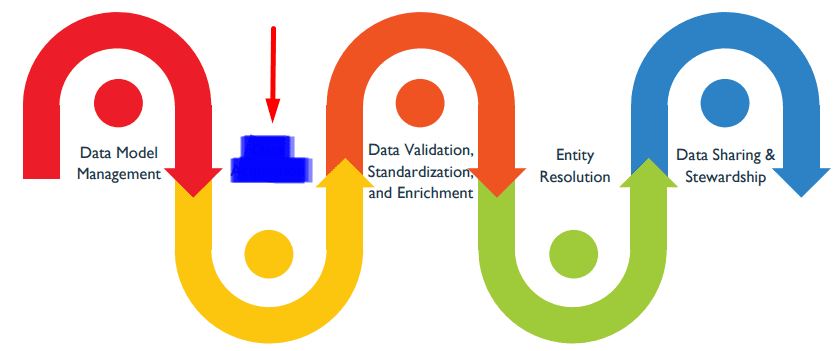
Which step is missing in the Key Processing Steps for MDM image?
Different types of product Master Data solutions support different business functions. In this context MES stands for....