Read and write multi-digit whole numbers using base-ten numerals, number names, and expanded form. Compare two multi-digit numbers based on meanings of the digits in each place, using >, =, and < symbols to record the results of comparisons.
Multiply or divide to solve word problems involving multiplicative comparison, e.g., by using drawings and equations with a symbol for the unknown number to represent the problem, distinguishing multiplicative comparison from additive comparison.
Explain why a fraction a/b is equivalent to a fraction (n × a)/(n × b) by using visual fraction models, with attention to how the number and size of the parts differ even though the two fractions themselves are the same size. Use this principle to recognize and generate equivalent fractions.
Add and subtract mixed numbers with like denominators, e.g., by replacing each mixed number with an equivalent fraction, and/or by using properties of operations and the relationship between addition and subtraction.
Recognize that in a multi-digit whole number, a digit in one place represents ten times what it represents in the place to its right. For example, recognize that 700 ÷ 70 = 10 by applying concepts of place value and division.
Track each student's skills and progress in your Mastery dashboards
Give this quiz to my class
Q 1/6
Score 0
60
Q 2/6
Score 0
60
6 questions
Q.
1
60 sec
4.NBT.A.2
Q.
2
60 sec
4.OA.A.2
Q.
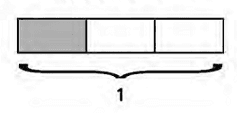
The model below is shaded to represent a fraction.
Which model shows an equivalent fraction?
3
60 sec
4.NF.A.1
Q.
4
60 sec
4.NF.B.3.C
Q.
5
60 sec
4.NBT.A.1
Q.
Students voted on a name for their school softball team. The table below lists the number of votes each team name received.
Which team name received 3 times as many votes as "Comets"?