Tag the questions with any skills you have. Your dashboard will track each student's mastery of each skill.
Give this quiz to my class
Q 1/9
Score 0
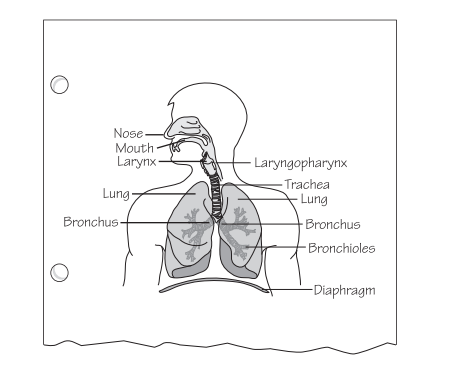
A student drew the picture of a human body system shown below. The student labeled some of the organs of the system. The main function of this human body system is to —
30
chew food as it enters the mouth
sense odors in the environment
exchange gases with the environment
trap particles that enter the nose
Q 2/9
Score 0
Plants use energy from sunlight, water, and carbon dioxide to produce sugar. Which structure is found only in plant cells and helps plants capture energy from sunlight?
45
Nucleus
Vacuole
Chloroplast
Cell membrane
9 questions
Q.
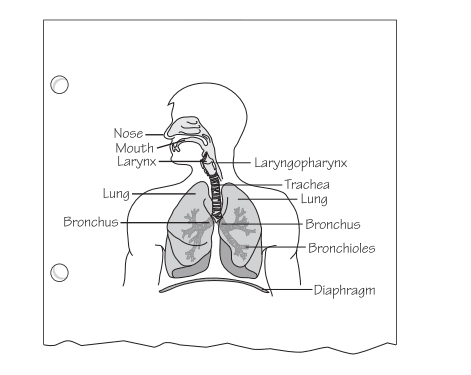
A student drew the picture of a human body system shown below. The student labeled some of the organs of the system. The main function of this human body system is to —
1
30 sec
Q.
Plants use energy from sunlight, water, and carbon dioxide to produce sugar. Which structure is found only in plant cells and helps plants capture energy from sunlight?
2
45 sec
Q.
Certain species of whiptail lizards have only female individuals and no males. These lizards reproduce asexually. What is one disadvantage of asexual reproduction for these lizards?
3
45 sec
Q.
Which organisms in the food web shown above compete for the same food source in this environment?
4
45 sec
Q.
Which of these human activities is most likely to cause the excessive growth of phytoplankton in the world’s oceans?
5
45 sec
Q.
Many Texas caves provide a habitat for animals that live in total darkness. The caves are damp and cool, and most of the caves are rich in the mineral calcite. The diagram below shows the relationships of some organisms involved in a cave ecosystem. Based on the diagram, which of the following statements is valid?
6
45 sec
Q.
A partial food web is shown. The mourning dove is a bird that is often part of this food web. Which of these describes the mourning dove when it is part of the food web shown?
7
45 sec
Q.
The white-tailed ptarmigan lives at high elevations on mountains that receive a lot of snow in the winter. During the summer, the ptarmigans’ feathers are mottled brown. The birds lose the brown feathers and grow a new set of white feathers during the winter. Scientists are concerned that rising global temperatures will affect the white-tailed ptarmigan. If global climate change leads to the elimination of snow in the habitat of white-tailed ptarmigans, which adaptation is most likely to occur over many generations?
8
45 sec
Q.
The types of small organisms that live on the bottom of streams can be good indicators of water pollution. The table below groups some organisms by their tolerance of pollution. A certain stream that was historically clear and clean has become increasingly polluted with fertilizer waste over the years. Which of these describes a likely result of this pollution?