Explain how a one-celled organism is able to function despite lacking the levels of organization present in more complex organisms.
1.3a The structures present in some single-celled organisms act in a manner similar to the tissues and systems found in multicellular organisms, thus enabling them to perform all of the life processes needed to maintain homeostasis.
Explain how organisms, including humans, reproduce their own kind.
4.1a Reproduction and development are necessary for the continuation of any species.
4.1b Some organisms reproduce asexually with all the genetic information coming from one parent. Other organisms reproduce sexually with half the genetic information typically contributed by each parent. Cloning is the production of identical genetic copies.
4.1c The processes of meiosis and fertilization are key to sexual reproduction in a wide variety of organisms. The process of meiosis results in the production of eggs and sperm which each contain half of the genetic information. During fertilization, gametes unite to form a zygote, which contains the complete genetic information for the offspring.
4.1d The zygote may divide by mitosis and differentiate to form the specialized cells, tissues, and organs of multicellular organisms.
4.1e Human reproduction and development are influenced by factors such as gene expression, hormones, and the environment. The reproductive cycle in both males and females is regulated by hormones such as testosterone, estrogen, and progesterone.
4.1f The structures and functions of the human female reproductive system, as in almost all other mammals, are designed to produce gametes in ovaries, allow for internal fertilization, support the internal development of the embryo and fetus in the uterus, and provide essential materials through the placenta, and nutrition through milk for the newborn.
4.1g The structures and functions of the human male reproductive system, as in other mammals, are designed to produce gametes in testes and make possible the delivery of these gametes for fertilization.
4.1h In humans, the embryonic development of essential organs occurs in early stages of pregnancy. The embryo may encounter risks from faults in its genes and from its mother’s exposure to environmental factors such as inadequate diet, use of alcohol/drugs/tobacco, other toxins, or infections throughout her pregnancy.
Explain how the technology of genetic engineering allows humans to alter genetic makeup of organisms.
2.2a For thousands of years new varieties of cultivated plants and domestic animals have resulted from selective breeding for particular traits.
2.2b In recent years new varieties of farm plants and animals have been engineered by manipulating their genetic instructions to produce new characteristics.
2.2c Different enzymes can be used to cut, copy, and move segments of DNA. Characteristics produced by the segments of DNA may be expressed when these segments are inserted into new organisms, such as bacteria.
2.2d Inserting, deleting, or substituting DNA segments can alter genes. An altered gene may be passed on to every cell that develops from it.
2.2e Knowledge of genetics is making possible new fields of health care; for example, finding genes which may have mutations that can cause disease will aid in the development of preventive measures to fight disease. Substances, such as hormones and enzymes, from genetically engineered organisms may reduce the cost and side effects of replacing missing body chemicals.
Explain how individual choices and societal actions can contribute to improving the environment.
7.3a Societies must decide on proposals which involve the introduction of new technologies. Individuals need to make decisions which will assess risks, costs, benefits, and trade-offs.
7.3b The decisions of one generation both provide and limit the range of possibilities open to the next generation.
Explain factors that limit growth of individuals and populations.
6.1a Energy flows through ecosystems in one direction, typically from the Sun, through photosynthetic organisms including green plants and algae, to herbivores to carnivores and decomposers.
6.1b The atoms and molecules on the Earth cycle among the living and nonliving components of the biosphere. For example, carbon dioxide and water molecules used in photosynthesis to form energy-rich organic compounds are returned to the environment when the energy in these compounds is eventually released by cells. Continual input of energy from sunlight keeps the process going. This concept may be illustrated with an energy pyramid.
6.1c The chemical elements, such as carbon, hydrogen, nitrogen, and oxygen, that make up the molecules of living things pass through food webs and are combined and recombined in different ways. At each link in a food web, some energy is stored in newly made structures but much is dissipated into the environment as heat.6.1c
6.1d The number of organisms any habitat can support (carrying capacity) is limited by the available energy, water, oxygen, and minerals, and by the ability of ecosystems to recycle the residue of dead organisms through the activities of bacteria and fungi.
6.1d The number of organisms any habitat can support (carrying capacity) is limited by the available energy, water, oxygen, and minerals, and by the ability of ecosystems to recycle the residue of dead organisms through the activities of bacteria and fungi.
6.1e In any particular environment, the growth and survival of organisms depend on the physical conditions including light intensity, temperature range, mineral availability, soil/rock type, and relative acidity (pH).
6.1f Living organisms have the capacity to produce populations of unlimited size, but environments and resources are finite. This has profound effects on the interactions among organisms.
6.1g Relationships between organisms may be negative, neutral, or positive. Some organisms may interact with one another in several ways. They may be in a producer/consumer, predator/prey, or parasite/host relationship; or one organism may cause disease in, scavenge, or decompose another.
Explain how diversity of populations within ecosystems relates to the stability of ecosystems
1.1a Populations can be categorized by the function they serve. Food webs identify the relationships among producers, consumers, and decomposers carrying out either autotropic or heterotropic nutrition.
1.1b An ecosystem is shaped by the nonliving environment as well as its interacting species. The world contains a wide diversity of physical conditions, which creates a variety of environments.
1.1c In all environments, organisms compete for vital resources. The linked and changing interactions of populations and the environment compose the total ecosystem.
1.1d The interdependence of organisms in an established ecosystem often results in approximate stability over hundreds and thousands of years. For example, as one population increases, it is held in check by one or more environmental factors or another species.
1.1e Ecosystems, like many other complex systems, tend to show cyclic changes around a state of approximate equilibrium.
1.1f Every population is linked, directly or indirectly, with many others in an ecosystem. Disruptions in the numbers and types of species and environmental changes can upset ecosystem stability.
Explain the mechanisms and patterns of evolution.
3.1a The basic theory of biological evolution states that the Earth’s present-day species developed from earlier, distinctly different species.
3.1b New inheritable characteristics can result from new combinations of existing genes or from mutations of genes in reproductive cells.
3.1c Mutation and the sorting and recombining of genes during meiosis and fertilization result in a great variety of possible gene combinations.
3.1d Mutations occur as random chance events. Gene mutations can also be caused by such agents as radiation and chemicals. When they occur in sex cells, the mutations can be passed on to offspring; if they occur in other cells, they can be passed on to other body cells only.
3.1e Natural selection and its evolutionary consequences provide a scientific explanation for the fossil record of ancient life-forms, as well as for the molecular and structural similarities observed among the diverse species of living organisms.
3.1f Species evolve over time. Evolution is the consequence of the interactions of (1) the potential for a species to increase its numbers, (2) the genetic variability of offspring due to mutation and recombination of genes, (3) a finite supply of the resources required for life, and (4) the ensuing selection by the environment of those offspring better able to survive and leave offspring.
3.1g Some characteristics give individuals an advantage over others in surviving and reproducing, and the advantaged offspring, in turn, are more likely than others to survive and reproduce. The proportion of individuals that have advantageous characteristics will increase.
3.1h The variation of organisms within a species increases the likelihood that at least some members of the species will survive under changed environmental conditions.
3.1i Behaviors have evolved through natural selection. The broad patterns of behavior exhibited by organisms are those that have resulted in greater reproductive success.
3.1j Billions of years ago, life on Earth is thought by many scientists to have begun as simple, single-celled organisms. About a billion years ago, increasingly complex multicellular organisms began to evolve.
3.1k Evolution does not necessitate long-term progress in some set direction. Evolutionary changes appear to be like the growth of a bush: Some branches survive from the beginning with little or no change, many die out altogether, and others branch repeatedly, sometimes giving rise to more complex organisms.
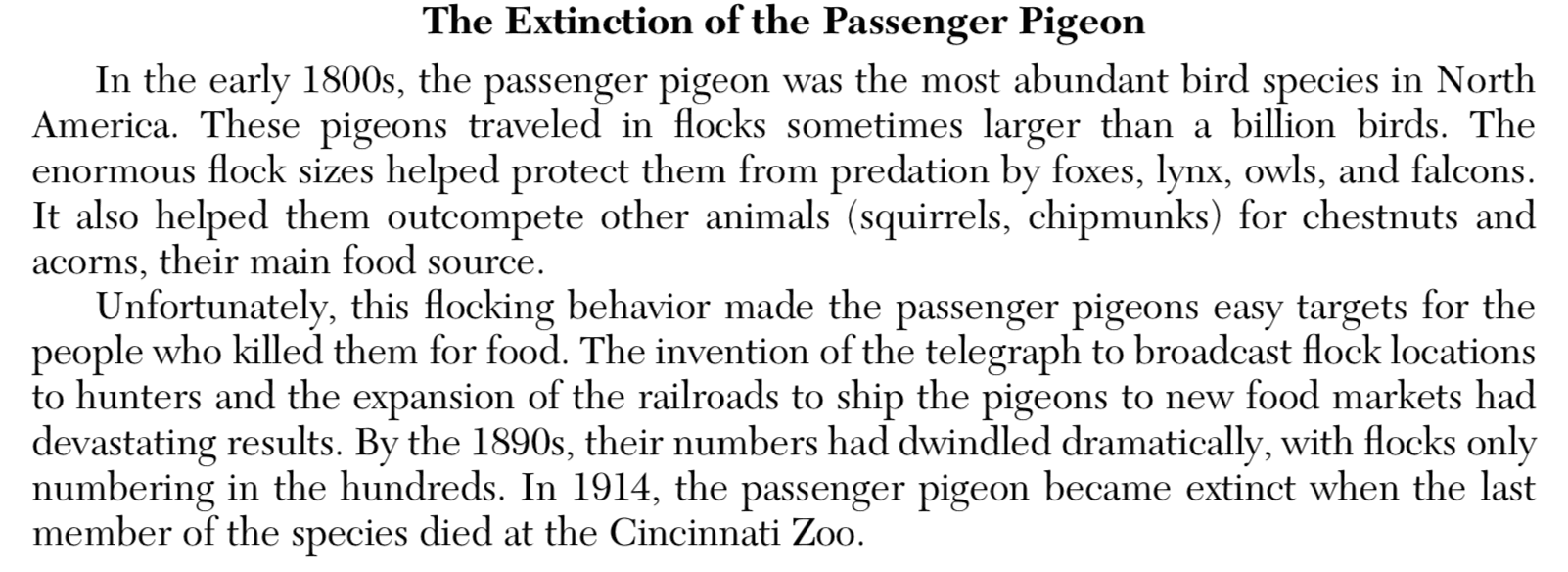
3.1l Extinction of a species occurs when the environment changes and the adaptive characteristics of a species are insufficient to allow its survival. Fossils indicate that many organisms that lived long ago are extinct. Extinction of species is common; most of the species that have lived on Earth no longer exist.
Describe and explain the structures and functions of the human body at different organizational levels (e.g., systems, tissues, cells, organelles).
1.2a Important levels of organization for structure and function include organelles, cells, tissues, organs, organ systems, and whole organisms.
1.2b Humans are complex organisms. They require multiple systems for digestion, respiration, reproduction, circulation, excretion, movement, coordination, and immunity. The systems interact to perform the life functions.
1.2c The components of the human body, from organ systems to cell organelles, interact to maintain a balanced internal environment. To successfully accomplish this, organisms possess a diversity of control mechanisms that detect deviations and make corrective actions.
1.2d If there is a disruption in any human system, there may be a corresponding imbalance in homeostasis.
1.2e The organs and systems of the body help to provide all the cells with their basic needs. The cells of the body are of different kinds and are grouped in ways that enhance how they function together.
1.2f Cells have particular structures that perform specific jobs. These structures perform the actual work of the cell. Just as systems are coordinated and work together, cell parts must also be coordinated and work together.
1.2g Each cell is covered by a membrane that performs a number of important functions for the cell. These include: separation from its outside environment, controlling which molecules enter and leave the cell, and recognition of chemical signals. The processes of diffusion and active transport are important in the movement of materials in and out of cells.
1.2h Many organic and inorganic substances dissolved in cells allow necessary chemical reactions to take place in order to maintain life. Large organic food molecules such as proteins and starches must initially be broken down (digested to amino acids and simple sugars respectively), in order to enter cells. Once nutrients enter a cell, the cell will use them as building blocks in the synthesis of compounds necessary for life.
1.2i Inside the cell a variety of specialized structures, formed from many different molecules, carry out the transport of materials (cytoplasm), extraction of energy from nutrients (mitochondria), protein building (ribosomes), waste disposal (cell membrane), storage (vacuole), and information storage (nucleus).
1.2j Receptor molecules play an important role in the interactions between cells. Two primary agents of cellular communication are hormones and chemicals produced by nerve cells. If nerve or hormone signals are blocked, cellular communication is disrupted and the organism’s stability is affected.
Describe the range of interrelationships of humans with the living and nonliving environment.
7.1a The Earth has finite resources; increasing human consumption of resources places stress on the natural processes that renew some resources and deplete those resources that cannot be renewed.
7.1b Natural ecosystems provide an array of basic processes that affect humans. Those processes include but are not limited to: maintenance of the quality of the atmosphere, generation of soils, control of the water cycle, removal of wastes, energy flow, and recycling of nutrients. Humans are changing many of these basic processes and the changes may be detrimental.
7.1c Human beings are part of the Earth’s ecosystems. Human activities can, deliberately or inadvertently, alter the equilibrium in ecosystems. Humans modify ecosystems as a result of population growth, consumption, and technology. Human destruction of habitats through direct harvesting, pollution, atmospheric changes, and other factors is threatening current global stability, and if not addressed, ecosystems may be irreversibly affected.
Explain disease as a failure of homeostasis.
5.2a Homeostasis in an organism is constantly threatened. Failure to respond effectively can result in disease or death.
5.2b Viruses, bacteria, fungi, and other parasites may infect plants and animals and interfere with normal life functions.
5.2c The immune system protects against antigens associated with pathogenic organisms or foreign substances and some cancer cells.
5.2d Some white blood cells engulf invaders. Others produce antibodies that attack them or mark them for killing. Some specialized white blood cells will remain, able to fight off subsequent invaders of the same kind.
5.2e Vaccinations use weakened microbes (or parts of them) to stimulate the immune system to react. This reaction prepares the body to fight subsequent invasions by the same microbes.
5.2f Some viral diseases, such as AIDS, damage the immune system, leaving the body unable to deal with multiple infectious agents and cancerous cells.
5.2g Some allergic reactions are caused by the body’s immune responses to usually harmless environmental substances. Sometimes the immune system may attack some of the body’s own cells or transplanted organs.
5.2h Disease may also be caused by inheritance, toxic substances, poor nutrition, organ malfunction, and some personal behavior. Some effects show up right away; others may not show up for many years.
5.2i Gene mutations in a cell can result in uncontrolled cell division, called cancer. Exposure of cells to certain chemicals and radiation increases mutations and thus increases the chance of cancer.
5.2j Biological research generates knowledge used to design ways of diagnosing, preventing, treating, controlling, or curing diseases of plants and animals.
Explain the impact of technological development and growth in the human population on the living and nonliving environment.
7.2a Human activities that degrade ecosystems result in a loss of diversity of the living and nonliving environment. For example, the influence of humans on other organisms occurs through land use and pollution. Land use decreases the space and resources available to other species, and pollution changes the chemical composition of air, soil, and water.
7.2b When humans alter ecosystems either by adding or removing specific organisms, serious consequences may result. For example, planting large expanses of one crop reduces the biodiversity of the area.
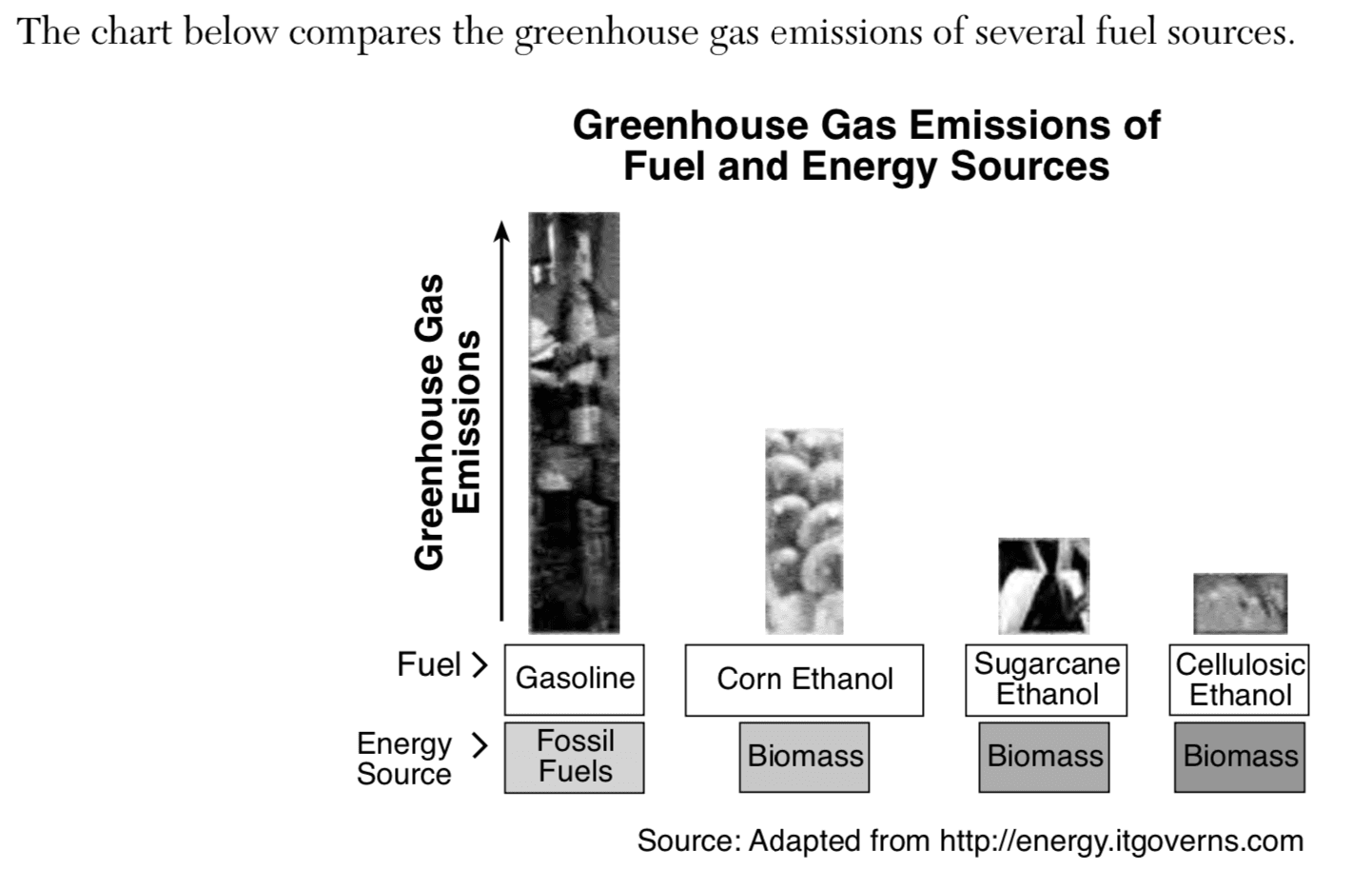
7.2c Industrialization brings an increased demand for and use of energy and other resources including fossil and nuclear fuels. This usage can have positive and negative effects on humans and ecosystems.
Use various methods of representing and organizing observations (e.g., diagrams, tables, charts, graphs, equations, matrices) and insightfully interpret the organized data.
3.1a Interpretation of data leads to development of additional hypotheses, the formulation of generalizations, or explanations of natural phenomena.
Explain how the structure and replication of genetic material result in offspring that resemble their parents
2.1a Genes are inherited, but their expression can be modified by interactions with the environment.
2.1b Every organism requires a set of coded instructions for specifying its traits. For offspring to resemble their parents, there must be a reliable way to transfer information from one generation to the next. Heredity is the passage of these instructions from one generation to another.
2.1c Hereditary information is contained in genes, located in the chromosomes of each cell. An inherited trait of an individual can be determined by one or by many genes, and a single gene can influence more than one trait. A human cell contains many thousands of different genes in its nucleus.
2.1d In asexually reproducing organisms, all the genes come from a single parent. Asexually produced offspring are normally genetically identical to the parent.
2.1e In sexually reproducing organisms, the new individual receives half of the genetic information from its mother (via the egg) and half fromits father (via the sperm). Sexually produced offspringoften resemble, but are not identical to, either of their parents.
2.1f In all organisms, the coded instructions for specifying the characteristics of the organism are carried in DNA, a large molecule formed from subunits arranged in a sequence with bases of four kinds (represented by A, G, C, and T). The chemical and structural properties of DNA are the basis for how the genetic information that underlies heredity is both encoded in genes (as a string of molecular “bases”) and replicated by means of a template.
2.1g Cells store and use coded information. The genetic information stored in DNA is used to direct the synthesis of the thousands of proteins that each cell requires.
2.1h Genes are segments of DNA molecules. Any alteration of the DNA sequence is a mutation. Usually, an altered gene will be passed on to every cell that develops from it.
2.1i The work of the cell is carried out by the many different types of molecules it assembles, mostly proteins. Protein molecules are long, usually folded chains made from 20 different kinds of amino acids in a specific sequence. This sequence influences the shape of the protein. The shape of the protein, in turn, determines its function.
2.1j Offspring resemble their parents because they inherit similar genes that code for the production of proteins that form similar structures and perform similar functions.
2.1k The many body cells in an individual can be very different from one another, even though they are all descended from a single cell and thus have essentially identical genetic instructions. This is because different parts of these instructions are used in different types of cells, and are influenced by the cell’s environment and past history.
Explain the basic biochemical processes in living organisms and their importance in maintaining dynamic equilibrium.
5.1a The energy for life comes primarily from the Sun. Photosynthesis provides a vital connection between the Sun and the energy needs of living systems.
5.1b Plant cells and some one-celled organisms contain chloroplasts, the site of photosynthesis. The process of photosynthesis uses solar energy to combine the inorganic molecules carbon dioxide and water into energy-rich organic compounds (e.g., glucose) and release oxygen to the environment.
5.1c In all organisms, organic compounds can be used to assemble other molecules such as proteins, DNA, starch, and fats. The chemical energy stored in bonds can be used as a source of energy for life processes.
5.1d In all organisms, the energy stored in organic molecules may be released during cellular respiration. This energy is temporarily stored in ATP molecules. In many organisms, the process of cellular respiration is concluded in mitochondria, in which ATP is produced more efficiently, oxygen is used, and carbon dioxide and water are released as wastes.
5.1e The energy from ATP is used by the organism to obtain, transform, and transport materials, and to eliminate wastes.
5.1f Biochemical processes, both breakdown and synthesis, are made possible by a large set of biological catalysts called enzymes. Enzymes can affect the rates of chemical change. The rate at which enzymes work can be influenced by internal environmental factors such as pH and temperature.
5.1g Enzymes and other molecules, such as hormones, receptor molecules, and antibodies, have specific shapes that influence both how they function and how they interact with other molecules.
Follows safety rules in the laboratory
Makes observations of biological processes
Track each student's skills and progress in your Mastery dashboards