Loading...

Quiz No. 1_Plate Tectonics
Quiz by Cristina LAIG
Tag the questions with any skills you have. Your dashboard will track each student's mastery of each skill.
He is the proponent of Mantle Convection Theory.
It is the foundation of Plate Tectonics theory.
Tectonic plates are also called ____________.
It is the vast ocean surrounding the supercontinent millions of years ago.
What are the main components of oceanic crust?
Who is the "Father of Plate Tectonics"?
How thick is the continental crust?
What process is illustrated in the figure above, wherein the denser plate do beneath a less dense plate?
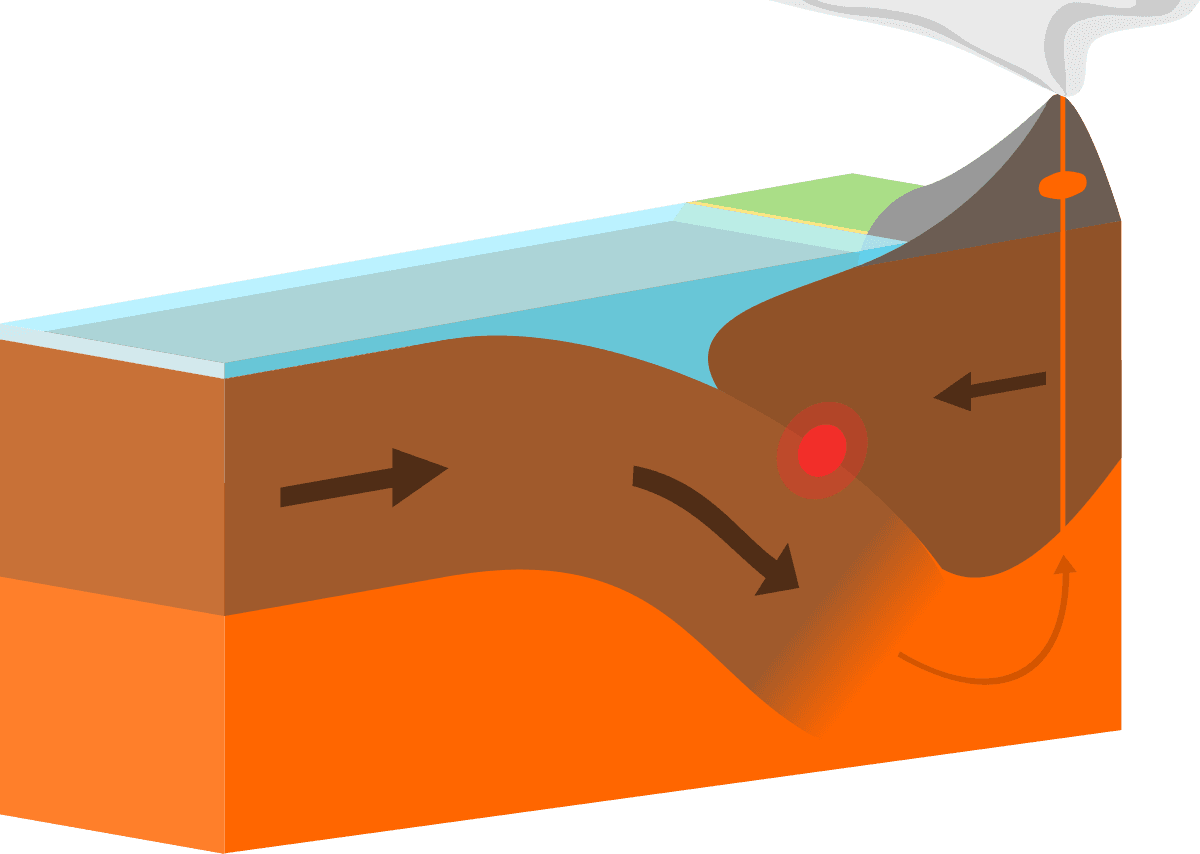
The picture shows one of the mechanisms of plate movement. What process drives the movement of plates?
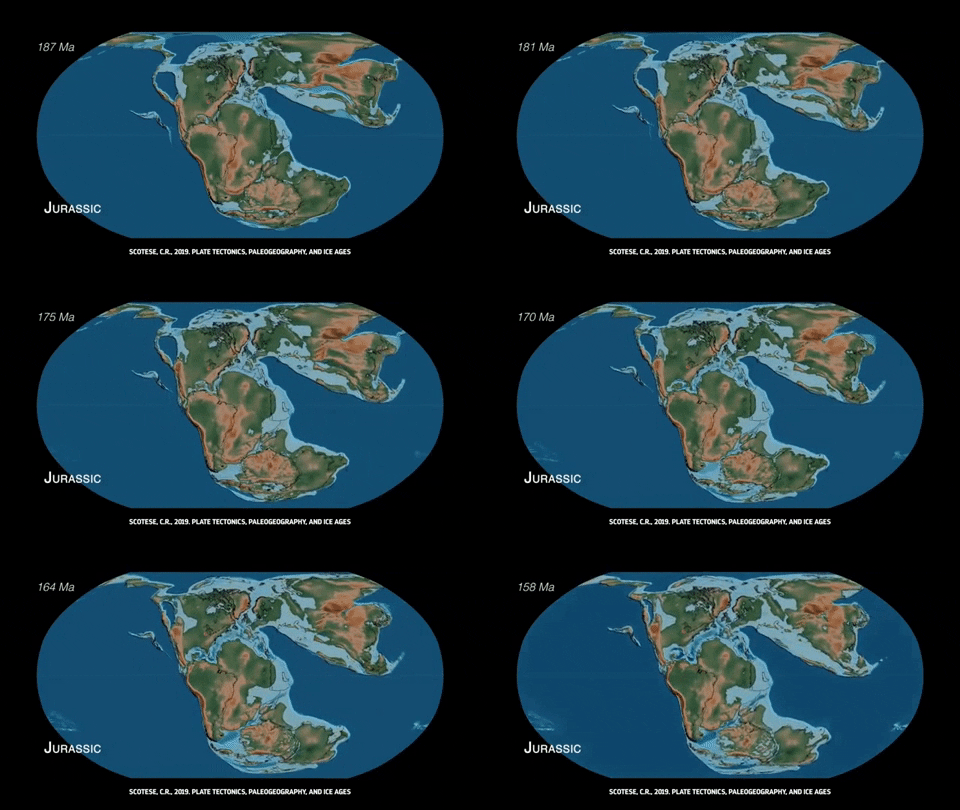
The evolution of the supercontinent, Pangaea occurred how many years ago?
Plate Tectonics theory was easily accepted by the scientific society during the ancient times.
The continental crust is denser than the oceanic crust.
Who created the first World Atlas?
The Atlantic ocean was once a valley between two continents, what are those?
The movement of tectonic plates ranges from __________ to __________ per year.
Pangaea split into two supercontinent known as ____________ and _____________.
The Philippine Sea plate is an example of ____________.
Which plate is sometimes a primary and sometimes a secondary plate?
The lithosphere and the asthenosphere were discovered by ___________.
How many major tectonic plates made up the Earth?
Who is the proponent of Expanding Earth Theory?
Who stated that oceans grow through spreading ridges where seafloor is created and moved away in both directions?
Who determined that there is a liquid core?
It was a body of water that separated the two supercontinent when Pangea split.
The Contracting Earth theory states that our planet is like a grape that shrink into a raisin due to cooling processes.
_________ is the equilibrium that exists between parts of the earth's crust, which behaves as if it consists of blocks floating on the underlying mantle, rising if material (such as an ice cap) is removed and sinking if material is deposited.
The ____________is the highly viscous, mechanically weak, and ductile region of the upper mantle of Earth.
______________states that the force of gravity and the plates are responsible for the movement of the Earth.
These are massive, irregular slab of solid rocks that envelope the surface of the Earth.
Younger rocks can be found in the _________________ crust.
