Loading...


REMA 101
Quiz by Mae Elaine Mirando
Tag the questions with any skills you have. Your dashboard will track each student's mastery of each skill.
This involves the initiative of any proponent to build a railway system
Determining the plans and specifications of all the railway system aspects.
Designing of all railway aspects as required and specified in the result of the feasibility studies.
Implementation of the project following all the approved designs and plans for all its aspects/discipline
Execution of all technical aspects, regulations and operational guideline to run a railway system
Activities done to prolong the life of any railway system components:
Is a written document outlining everything stakeholders should know about a project, including the timeline, budget, objectives, and goals.
Your feasibility study should summarize your project details and sell your idea so stakeholders feel inclined to get involved in the initiative
This is the initial design stage of any project or plan.
The term ______ in the rail transportation industry refers to any vehicle that moves along a railway track.
is a horizontally extending steel bar between supports that serves as a track for trains.
is a mechanical device that is used to guide trains from one rail track to another.
is used for holding two rails in horizontal as well as in vertical planes at equal height.
is the most common type of rail used by all railway lines.
is the difference in height between the outer and the inner rail on a curve.
A Standard Gauge railway is a railway with a track gauge of
The following are disadvantages of a railway turnout except
The following are advantages of rail transportation except
is the distance between two rails of a railway track.
is used to bear the compression load of the railroad ties, rails, and rolling stock; to facilitate drainage; and keep down vegetation that can compromise the integrity of the combined track structure.
is suitable for all types of rail.
involves the interception and removal of water from; upon or under the track.
In 1964, by virtue of _________ of Manila Railroad Co. became Philippine National Railways (PNR), a government-owned corporation.
The first railroad in the Philippines was inaugurated on __________ nearly two decades after King Alfonso XII of Spain issued a decree for the establishment of a railroad system in Luzon.
A Narrow Gauge railway is a railway with a track gauge of _____
is an 11.7-km extension project that aims to extend the railway from Baclaran to Bacoor, traversing through cities such as Parañaque and Las Piñas The latest update on the project is the installation of the girder along the Manila-Cavite Expressway (CAVITEX).
is one of the most highly anticipated projects in the country considering that it will be handy for those residing in Bulacan that are going in and out of the busy city of Metro Manila. Upon completion, it is expected to cut travel time between Quezon City and San Jose Del Monte, Bulacan to just 35 mins.
is a massive railway project that is a 36-km long subway that will go down as the first mass underground transport system in the Philippines. It aims to accommodate 1.5 million passengers daily while reducing the travel time between Quezon City to NAIA Terminal 3 to 35 minutes.
The following are sources of moisture affecting a railway track except
is a diagram or physical structure that defines the maximum height and width dimensions in railway vehicles and their loads. Their purpose is to ensure that rail vehicles can pass safely through tunnels and under bridges, and keep clear of platforms, trackside buildings and structures.
Due to its wide coverage, _______ is expected to serve as an essential part of growing the economy. The government agency divides the 148 km railway project into three segments. The first one is the PNR Clark Phase 1 which aims to cut down travel time between Manila and Malolos to just 35 minutes. Meanwhile, the PNR Clark Phase 2 will reduce the travel time between Makati and Clark International Airport to 55 minutes, which can help go hand-in-hand with NAIA upon completion. Lastly, the PNR Calamba. It is constructed to bring travel time between Manila and Calamba to an hour only.
CIn a four-aspect colour light signaling, DOUBLE YELLOW stands for
In a four-aspect colour light signaling, RED stands for
In a four aspect colour light signaling, YELLOW stands for
In a four-aspect colour light signaling,
is the fee paid by a passenger for the use of a public transport system: rail, bus, taxi, etc.
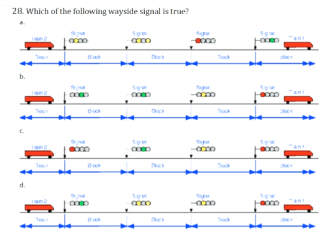
Which of the following wayside is true?
is a system used in railway signaling to detect the clear or occupied status of a section of track between two points. The system generally consists of a wheel sensor (one for each end of the section) and an evaluation unit for counting the axles of the train both into and out of the section.
is an electrical device used to prove the absence of train on rail tracks to signallers and control relevant signals.
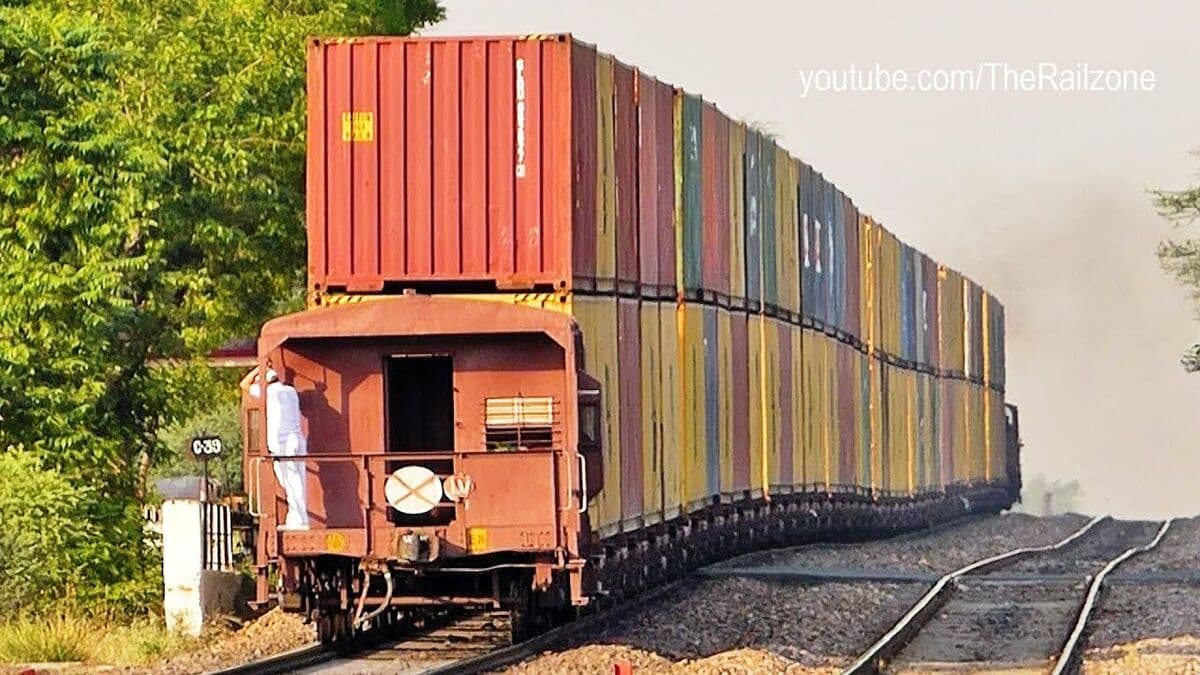
means putting two shipping containers on top of each other. This way, special railroad cars - called well cars - carry almost twice as much cargo
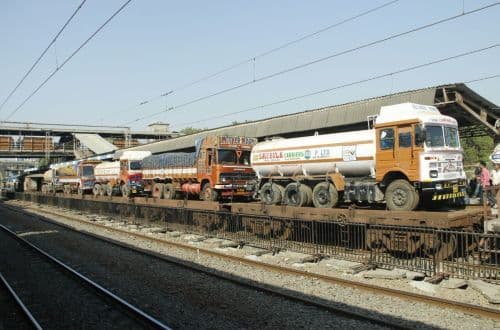
This means that trucks can drive onto a railroad flatcar and drive off when the train reaches the endpoint.
Rail Freight
This is an example of

This is an example of
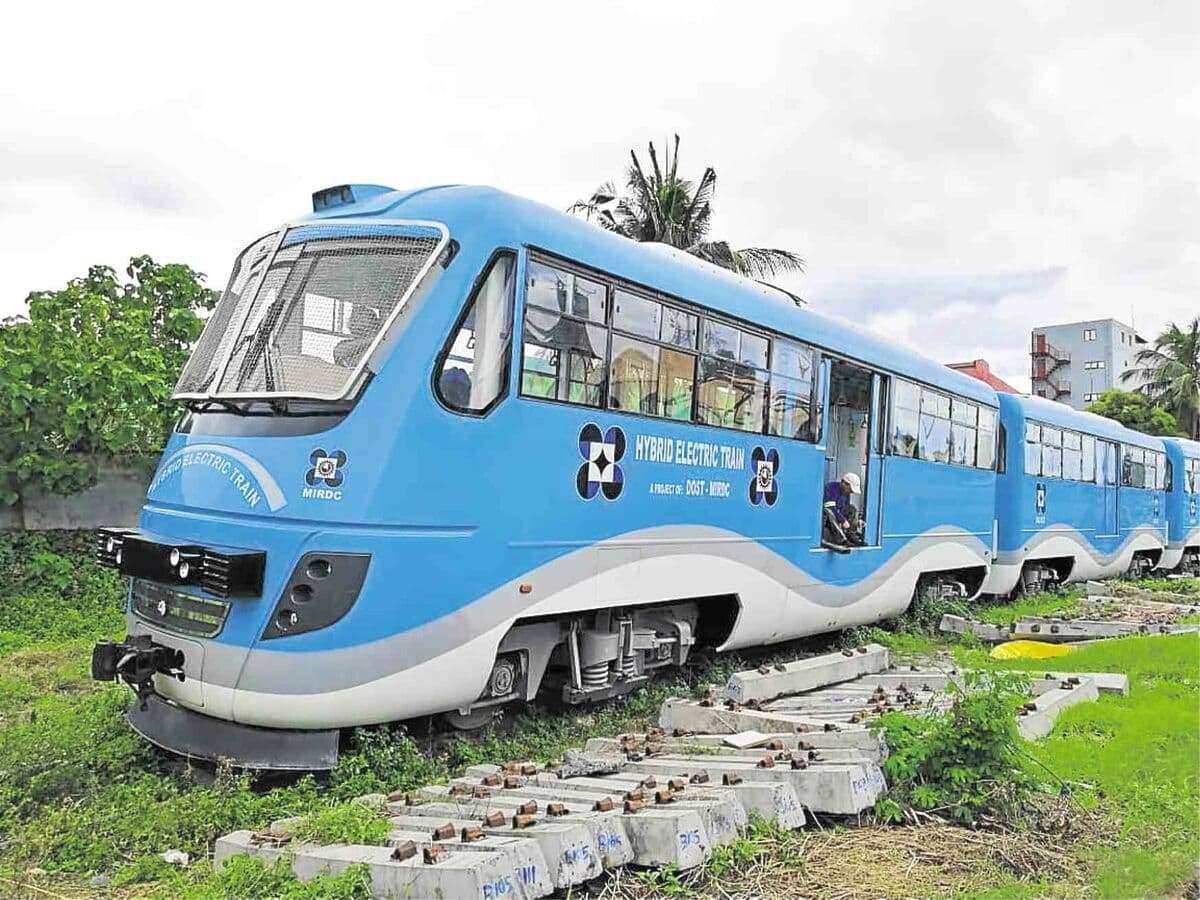
This is an example of

This is an example of

produces its pulling power through a steam engine. It have boilers whose water is heated by burning coal, wood or oil until it produces steam.
is a locomotive powered by electricity.
uses an onboard rechargeable energy storage system (a battery) in addition to a fueled power source and electrical engine.
has a diesel engine with internal combustion as its power source.
The rotation energy produced in the cylinders of a diesel engine was developed by _______ from 1892 onwards that can be transferred to the driving axle by three types of Transmission
The first electric train was invented by ________ in 1879.
a faster way to aggressively slow and stop the train when needed.
The ______ is the standard, fail-safe, train brake used by railways all over the world.
_______ brakes are controlled by the driver's brake valve handle. It is usually the same handle used to control the air brake.
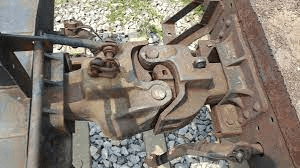
A mechanism typically placed at each end of a railway vehicle that connects them together to form a train.
Movement of goods from one place to another.
is the use of railroads and trains to transport cargo as opposed to human passengers
the amount of cargo that fits in a rail car
commodities not packed but loaded directly into a vessel.
refers to moving freight by two or more modes of transportation.
unloading cargo from one vessel and loading them into another to complete a journey to the final destination.
A task is regularly performed to monitor the status or the conditions of railway equipment, in order to lessen the likelihood of its failure.
Life based maintenance
a task performed to identify, isolate, and resolve a fault so that a failed equipment can be replaced or restored to anoperational condition
designed to help determine the condition of in-service equipment in order to predict when it is going to fail,
Aims at using multivariate data inputs and analysis
are wagons used for the overland hauling of freight and bulk commodities
train used to transport people along a railroad line
passenger railroad cars also known as
These rolling stock characteristics lead to:
Flat-footed rails were first invented in 1836 by
Types of rails

Types of rails
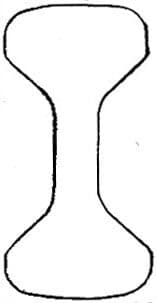
Types of rails
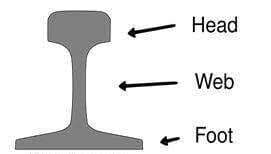
These generally rest on ballast and are also called ties in some regions. It transfer the load from the rails to the ballast or ground
Reduce the vibrations coming from rails.
The function of the _________ system is to fix rails to railway sleeper or railroad ties.
Single turnout consists of three parts includes
refers to the steel rail that is made from a standard rail profile, with one side straight and the other side curved.
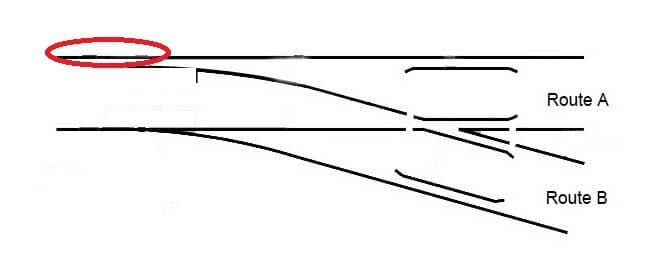
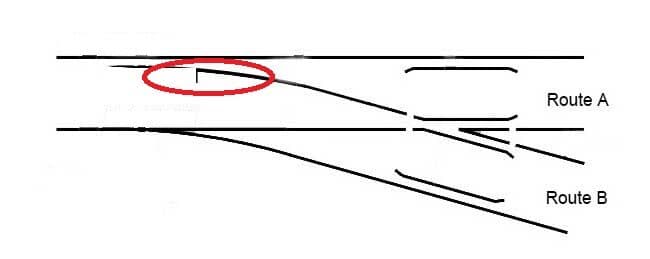
By using the switch machine to change the position of the switch rail, a train can change the running routes from A to B.
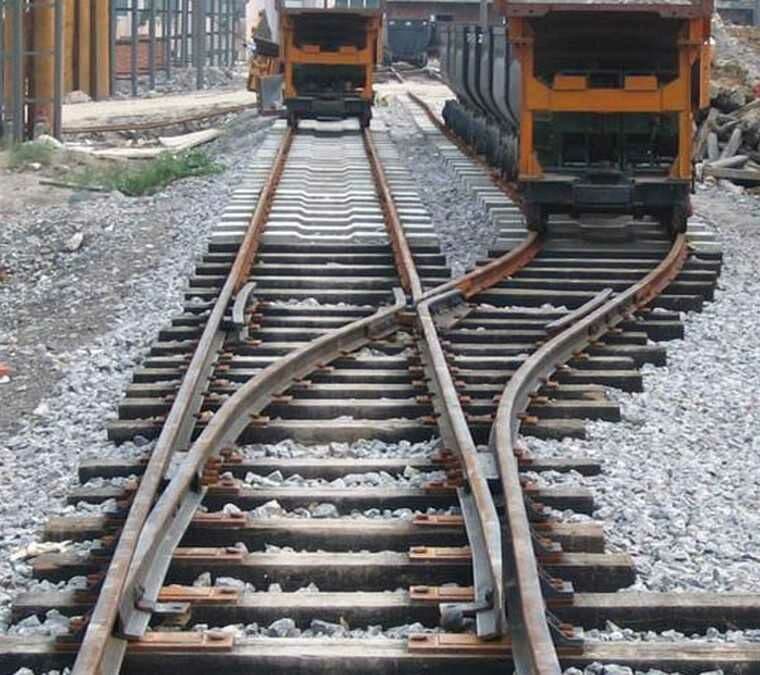
also named switch rail or point blades, which lie between the diverging stock rails, removable and direct the trains coming from the rail points towards either the straight or the diverging track.
It is used to change the position of switch rails by the switch machine to ensure the turnout open direction.

also known as the point machine, is the executive part of the railway turnout control system. It is electric, hydraulic or pneumatic machinery that is used to change turnouts, block point blades, and show the position of switch rails.

help to connect the switch rail with the frog and guard rail as a complete railway turnout.
check rail, is a short rail fixed alongside the outer rail and opposite the frog to guide the trail wheels passing through the appropriate flangeway and avoid derailing.

is the crossing part of two tracks,
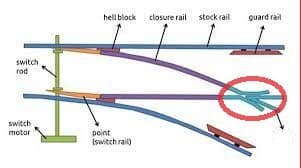
is Y-shaped in that the two jointed tracks diverge to the two sides

is shaped and connects three rail tracks. It uses two switch machines to control two sets of point rails.

is X-shaped. It looks like the combination of four sets of single turnout and a diamond crossing.
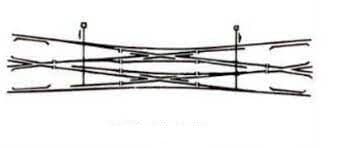
is composed of two acute frogs and two obtuse frogs. Without a switch machine, it cannot change routes.
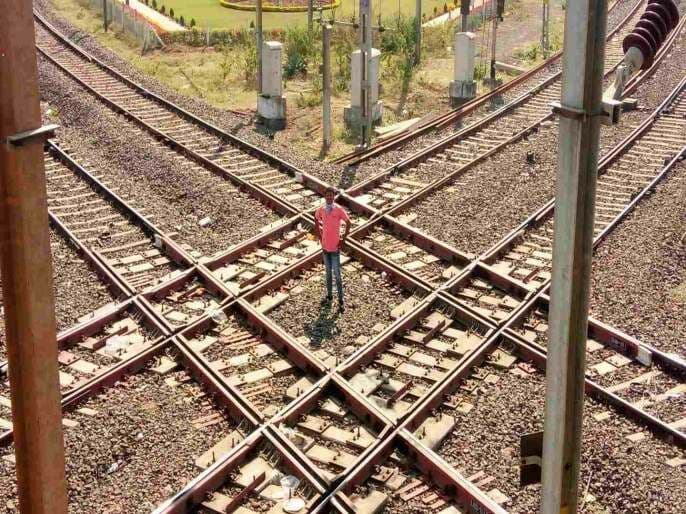
connects the upper two points with the lower two points of multiple slip switches will form the double crossover. It opens more directions but needs less occupied area.

is among the weakest parts of the railway.
is a mathematically-calculated curve on a section of highway, or railroad track, in which a straight section changes into a curve. It is designed to prevent sudden changes in lateral (or centripetal)acceleration.
It automates the ticket accounting and selling processes and it can give detailed data on system usage
where passengers can buy a ticket for their journey.
used by railway staff to issue tickets at stations
where passengers having a stored value ticket can increase the residual value.
which form a barrier between the "unpaid" area of the station and the "paid" area where passengers must possess a valid ticket.
It will read and release the gate when a valid ticket is presented.
which come in a number of varieties (according to the system in use) but which all have electronically encoded data content indicating the validity and/or use.