Describe the interactions that occur among systems that perform the functions of regulation, nutrient absorption, reproduction, and defense from injury or illness in animals.
Track each student's skills and progress in your Mastery dashboards
Give this quiz to my class
Q 1/18
Score 0
Health-care workers are exposed to many different types of pathogenic and nonpathogenic microorganisms. Which body systems work together to protect the body from pathogens?
60
Circulatory and immune
Muscular and vascular
Endocrine and reproductive
Digestive and excretory
Q 2/18
Score 0
Which of the following correctly describes an interaction that occurs between two body systems of a rabbit that helps the rabbit outrun a pursuing coyote?
60
The skeletal system releases additional calcium, and the circulatory system retains more sodium in the blood to provide muscles with ions for contraction
The endocrine system releases hormones that prepare the immune system to deal with possible injuries
The digestive system increases the rate of digestion, and the excretory system ceases to provide tissues with more nutrients
The respiratory system increases the breathing rate, and the circulatory system increases blood pressure to provide tissues with more oxygen
18 questions
Q.
Health-care workers are exposed to many different types of pathogenic and nonpathogenic microorganisms. Which body systems work together to protect the body from pathogens?
1
60 sec
BIOL.10a
Q.
Which of the following correctly describes an interaction that occurs between two body systems of a rabbit that helps the rabbit outrun a pursuing coyote?
2
60 sec
BIOL.10a
Q.
The human digestive system is approximately 900 cm long. Food is moved through the digestive tract primarily by -
3
60 sec
BIOL.10a
Q.
What two human systems work together to provide body cells with a constant supply of oxygen while removing carbon dioxide waste products?
4
60 sec
BIOL.10a
Q.
When a person is suddenly cut by a sharp object, a nervous impulse is sent along a sensory neuron to the spinal cord. The impulse is immediately transmitted through motor neurons to produce a response. Which of the following correctly identifies and describes this response?
5
60 sec
BIOL.10a
Q.
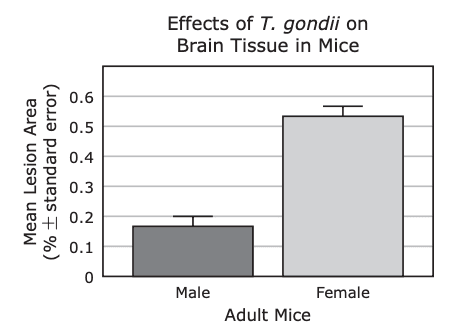
Toxoplasmosis is an infection producing brain lesions caused by the parasitic protozoan Toxoplasma gondii. Mice with their gonads removed are more resistant to T. gondii and develop very few lesions on their brain tissue. The graph shows the results of a scientific study of normal adult mice infected with T. gondii. Which systems most likely interact and cause the severity of infections to vary?
6
60 sec
BIOL.10a
Q.
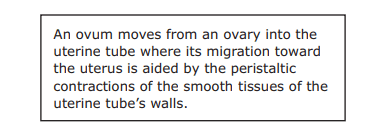
An informational pamphlet in a health clinic describes an interaction between body systems. Which statement identifies the body systems that are directly involved in the interaction described and explains how they accomplish the interaction?
7
60 sec
BIOL.10a
Q.
Coracias garrulus is a blue bird with an orange-brown back. The offspring of this bird have an effective defense mechanism. The young birds vomit and cover themselves in a foul-smelling orange liquid when they sense a threat by predators. Which two systems alert the young bird to the danger and help produce the vomit it uses as a defense?
8
60 sec
BIOL.10a
Q.
Animal body systems often coordinate their actions to carry out specific functions for the whole animal. Which of these correctly describes the interaction of two biological systems for a specific purpose in the human body?
9
60 sec
BIOL.10a
Q.
During the final stages of human gestation, receptors for the hormone oxytocin increase on the smooth muscle cells of the uterus. The release of oxytocin during labor stimulates the smooth muscle tissue in the wall of the uterus. The vigorous contraction of the uterine smooth muscle helps push the baby through the birth canal so that delivery can occur. This process involves the interaction of which organ systems?
10
60 sec
BIOL.10a
Q.
Scientists studying illnesses caused by chemically contaminated food conduct research to minimize the effects of these diseases on society. These chemicals harm the body through interactions between the digestive system and the immune system. Scientists conducting this research are likely to describe which of these interactions between the digestive and immune systems?
11
60 sec
BIOL.10a
Q.
Kidneys are part of the excretory system in a human body. They purify the impure blood and send it back to the rest of the body. Which system is mainly responsible for the transport of plasma to the kidneys?
12
60 sec
BIOL.10a
Q.
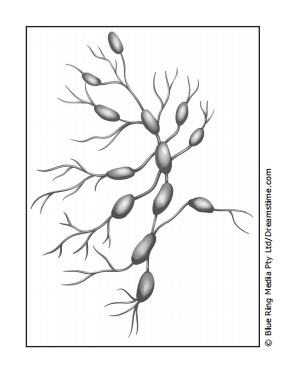
The picture shows bean-shaped glands called nodes. The clusters of cells in nodes include macrophages that break down viruses and other potentially harmful materials. Nodes also contain cells that produce protein particles capable of capturing harmful materials that flow in tissue fluid through the nodes. Different parts of the body are drained by nodes in different regions of the body. Which body systems are directly responsible for regulating these nodes and protecting the body from harmful materials in tissue fluid?
13
60 sec
BIOL.10a
Q.
Which of the following is an example of the endocrine system directly interacting with the nervous system?
14
60 sec
BIOL.10a
Q.
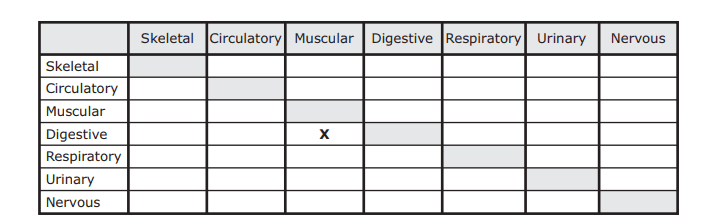
A student studying interactions between body systems constructs this table. The student plans to fill out the table with phrases that describe an interaction between each pair of systems. Which of these phrases could be placed in the position marked with an X?
15
60 sec
BIOL.10a
Q.
The female reproductive and endocrine systems work interactively for which main purpose?
16
60 sec
BIOL.10a
Q.
How do the circulatory system and immune system work together to respond to an injury?
17
60 sec
BIOL.10a
Q.
Which two body systems must directly interact for vertebrate organisms to exchange gases?