Tag the questions with any skills you have. Your dashboard will track each student's mastery of each skill.
Give this quiz to my class
Q 1/20
Score 0
Cytokinins are a class of plant hormones that help regulate growth by promoting cell division. Cytokinins are produced mainly in meristematic tissue, where most plant growth occurs. Which system carries cytokinins produced in the roots to the rest of the plant?
45
Reproductive system (stamen and pistil)
Vascular system (xylem and phloem)
Dermal system (outermost cells)
None of these
Q 2/20
Score 0
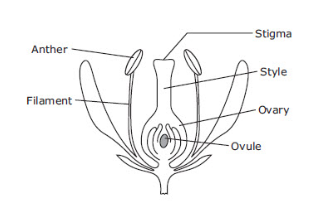
Which of the following best describes the interaction that occurs between a plant’s reproductive parts during self-fertilization?
45
pollen moves up from ovule to the anther
pollen released from the anther falls on the stigma and then the sperm cell is deposited in the ovary where the egg is
plants cannot self-fertilize
the egg leaves the ovary goes to the stamen where fertilization takes place
20 questions
Q.
Cytokinins are a class of plant hormones that help regulate growth by promoting cell division. Cytokinins are produced mainly in meristematic tissue, where most plant growth occurs. Which system carries cytokinins produced in the roots to the rest of the plant?
1
45 sec
Q.
Which of the following best describes the interaction that occurs between a plant’s reproductive parts during self-fertilization?
2
45 sec
Q.
Tropisms are important to plants because they -
3
45 sec
Q.
Plant roots have extensions called root hairs. These root hairs are important in the homeostasis of the plant.
Which statement best explains the importance of the root hairs to the stems and leaves of the plant?
4
45 sec
Q.
A corn plant produces both male and female flowers. The male flower forms the tassel and the female flower forms the ear of corn. The silks that emerge from the ear are the stigma of the female flower. Each silk leads to an ovule that can become a corn seed. Which of these must happen for corn seeds to develop on the ear?
5
45 sec
Q.
Which of the following is a product of photosynthesis?
6
45 sec
Q.
Which of the following is a product of cellular respiration?
7
45 sec
Q.
Which of the following correctly describes how the diagram of cellular respiration is different from the diagram of photosynthesis?
8
45 sec
Q.
Most plant leaves take in more carbon dioxide as light increases. They give off carbon dioxide if light intensity is too low. The graph shows a plant’s carbon dioxide levels at different light intensities. At point X, the rate of which process is equal to the rate of photosynthesis?
9
45 sec
Q.
Phytoplankton are marine protists. Like plants, phytoplankton contain chlorophyll and produce glucose using what two reactants?
10
45 sec
Q.
Which statement best describes the relationship between the products of photosynthesis and the reactants in cellular respiration?
11
45 sec
Q.
Photosynthesis and cellular respiration both involve the use and release of gases. Which statement correctly identifies the role of gases in the two processes?
12
45 sec
Q.
Which statement correctly pairs the reaction with its reactants?
13
45 sec
Q.
The picture shows an experiment designed to investigate photosynthesis activity in a water plant in a dark room. Over time, bubbles can be easily observed and counted as they escape from the funnel. What are the bubbles made of?
14
45 sec
Q.
More bubble indicates which of the following?
15
45 sec
Q.
As available water decreases the rate of photosynthesis -
16
45 sec
Q.
Several plants like the Venus fly trap and pitcher plant trap and digest insects. What would they get from the insects?
17
45 sec
Q.
The female parts of the flower include _________ and are called the ___________.