Tag the questions with any skills you have. Your dashboard will track each student's mastery of each skill.
Give this quiz to my class
Q 1/18
Score 0
Which of the following is the most abundant gas in the atmosphere?
30
nitrogen
carbon dioxide
oxygen
argon
Q 2/18
Score 0
What happens to the air pressure as you go higher in altitude?
30
it decreases
it remains steady
it changes randomly
it increases
18 questions
Q.
Which of the following is the most abundant gas in the atmosphere?
1
30 sec
Q.
What happens to the air pressure as you go higher in altitude?
2
30 sec
Q.
In which layer of the atmosphere do most clouds form?
3
30 sec
Q.
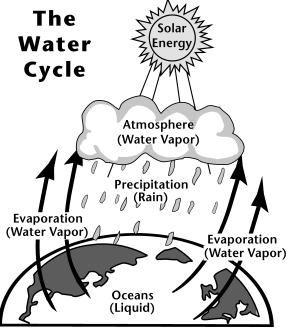
Following the evaporation stage of the water cycle, the evaporated water
4
30 sec
Q.
Which of the following processes describes water changing from a liquid to a gas?
5
30 sec
Q.
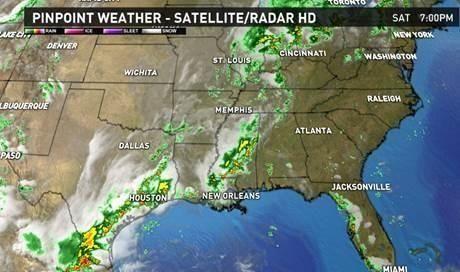
Using the satellite/radar image above, which of the following statements is correct?
6
30 sec
Q.
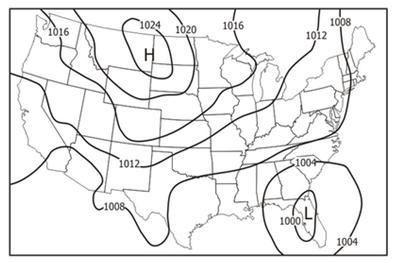
What type of equal measure do the isobars shown on this map connect?
7
30 sec
Q.
A weather map is often used to illustrate the boundary that separates warmer and cooler air. What is the boundary called
8
30 sec
Q.
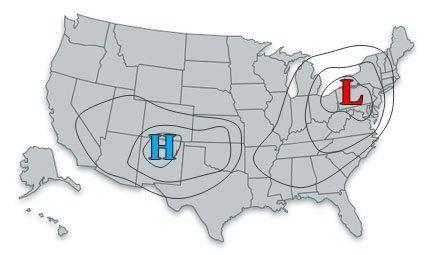
Based on the information in the weather map, which direction will the wind move?
9
30 sec
Q.
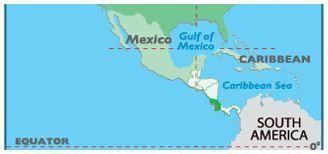
Which of the following would most likely describe an air mass that forms over the Gulf of Mexico?
10
30 sec
Q.
Suppose the air temperature outside is 30 degrees Farenheit and the relative humidity is 90%. What kind of weather should you expect if a cold front is moving in your direction?
11
30 sec
Q.
What is the effect of unequal heating of Earth's surface?
12
30 sec
Q.
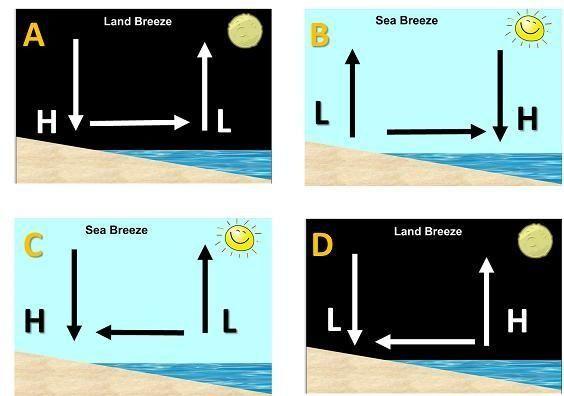
Which choice above correctly describes either a land or sea breeze?
13
30 sec
Q.
Which of the following is a valid example of how the greenhouse effect works in earth's atmosphere?
14
30 sec
Q.
Which of the following statements is correct regarding the effect of solar radiation on land and water?
15
30 sec
Q.
Which global wind is responsible for weather movement across the United States?
16
30 sec
Q.
Which of the letters above describe the polar easterlies?
17
30 sec
Q.
Why are coastal areas cooler during the day than inland areas?