demonstrate that the flow of electricity in circuits requires a complete path through which an electric current can pass and can produce light, heat, and sound
Track each student's skills and progress in your Mastery dashboards
Give this quiz to my class
Q 1/13
Score 0
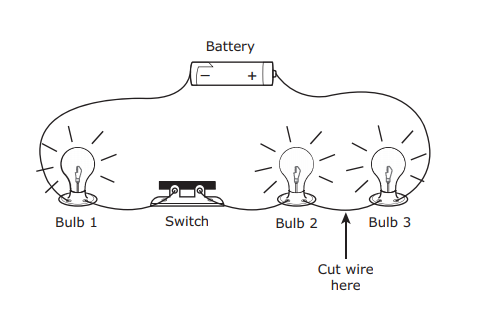
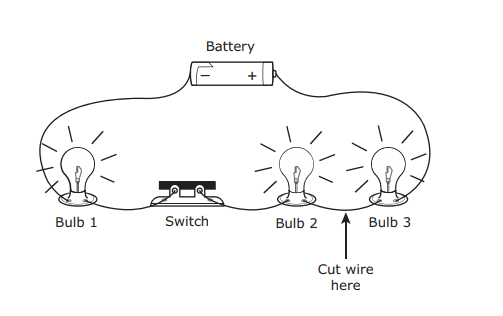
The diagram shows a series circuit with three lit bulbs. How many of the bulbs will remain lit if the wire is cut at the point shown by the arrow?
60
3
0
2
1
Q 2/13
Score 0
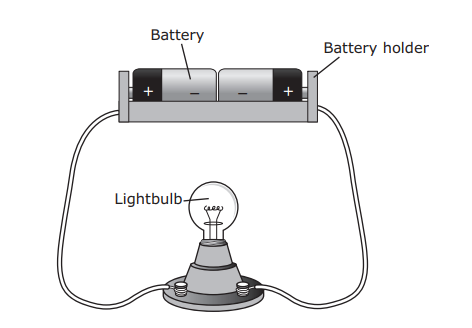
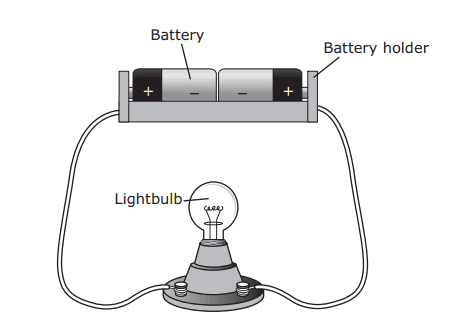
Which of these changes to the electric circuit shown above will cause the lightbulb to light up?
60
Adding a switch and more wire so that the current can flow more easily
Straightening the wire so that the current can flow more easily
Making the length of wire the same on both sides of the lightbulb
Turning one battery so that its positive end connects to the other battery’s negative end
13 questions
Q.
The diagram shows a series circuit with three lit bulbs. How many of the bulbs will remain lit if the wire is cut at the point shown by the arrow?
1
60 sec
5.6.B: Force, Motion and Energy
Q.
Which of these changes to the electric circuit shown above will cause the lightbulb to light up?
2
60 sec
5.6.B: Force, Motion and Energy
Q.
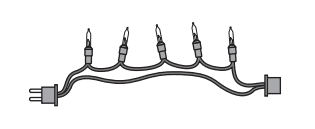
A string of lights with small bulbs is shown below. The bulbs are connected by wire that is covered with an insulator. When the lights are on, electricity travels in —
3
60 sec
5.6.B: Force, Motion and Energy
Q.
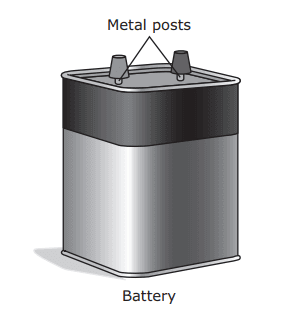
The diagram shows the metal posts that are usually found on a battery. The battery can be connected to a bell and a switch to produce sound. Which statement best explains why there are two metal posts on the battery?
4
60 sec
5.6.B: Force, Motion and Energy
Q.
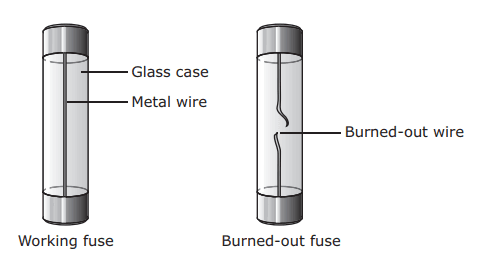
Most cars have lights, power locks, radios, and other equipment that use electricity. Electric circuits power this equipment. Each circuit has a fuse that completes it. The picture below shows one type of fuse a car may have. Which of these describes one thing that could happen if the wire in a car fuse burns out?
5
60 sec
5.6.B: Force, Motion and Energy
Q.
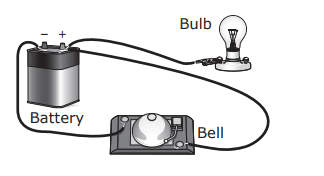
A group of students built the circuit shown below.
The lightbulb does not glow. Which statement explains this observation?
6
60 sec
5.6.B: Force, Motion and Energy
Q.
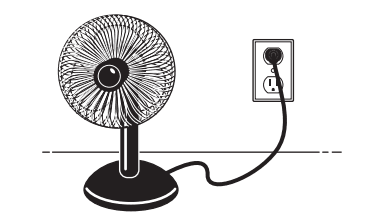
Many types of fans are used in homes. One type of electric fan is shown below. In addition to mechanical energy, which of these is produced as electric current passes through the circuit of this fan?
7
60 sec
5.6.B: Force, Motion and Energy
Q.
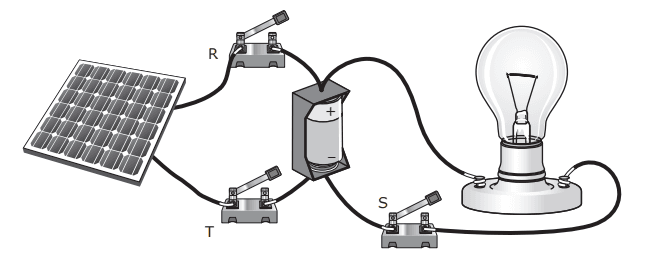
A simplified diagram of a system using solar energy is shown. To recharge the battery for later use without lighting the bulb, which of the following switches should be closed?
8
60 sec
5.6.B: Force, Motion and Energy
Q.
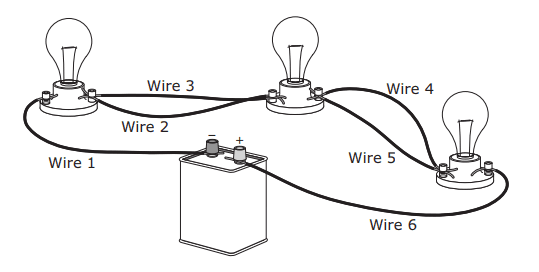
All the lightbulbs in this circuit are lit. Which change would cause all the bulbs to go out?
9
60 sec
5.6.B: Force, Motion and Energy
Q.
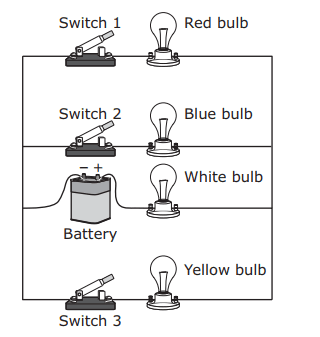
Students constructed a circuit using different-colored lightbulbs. What will happen if Switch 3 is closed and the other switches are left open?
10
60 sec
5.6.B: Force, Motion and Energy
Q.
This circuit has three lightbulbs and a bell. Which procedure will result in only the blue lightbulbs operating?
11
60 sec
5.6.B: Force, Motion and Energy
Q.
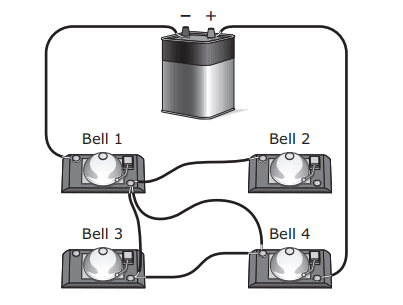
The diagram shows an electric circuit with four bells that a student plans to build. When the student connects the wires as shown, which of the bells will ring?
12
60 sec
5.6.B: Force, Motion and Energy
Q.
In some circuits that are used for decorating, one burned-out lightbulb will prevent all the other lightbulbs from lighting. In other circuits, one burned-out lightbulb will have no effect on the other lightbulbs. In which of these circuits will the other lightbulbs still light even if one bulb is burned out?