Loading...


Division Mock Test 1
Quiz by Ivy Solano
Tag the questions with any skills you have. Your dashboard will track each student's mastery of each skill.
ON OPINION MARKING SIGNALS: Read the given texts closely.
What do you think is the purpose of each of the letters above?
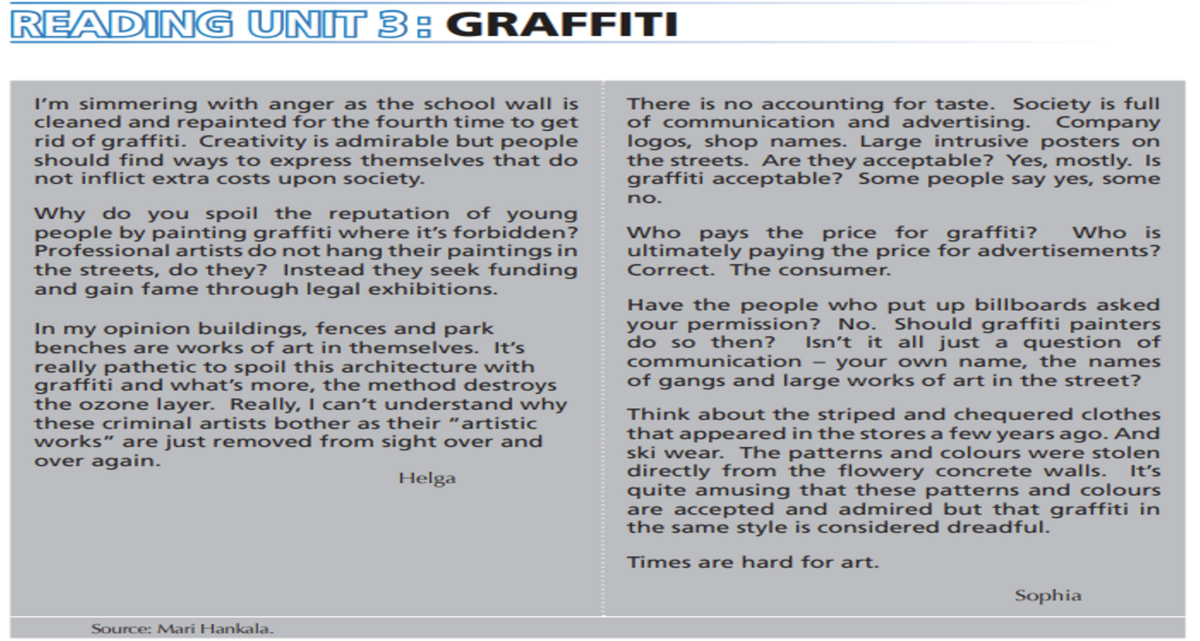
I am convinced that it tells people how much is spent removing graffiti.
I believe it explains what graffiti is.
It is my belief that it presents an opinion about graffiti.
It seems like it demonstrates the popularity of graffiti.
ON OPINION MARKING SIGNALS: Read the given texts closely.
What is the function of this signal “In my opinion” in the text?
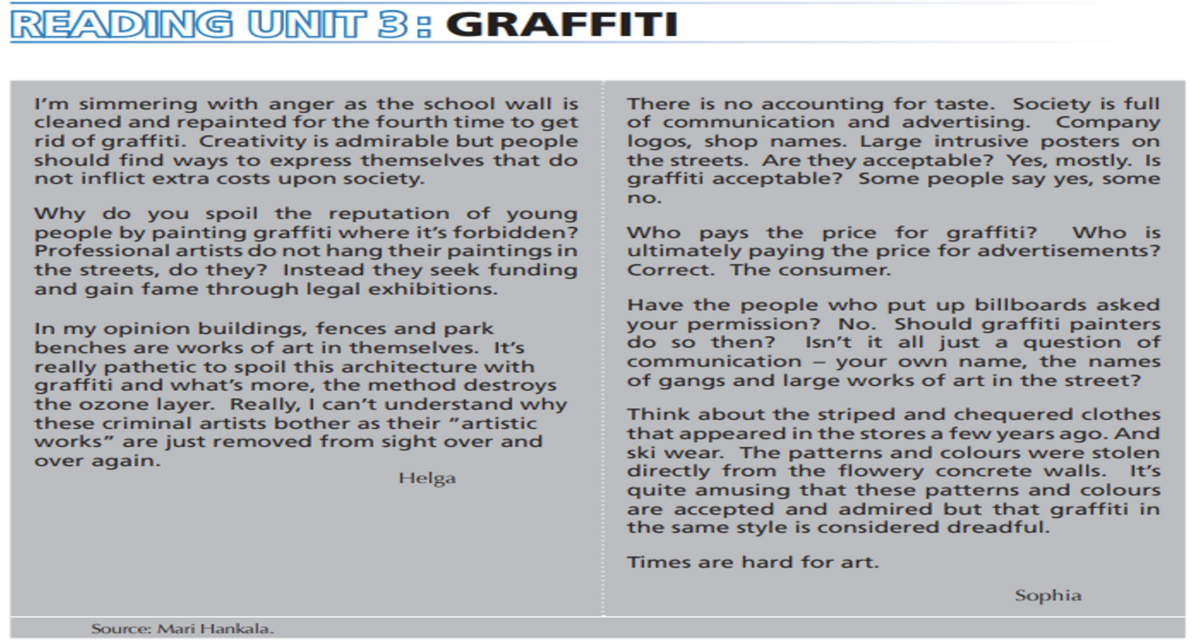
To provide factual information
To express the writer's opinion
To acknowledge an opposing viewpoint
To indicate a point in a process or a temporary situation
ON OPINION MARKING SIGNALS: Read the given texts closely.
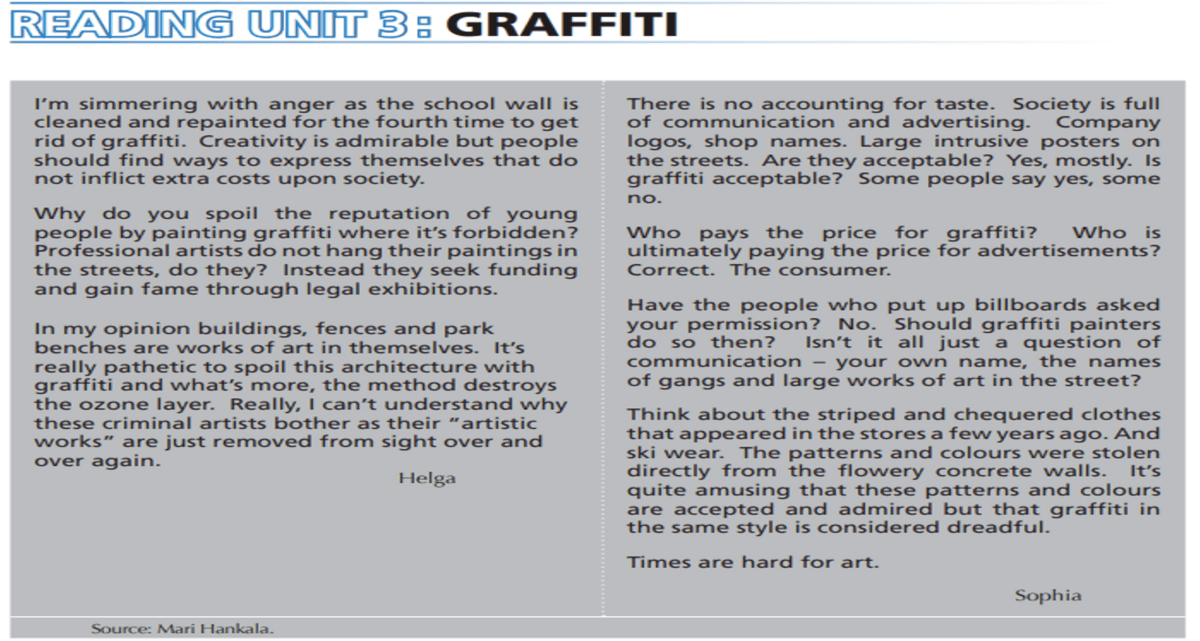
What do you think is the purpose of each of the letters above?
ON OPINION MARKING SIGNALS: Read the given texts closely.
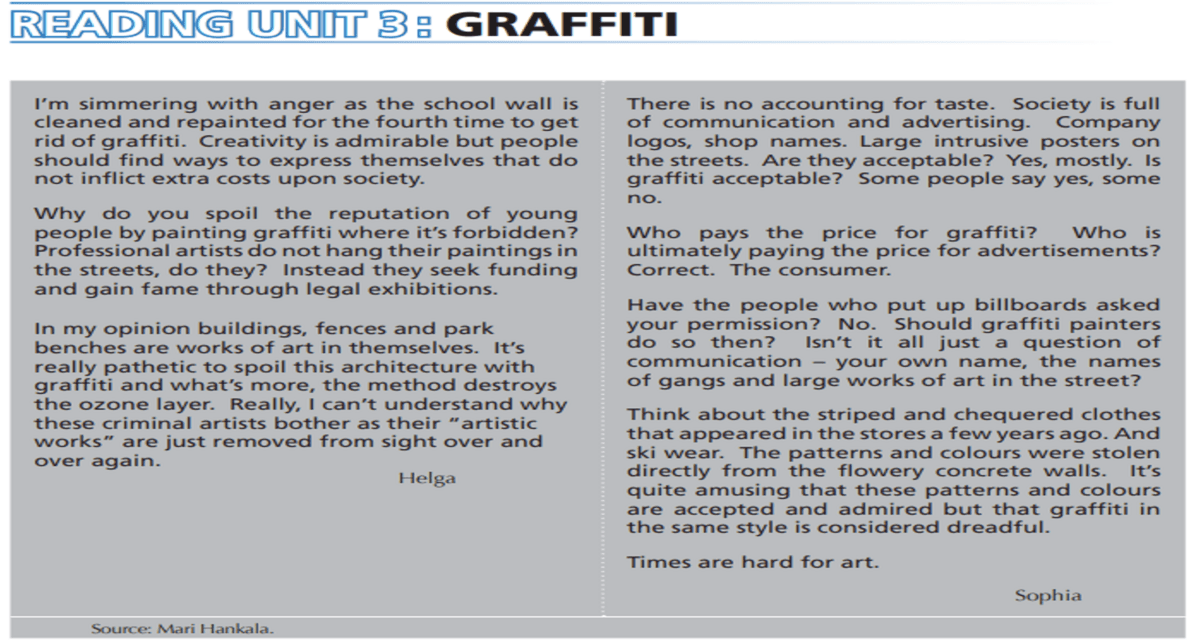
What is the function of this signal “In my opinion” in the text?
Study/ Interpret the following information in each of the non-linear texts or diagrams and answer the given questions.
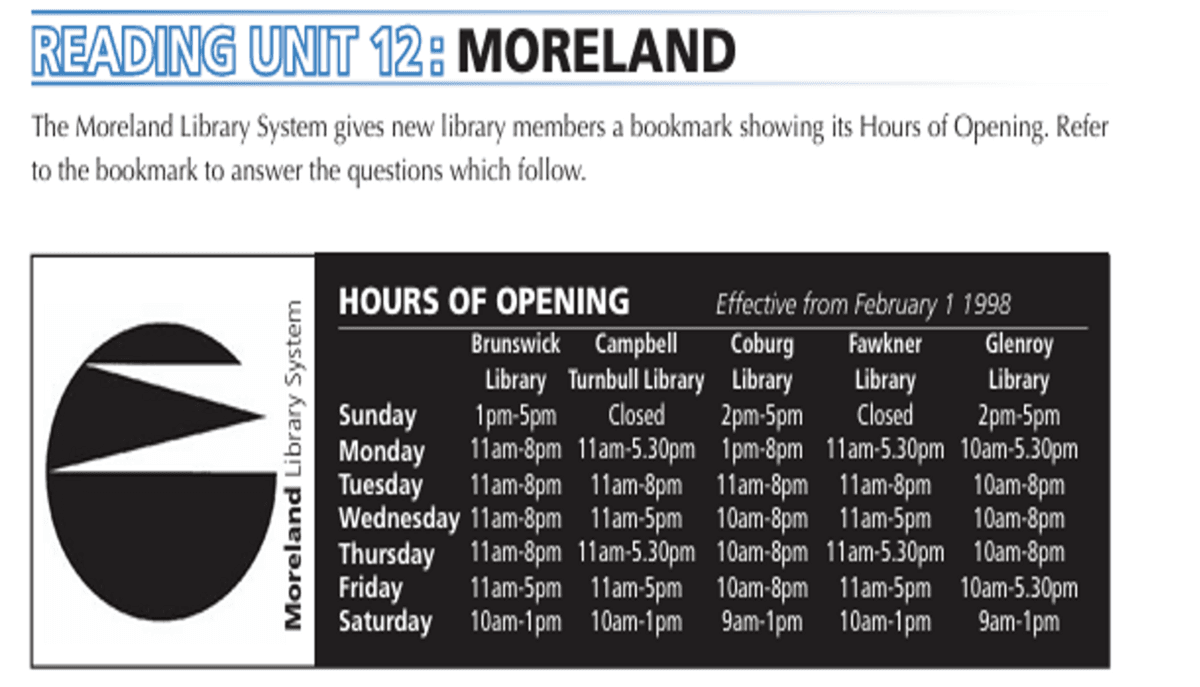
Question: What time does the Fawkner Library close on Wednesday? (Use the same time format based on the picture)
ORPHANED LEOPARD CUB
Manisha Barde of Dhamangaon village, in Nashik, Maharashtra, had stepped out of her hut to relieve herself one early August Morning, leaving the door ajar. Her children, who slept in the same bed with her, were inside. A bit drowsy, she returned home soon to the warmth of her bed. She noticed her pet cat curled up between her two kids, inside the mosquito net. As Manisha crawled back inside, she felt the cat cuddle up to her. That's when she realised she wasn't snuggling with a cat at all, but a leopard cub. It had been orphaned a month ago when its mother was accidently killed in a road accident and had snuck into the hut, going straight to the bed for a nap. Forest officials, who were soon alerted, trapped the three-month cub. Last heard, the cub was doing fine and under the care of the local forest department. It will be released into the wild once it is old enough to hunt. Source: Reader's Digest
Activists are alarmed at the loss of habitats of wild animals.
Which of these factors do you think is responsible for such a grim situation?
ORPHANED LEOPARD CUB
Manisha Barde of Dhamangaon village, in Nashik, Maharashtra, had stepped out of her hut to relieve herself one early August Morning, leaving the door ajar. Her children, who slept in the same bed with her, were inside. A bit drowsy, she returned home soon to the warmth of her bed. She noticed her pet cat curled up between her two kids, inside the mosquito net. As Manisha crawled back inside, she felt the cat cuddle up to her. That's when she realised she wasn't snuggling with a cat at all, but a leopard cub. It had been orphaned a month ago when its mother was accidently killed in a road accident and had snuck into the hut, going straight to the bed for a nap. Forest officials, who were soon alerted, trapped the three-month cub. Last heard, the cub was doing fine and under the care of the local forest department. It will be released into the wild once it is old enough to hunt. Source: Reader's Digest
Man and animals are interdependent. Even then most human wildlife conflict incidents are caused by human behaviour. How can the conflict between human and animals be resolved?
ON MULTIMODAL TEXTS
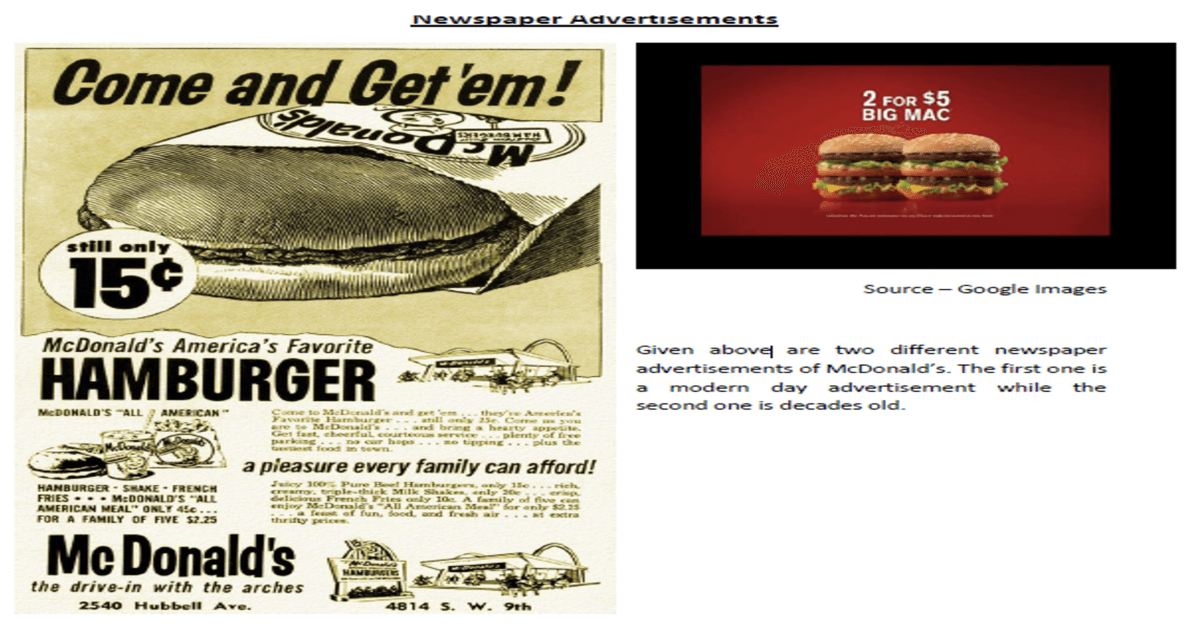
Given below are two different newspaper advertisements of McDonald’s. The first one is a modern day advertisement while the second one is decades old.
On the right side, what multimodal text is used?
ON MULTIMODAL TEXTS
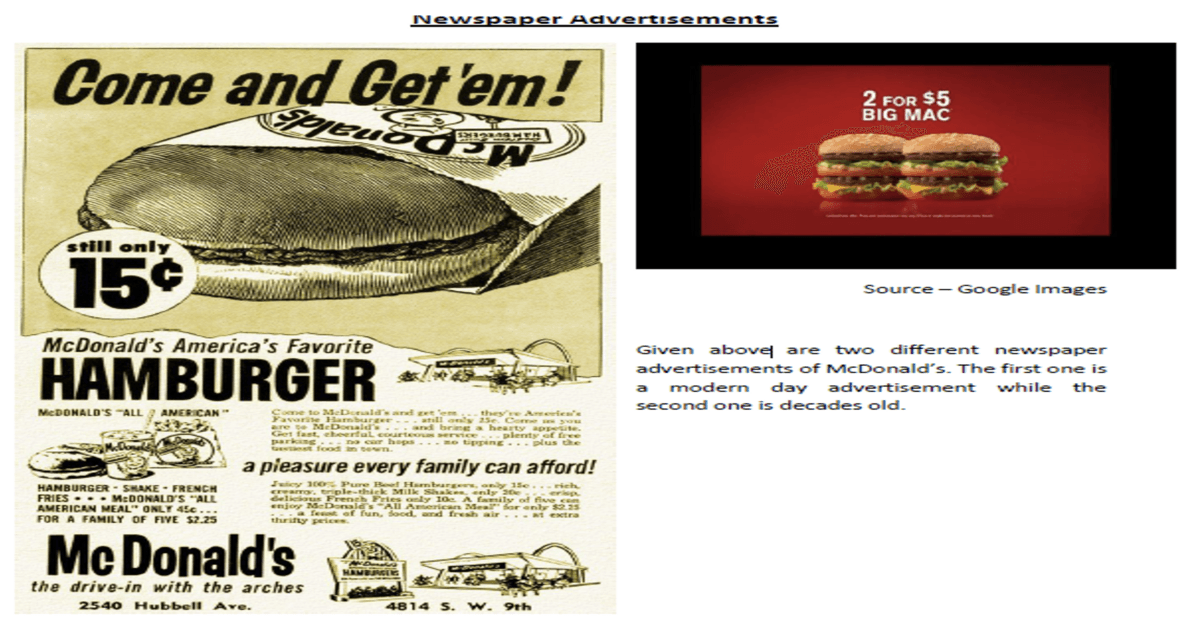
Given below are two different newspaper advertisements of McDonald’s. The first one is a modern day advertisement while the second one is decades old.
On the left side, what multimodal text is used?
Classify the following multimodal texts below. Click the given multimodal text/s and bring them to the right classification below.
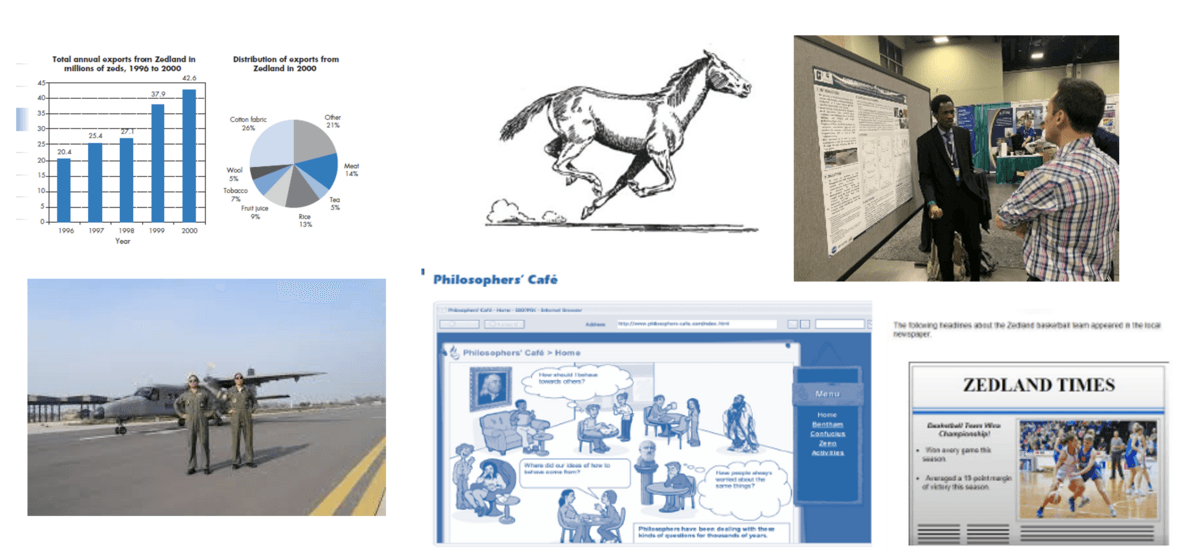
Study the given pie chart. Interpret information found in non-linear texts below.
QUESTION: Earth is home to millions of species, yet, one dominates it. The world witnessed many changes after humans came on the scene. The change led to a receding of:

Instructions: Carefully read the passage below. Examine its diagram and use the following questions to interpret its content.
Sustaining Artisans Economically
A wide range of beautiful handicrafts form one of the most significant traits of the rich cultural heritage of our country. They are not only the traditional arts of different provinces but also form an important source of alternative income for the artisans. Almost 70 percent of our country’s population residing in rural areas is directly or indirectly dependent on agriculture as the primary source of livelihood. In non-agricultural or lean seasons, handicrafts become an alternative means of subsistence for this population and safeguard them from food insecurity. In this way, handicrafts become an important source of livelihood for a large chunk of the Indian population. There were 68.86 lakh artisans as per the census of handicrafts conducted during the eleventh five-year plan. The sector provides employment in various forms to the artisans. This can be production of raw materials like motifs, production of finished goods and their marketing.
There is another sub-segment of this sector employing another set of people. They are the people engaged directly or indirectly in export of handicrafts. The export segment of handicrafts is emerging as the potential source of foreign exchange earnings.
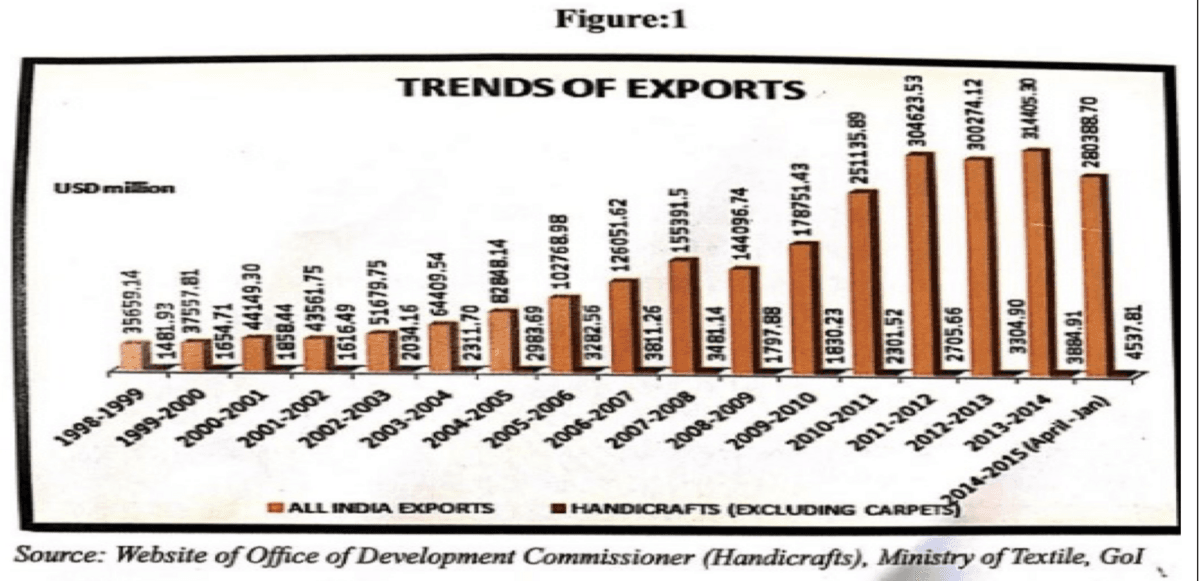
Figure 1 establishes the fact that export of handicrafts reflects a rising trend and has a significant share in the domain of all-India exports.
According to government sources it was estimated in the year 2015-16 the total production of handicrafts including handmade carpets was Rupees 41,418 crores and export of handicrafts was Rupees 30,939 crores. The figures prove the role of the sector in the Indian economy.
-Hina Naqvi, from Yojana magazine, Edition April 2019
According to the figure, the increase in All India Export of handicrafts from the year 1998-99 to 2011-12 was:
INTERNET RELAY CHAT
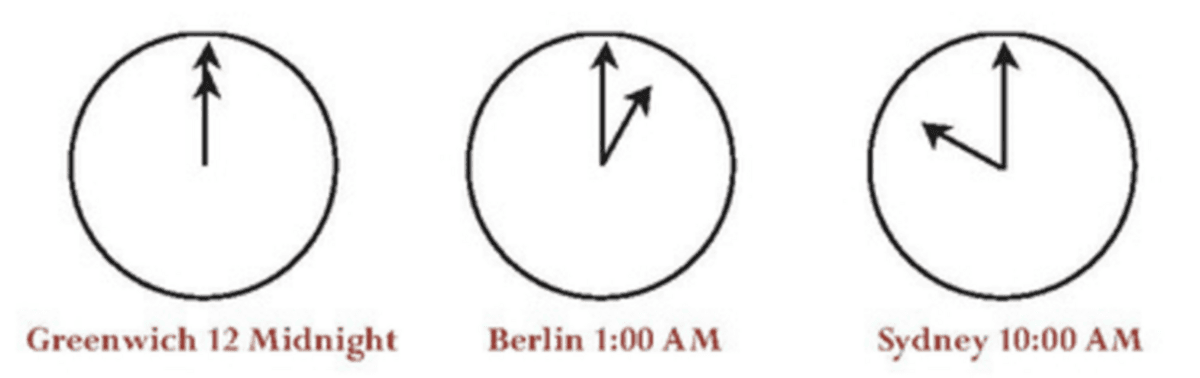
Mark (from Sydney, Australia) and Hans (from Berlin, Germany) often communicate with each other using “chat” on the Internet. They have to log on to the Internet at the same time to be able to chat.
To find a suitable time to chat, Mark looked up a chart of world times and found the following (see picture below).
Question:
Mark and Hans are not able to chat between 9:00 AM and 4:30 PM, their local time, as they have to go to school. Also, from 11:00 PM till 7:00 AM, their local time they won’t be able to chat because they will be sleeping.
When would be a good time for Mark and Hans to chat? Write the local times on the table. (Match the options by clicking the country on the left and clicking the corresponding time on the right respectively)
TRIANGULAR PATTERN
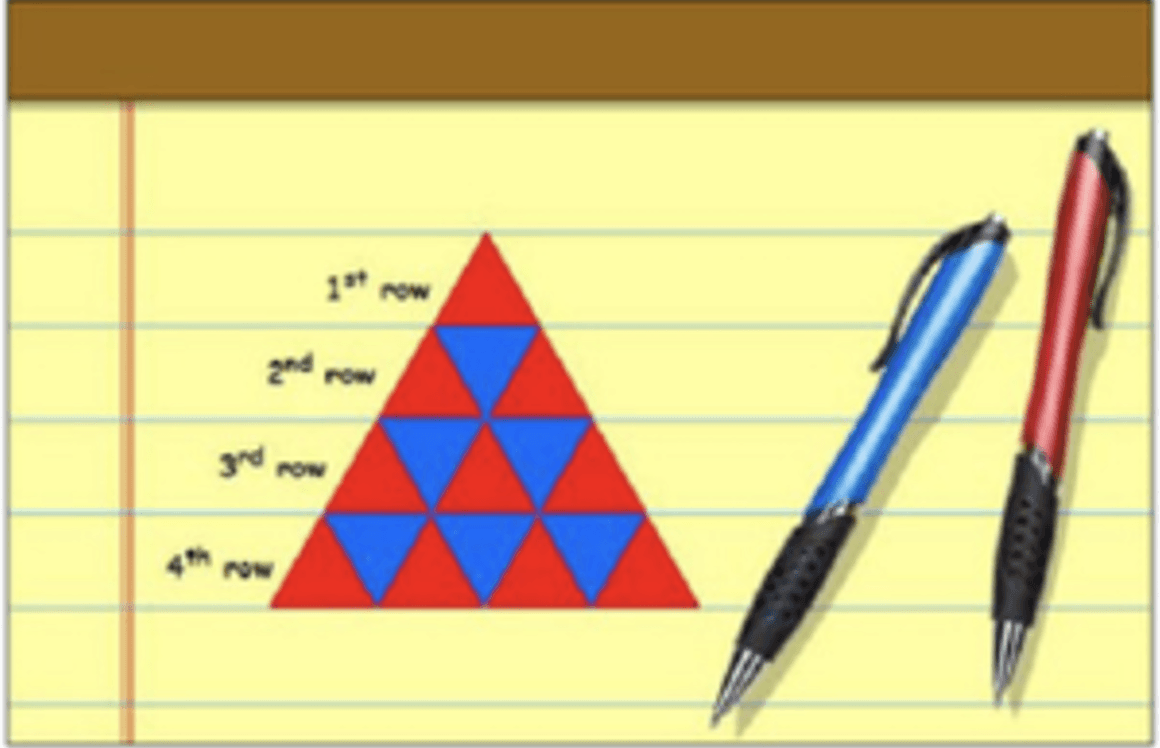
Alex drew the following pattern of red and blue triangles. The first four rows of the pattern are shown below.
Question:
Refer to “Triangular Pattern” below. Click on a choice to answer the question.
What percentage of the triangles in the first four rows of Alex’s pattern are blue?

TRIANGULAR PATTERN
Alex drew the following pattern of red and blue triangles. The first four rows of the pattern are shown below.
Question:
Refer to “Triangular Pattern” below. Click on a choice to answer the question.
If Alex were to extend the pattern to a fifth row, what would be the percentage of the blue triangles in all five rows of the pattern?
WALKING
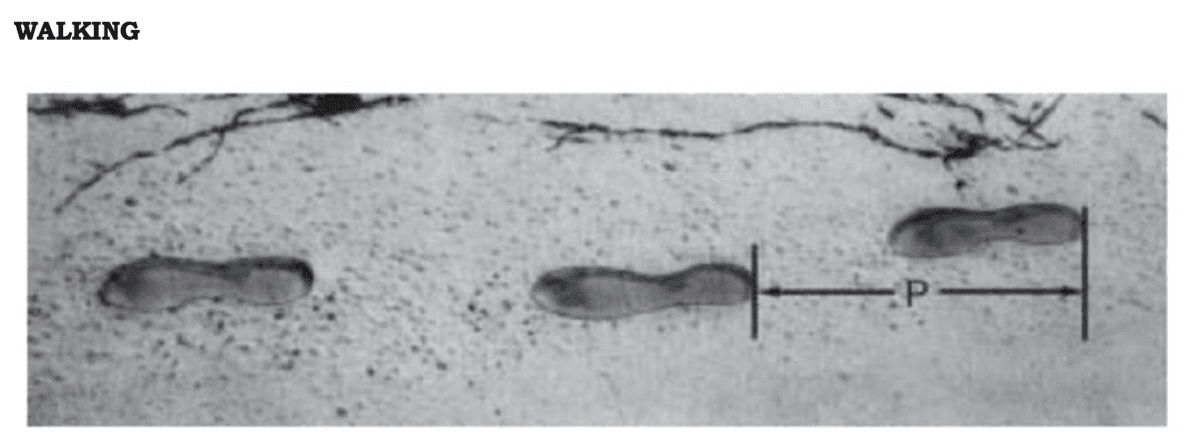
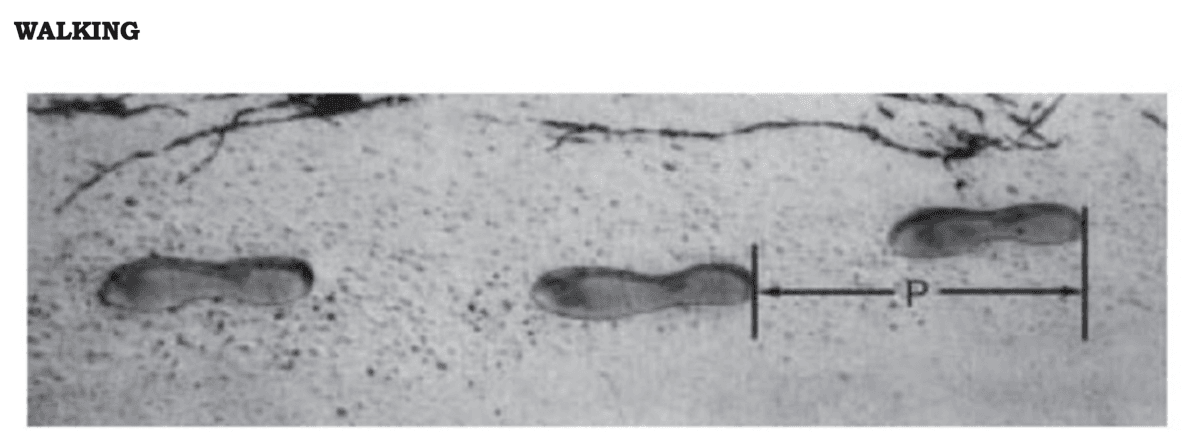
The picture shows the footprints of a man walking. The pace length P is the distance between the rear of two consecutive footprints.
For men, the formula, n/P = 140, gives an approximate relationship between n and P where:
n = number of steps per minute, and
P = pace length in meters.
Question:
If the formula applies to Heiko’s walking and Heiko takes 70 steps per minute, what is Heiko’s pace length?
WALKING
The picture shows the footprints of a man walking. The pace length P is the distance between the rear of two consecutive footprints.
For men, the formula, n/P = 140, gives an approximate relationship between n and P where:
n = number of steps per minute, and
P = pace length in meters.
Question:
Bernard knows his pace length is 0.80 meters. The formula applies to Bernard’s walking. Calculate Bernard’s walking speed in meters per minute and in kilometers per hour.
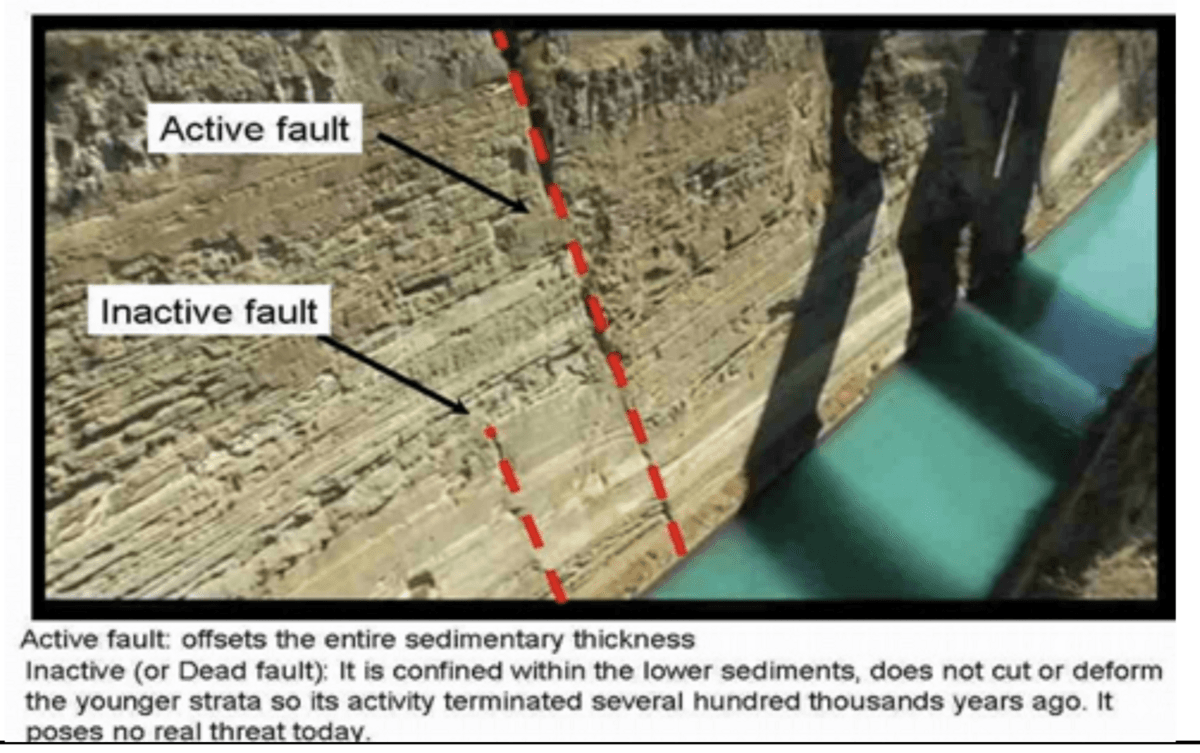
Based on the picture below, what is the primary difference between an active fault and an inactive (or dead) fault?
Data Analysis
Given the following data about two faults, classify each as active or inactive and provide a brief justification.
Fault A: Last significant movement recorded: 5 years ago, Magnitude: 6.5
Fault B: Last significant movement recorded: 15,000 years ago, Magnitude: N/A
Click the given fault and bring them to the right classification below.
Triangulation Method
Refer to the figure below to answer the question.
Using the triangulation method, an earthquake epicenter is determined by the intersection of circles drawn around three seismic stations in the Visayas and Mindanao. Which of the following steps is part of the triangulation method?

THE GRAND CANYON
The Grand Canyon is located in a desert in the USA. It is a very large and deep canyon containing many layers of rock. Sometime in the past, movements in the Earth’s crust lifted these layers up. The Grand Canyon is now 1.6 km deep in parts. The Colorado River runs through the bottom of the canyon.
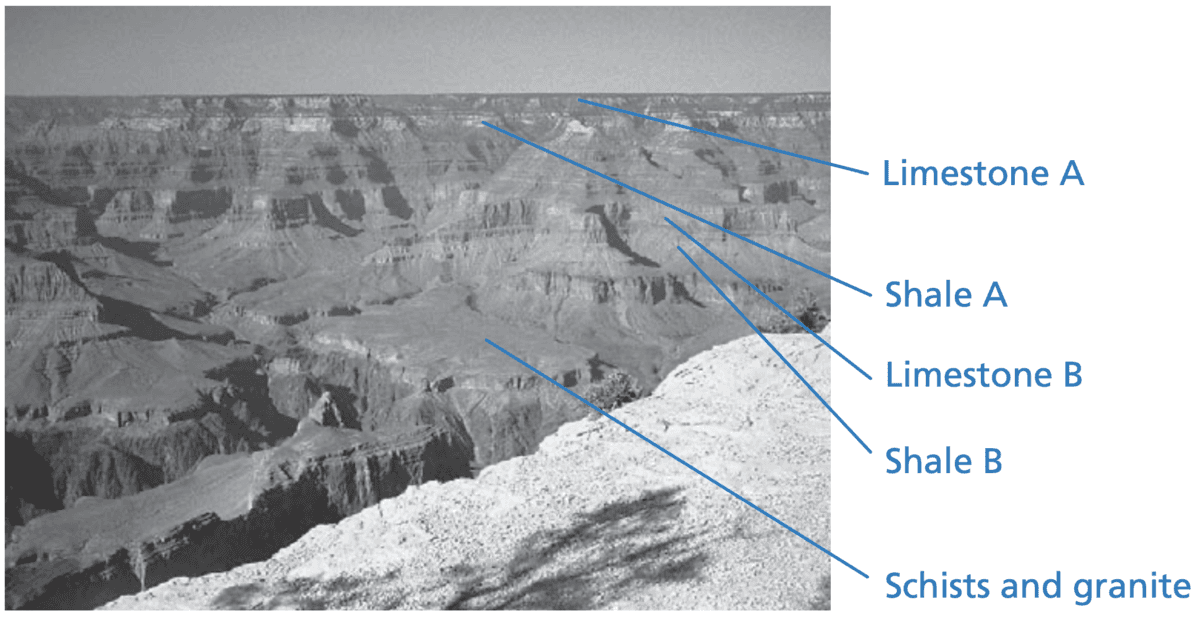
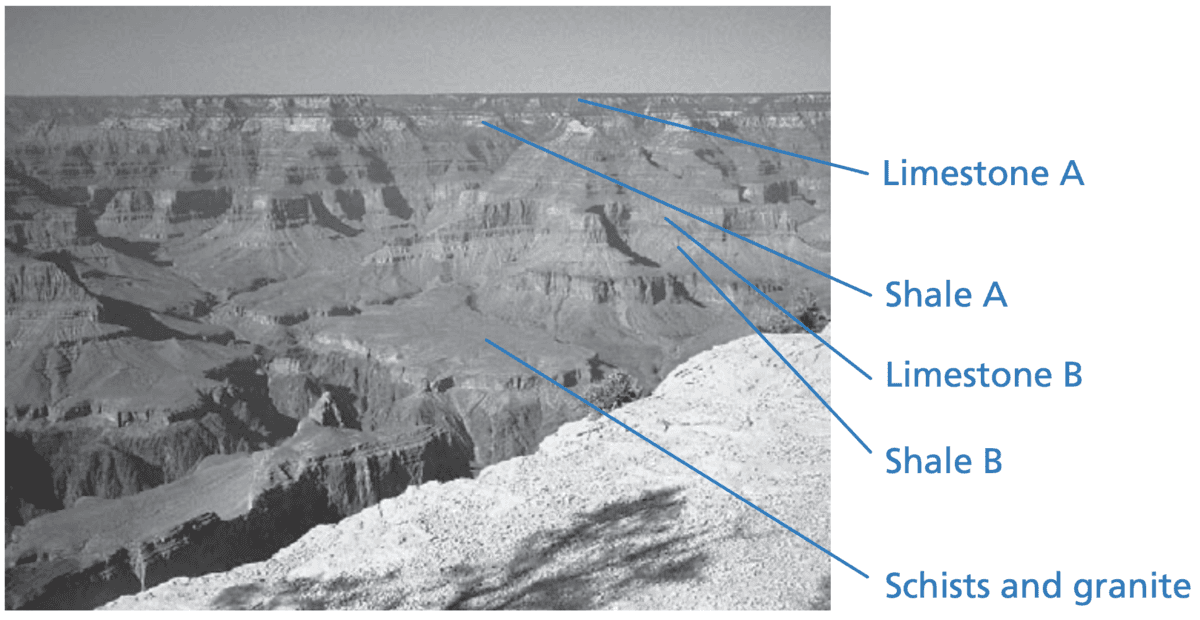
See the picture below of the Grand Canyon taken from its south rim. Several different layers of rock can be seen in the walls of the canyon.
QUESTION
The temperature in the Grand Canyon ranges from below 0 oC to over 40 oC. Although it is a desert area, cracks in the rocks sometimes contain water. How do these temperature changes and the water in rock cracks help to speed up the breakdown of rocks?
THE GRAND CANYON
The Grand Canyon is located in a desert in the USA. It is a very large and deep canyon containing many layers of rock. Sometime in the past, movements in the Earth’s crust lifted these layers up. The Grand Canyon is now 1.6 km deep in parts. The Colorado River runs through the bottom of the canyon.
See the picture below of the Grand Canyon taken from its south rim. Several different layers of rock can be seen in the walls of the canyon.
QUESTION
What geological process contributed to the formation of the Grand Canyon, resulting in its current depth of up to 1.6 km in parts?
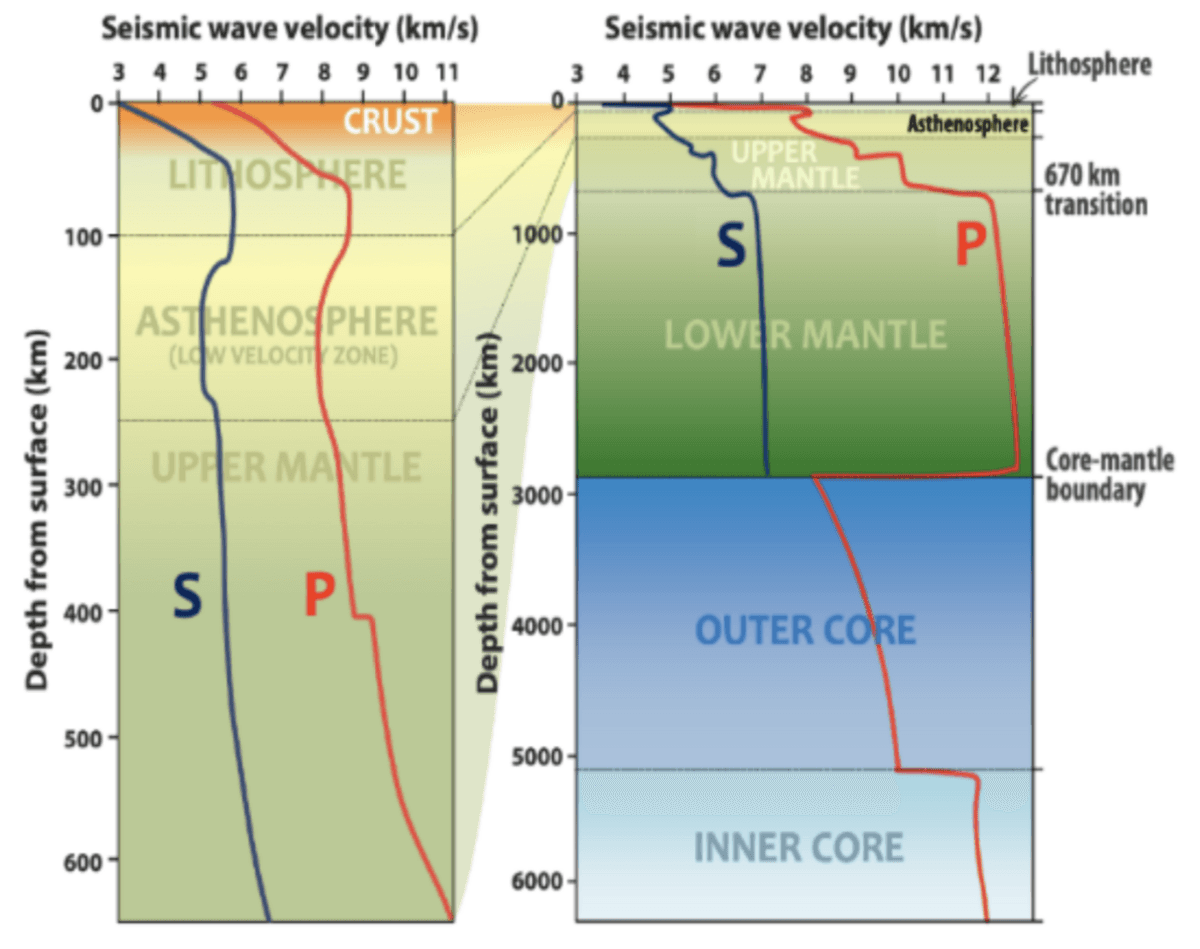
Below is the cross section of the earth showing the velocity of P wave and S wave at different depth. On the y- axis is the depth from the surface in km and x-axis on seismic wave velocity in km/s. Use the graph below to answer the questions given. At what layer do S waves dissipate and why?

Match the seismic wave behavior with the corresponding Earth layer:
Facts on Seismic Waves
Seismic waves are vibrations that travel through the Earth, generated by geological processes such as earthquakes, volcanic activity, or human-made explosions. There are two main categories of seismic waves: body waves and surface waves.
1. Body Waves: These waves travel through the Earth's interior and are further classified into:
a. P-waves (Primary waves): These are compressional waves that move through both solids and liquids. In P-waves, particles in the material move back and forth in the same direction as the wave propagation.
b. S-waves (Secondary waves): These waves only travel through solids and are shear waves, meaning they cause particles to move perpendicular to the direction of wave travel.
2. Surface Waves: These waves travel along the Earth's surface and are typically slower than body waves but can cause significant damage during earthquakes. They involve complex particle motion, often combining both longitudinal and transverse movements.
Understanding the types of seismic waves and their characteristics is crucial in seismology, particularly for interpreting seismic data and assessing earthquake impacts.
Question
Match each type of seismic wave (A, B, C) with its corresponding particle motion (1, 2, 3) and the medium it can travel through (X, Y, Z).
Seismic Waves:
A. P-waves
B. S-waves
C. Surface waves
Particle Motion:
1. Particles move perpendicular to wave direction
2. Particles move parallel to wave direction
3. Particles move in a rolling motion along the surface
Medium:
X. Can travel through solids and liquids
Y. Can only travel through solids
Z. Can travel along the Earth's surface
Earthquakes are sudden and often violent shaking of the ground, caused by the movement of tectonic plates along fault lines. Even minor earthquakes can cause significant damage to poorly constructed buildings and infrastructure. It's crucial to be aware of earthquake-prone areas and to take preventive measures to ensure safety. Familiarizing yourself with local seismic risks can help in preparing for potential earthquakes, minimizing risks, and understanding the importance of building resilient structures.
Question:
Match each term (A, B, C) related to earthquakes with its corresponding description (1, 2, 3) and impact (X, Y, Z).
Terms:
A. Fault Line
B. Aftershock
C. Seismic Wave
Descriptions:
1. A smaller quake that occurs after a larger earthquake
2. The surface along which the movement of tectonic plates occurs
3. A vibration that travels through the Earth as a result of an earthquake
Impact:
X. Can cause additional damage to structures
Y. Indicates the location of potential earthquakes
Z. Can provide information about the Earth's interior
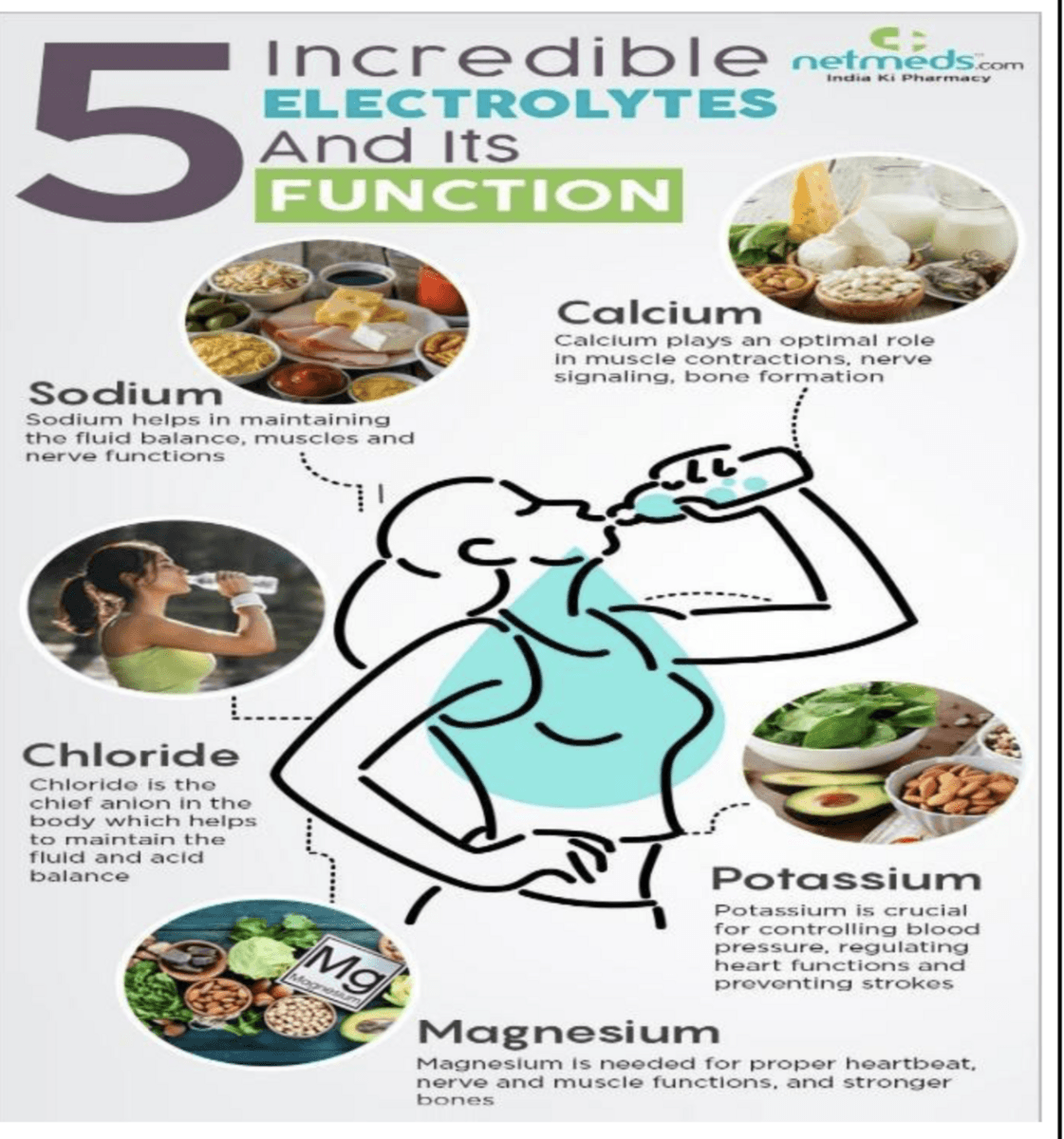
On Electrolytes
Electrolytes are essential minerals that carry an electric charge and play a critical role in maintaining various bodily functions. They are vital for processes such as muscle contractions, nerve signaling, hydration, and maintaining acid-base balance. The five incredible electrolytes in the human body include sodium, calcium, chloride, potassium, and magnesium. Each of these electrolytes has specific functions, and maintaining the right balance of these ions is crucial for overall health.
Sodium (Na⁺): Helps regulate fluid balance and is essential for nerve and muscle function.
Calcium (Ca²⁺): Vital for bone health, muscle contractions, and nerve signaling.
Chloride (Cl⁻): Important for maintaining fluid balance and producing stomach acid for digestion.
Potassium (K⁺): Regulates heartbeat, muscle contractions, and nerve functions.
Magnesium (Mg²⁺): Involved in over 300 biochemical reactions, including energy production and muscle function.
Question:
Match each electrolyte (A, B, C, D, E) with its corresponding ion charge (1, 2, 3) and function (X, Y, Z).
Electrolytes:
A. Sodium
B. Calcium
C. Chloride
D. Potassium
E. Magnesium
Ion Charges:
1. Na⁺
2. Ca²⁺
3. Cl⁻
4. K⁺
5. Mg²⁺
Functions:
X. Vital for muscle contraction and bone health
Y. Helps maintain fluid balance and nerve function
Z. Important for producing stomach acid and digestion
On Electron Transfer in Elements
In chemistry, the behavior of atoms in terms of gaining or losing electrons is crucial for understanding the formation of ions and the nature of chemical bonds. Elements can be classified into two main categories: metals and nonmetals.
Metals: Typically located on the left side of the periodic table, metals tend to have low electronegativities and ionization energies. They usually lose electrons to achieve a stable electron configuration, forming positive ions (cations). For example, sodium (Na) loses one electron to form Na⁺.
Nonmetals: Found on the right side of the periodic table, nonmetals generally have higher electronegativities and ionization energies. They are more likely to gain electrons to fill their outer electron shells, resulting in the formation of negative ions (anions). For example, chlorine (Cl) gains one electron to form Cl⁻.
Understanding the tendency of metals to lose electrons and nonmetals to gain them is fundamental in predicting how different elements will interact in chemical reactions.
Match each type of element (A, B) with their corresponding behavior (1, 2) and resulting ion (X, Y).
Types of Elements:
A. Metals.
B. Nonmetals
Behaviors:
1. Lose electrons
2. Gain electrons
Resulting Ions:
X. Form positive ions (cations)
Y. Form negative ions (anions)
Ion Formation in Metals and Nonmetals
Understanding how metals and nonmetals form ions is fundamental in chemistry. Ions are charged particles that result from the loss or gain of electrons.
Metals: Typically located on the left side of the periodic table, metals tend to lose electrons when they react with other elements. This loss of electrons results in the formation of positively charged ions known as cations. For example, sodium (Na) loses one electron to form Na⁺.
Nonmetals: Found on the right side of the periodic table, nonmetals generally gain electrons during chemical reactions. This gain of electrons results in the formation of negatively charged ions called anions. For example, chlorine (Cl) gains one electron to form Cl⁻.
By understanding the behavior of these two groups of elements, students can gain insights into how ionic compounds are formed, their properties, and their significance in chemical reactions.
QUESTION: What happens to a metal atom when it forms a cation?
Everyday Products
The products we use daily significantly impact our lives, health, and environment. Understanding the importance of these products helps us make informed decisions regarding their use, sustainability, and alternatives.
Salt (Sodium Chloride): Used in cooking and food preservation, salt is essential for maintaining electrolyte balance in the body. Deciding how much salt to consume involves considering health risks like hypertension.
Lithium Batteries: Critical for powering many modern devices, lithium batteries contribute to the efficiency of our technology. Decisions about their use include considering environmental impacts and recycling options.
Water: Vital for life, water is necessary for hydration and various biological functions. Making decisions about water conservation and accessibility is crucial, especially in areas facing drought.
Toothpaste: Essential for dental hygiene, toothpaste helps prevent oral health issues. Deciding which toothpaste to use can involve considerations like fluoride content and packaging sustainability.
QUESTION:
Match each product (A, B, C, D) with its potential decision-making considerations (1, 2, 3, 4).
Products:
Salt
Lithium Battery
Water
Toothpaste
Decision-Making Considerations:
Monitoring intake to prevent health issues.
Considering environmental sustainability and recycling.
Making choices about conservation and usage.
Selecting products that promote dental health.

Valence Electrons and the Periodic Table
Understanding valence electrons is fundamental to grasping how elements interact in chemical reactions. Valence electrons are the electrons in the outermost shell of an atom and are crucial in determining how an element will bond with others.
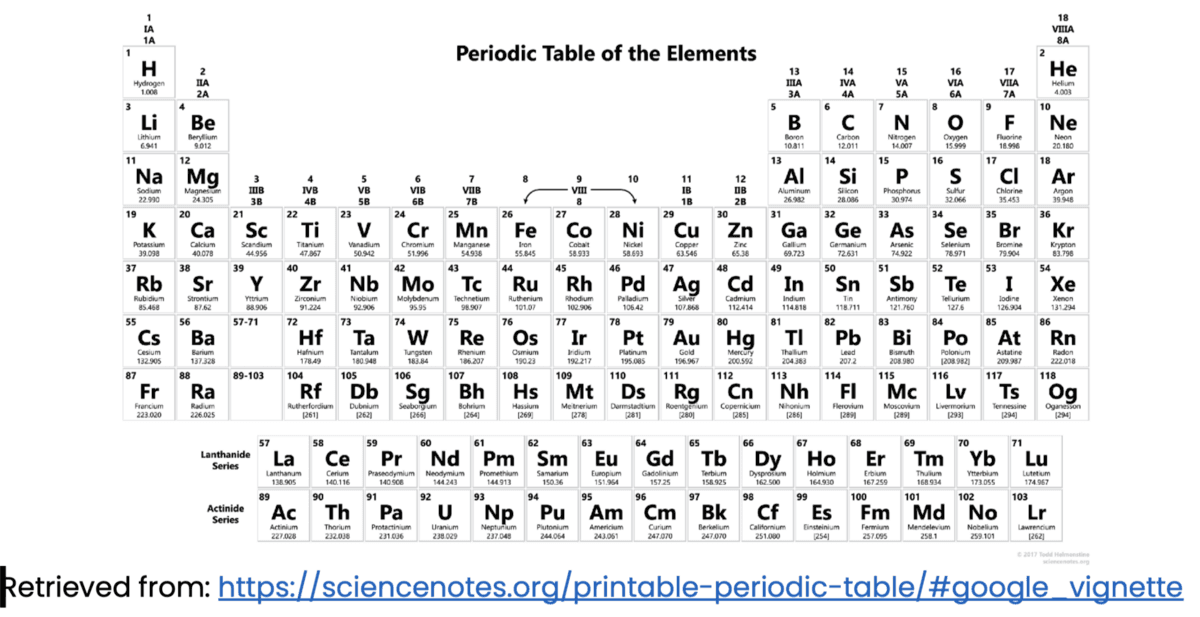
Groups in the Periodic Table: The periodic table is organized into groups (vertical columns) that share similar chemical properties due to their valence electron configuration.
Group 1A (Alkali Metals): These elements have one valence electron (e.g., Lithium, Sodium). They are highly reactive and tend to lose this electron easily.
Group 2A (Alkaline Earth Metals): These elements have two valence electrons (e.g., Magnesium, Calcium) and are less reactive than alkali metals.
Group 3A (Boron Group): Elements in this group have three valence electrons (e.g., Aluminum, Gallium).
Group 4A (Carbon Group): These elements have four valence electrons (e.g., Carbon, Silicon).
Group 5A (Nitrogen Group): Elements here have five valence electrons (e.g., Nitrogen, Phosphorus).
Group 6A (Chalcogens): These elements have six valence electrons (e.g., Oxygen, Sulfur).
Group 7A (Halogens): Elements in this group have seven valence electrons (e.g., Fluorine, Chlorine). They are very reactive and tend to gain one electron to achieve stability.
Group 8A (Noble Gases): These elements have eight valence electrons (e.g., Neon, Argon), making them very stable and generally unreactive.
Question: What will likely happen if an element in Group 5A loses three valence electrons?
Covalent Bonding and Collaboration
Covalent bonding is a fundamental concept in chemistry where atoms share electrons to achieve stability. This sharing creates strong connections between atoms, resulting in the formation of stable molecules. Just as in Filipino culture, where food and relationships thrive through sharing and collaboration, atoms must work together to create compounds that support life.
Key Concepts:
Covalent Bonds: Formed when two or more atoms share electrons, allowing them to attain a full outer electron shell.
Molecular Stability: Achieved through the right combination of atoms, much like how a well-balanced dish requires the proper ingredients.
Collaboration: Both in cooking and in chemistry, successful outcomes depend on teamwork and the right elements coming together harmoniously.
Match each term with the correct description or analogy.
Terms:
Covalent Bond
Carbon
Ingredients in Cooking
Stability
Descriptions:
The building block of many organic compounds due to its ability to form stable bonds.
A strong connection formed by the sharing of electrons between atoms.
Essential components needed in the right proportions to create a flavorful dish.
Achieved when atoms share electrons correctly, leading to stable molecules.
