Loading...


Cell Bio Week 11
Quiz by Haniya Hopson
Tag the questions with any skills you have. Your dashboard will track each student's mastery of each skill.
What is the term for a member of a family of proteins that mediate Ca2+-dependent cell–cell adhesion in animal tissues?
Cortical tension in an unattached cell gives it a spherical shape, much like surface tension produces the spherical shape of a water droplet. Which one of the following statements correctly describes the basis for cortical tension in unattached cells?
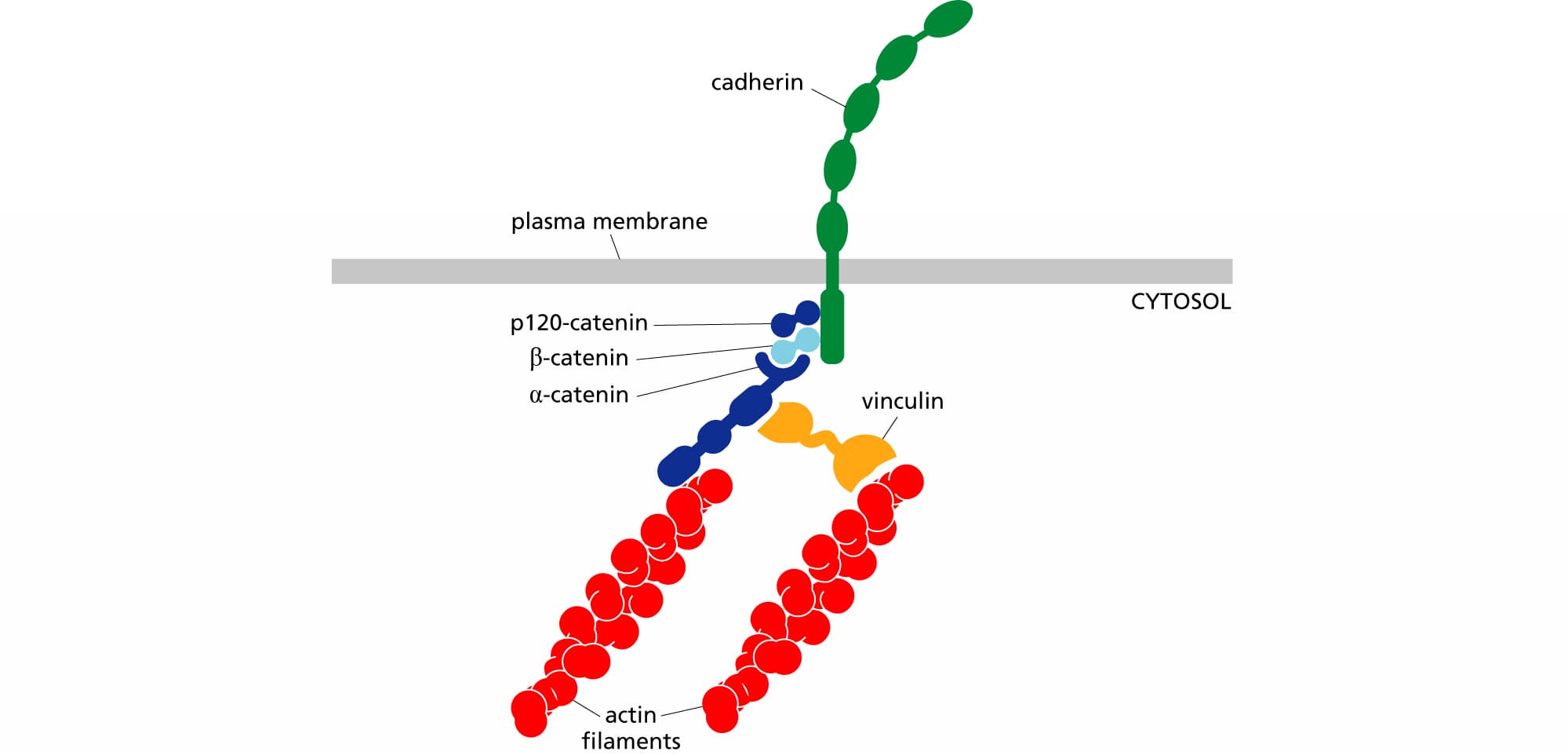
Adherens junctions link together adjacent cells in an epithelial sheet through the lateral associations of numerous cadherin molecules. On their cytosolic surfaces these junctions are tied to the actin networks of the neighboring cells (see the figure), giving them the remarkable ability to sense mechanical stresses and generate biochemical signals that lead to an appropriate response.Each of the following statements accurately describes a property of this process of mechanotransduction EXCEPT:
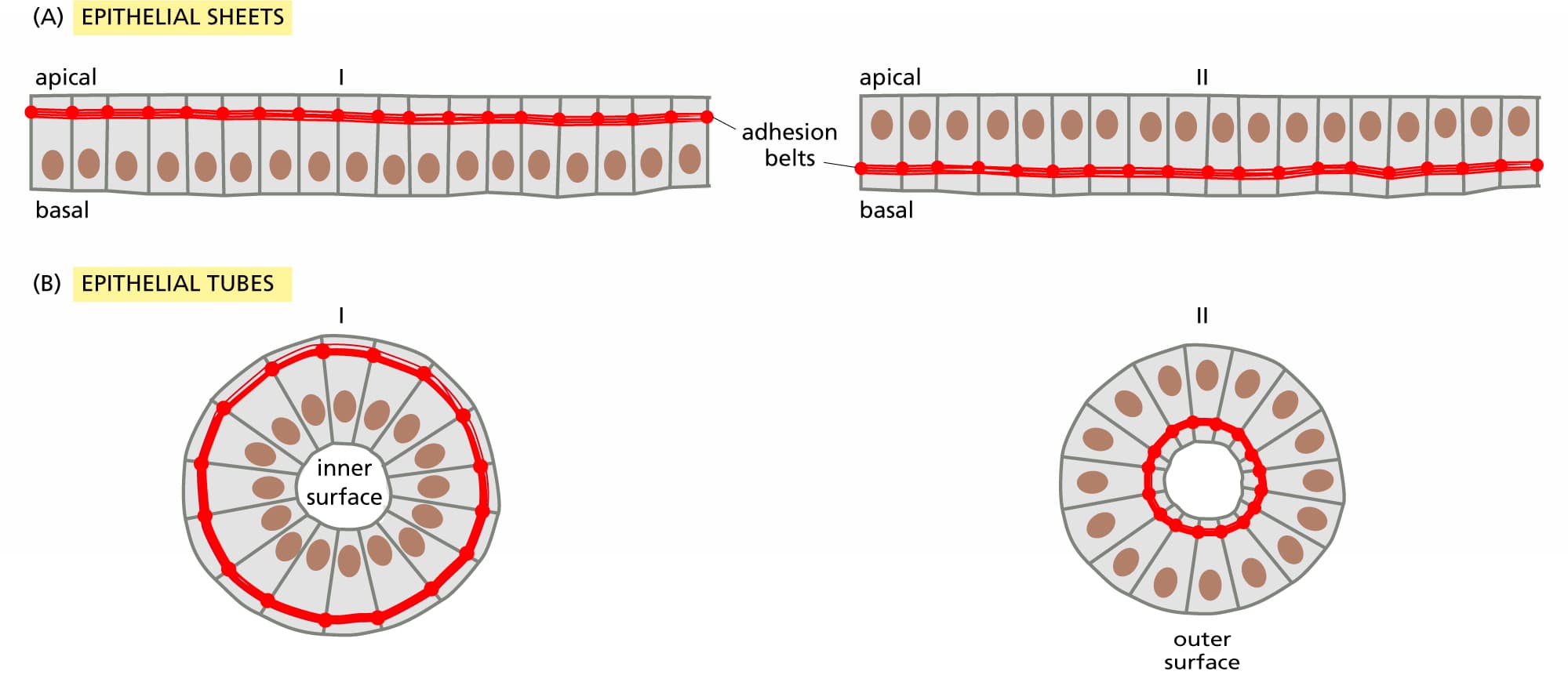
Adherens junctions in epithelia often form a continuous adhesion belt that encircles each of the cells just beneath a surface of the epithelium (see the figure Part A). Within each cell, a contractile bundle of actin filaments and myosin II lies adjacent to the adhesion belt, oriented parallel to the plasma membrane and tethered to it by cadherins. The actin–myosin bundles are thus linked, via the cadherins, into an extensive transcellular network.In the normal course of development, the coordinated contraction of this network provides the motile force for the folding of epithelial-cell sheets into tubes—a fundamental process in animal morphogenesis (Part B).In animal development, which epithelial sheet in the figure gives rise to which epithelial tube?
What is the term for the type of anchoring junction that links the intermediate filaments in two adjoining cells?
You’ve just eaten a slice of pecan pie. When the nutrients in the pie reach your gut, they will be moved across the gut epithelium by transporters in its apical and basolateral domains.Which one of the following statements correctly describes the mode of glucose transcellular transport across the gut epithelium?
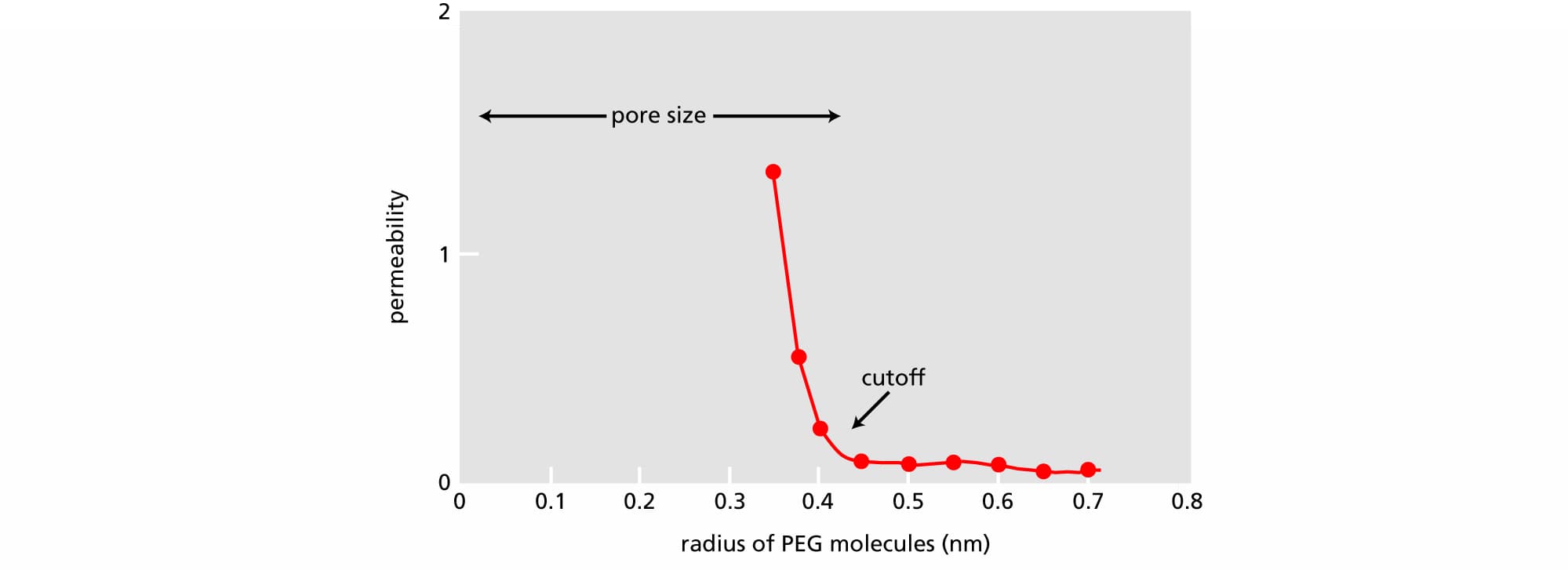
Although we have accumulated a great deal of information about the components and morphological appearance of tight junctions, we know less about how molecules pass through them in the paracellular transport pathway.One elegant study used a discrete series of polyethylene glycol (PEG) molecules with radii of 0.35 nm up to 0.74 nm. By placing the PEG molecules on one side of an epithelial sheet of intestinal cells and measuring their rate of appearance on the other side, the researchers determined the permeability of the tight junction as a function of PEG radius (see the figure). These measurements indicated there exists a common, restrictive pore with a radius of 0.43 nm.The size of the restrictive pore is defined by the sharp cutoff at the initial part of the curve. Why do you suppose that the permeability of PEG molecules that are smaller than the pore—the three smallest molecules—declines markedly with increasing size?
What is the general term for the common cell type in connective tissue that secretes an extracellular matrix rich in collagen and other extracellular matrix macromolecules?
The extracellular matrix is a relatively inert scaffold that stabilizes the structure of tissues.
What is the general name for a long, linear, highly charged polysaccharide—composed of a repeating pair of sugars, one of which is always an amino sugar—that is found covalently linked to a protein core in the extracellular matrix?
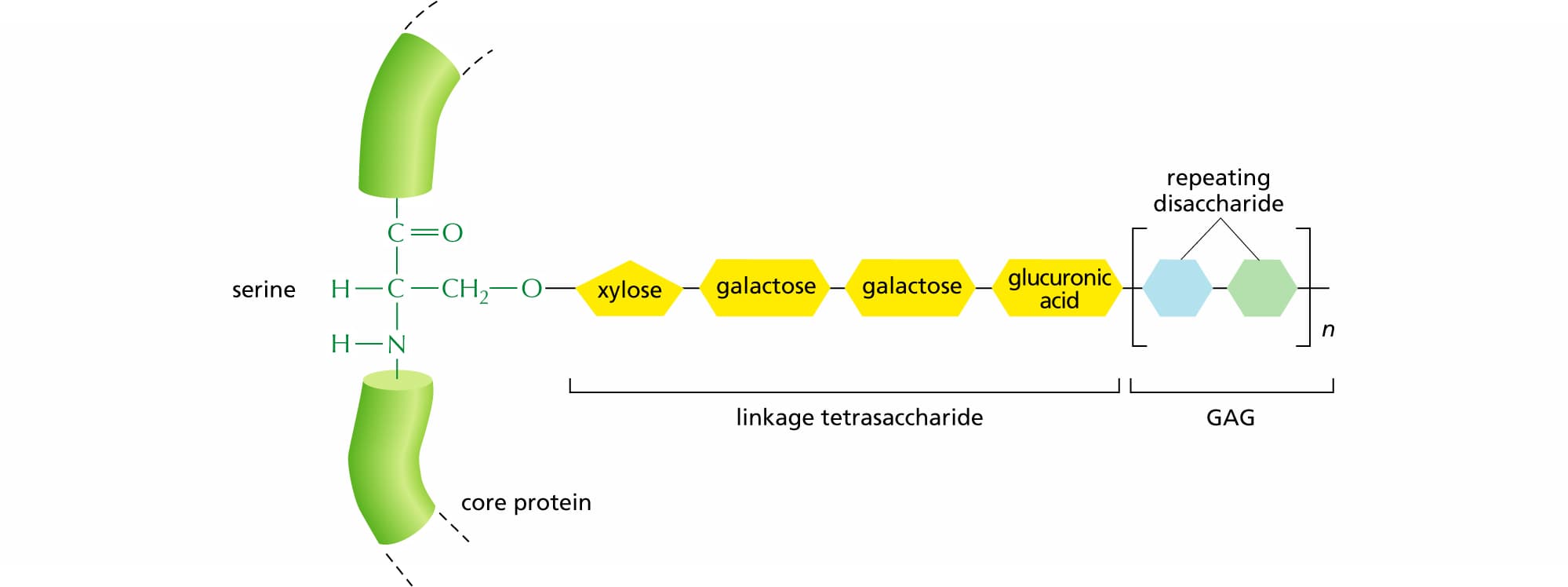
Except for hyaluronan, all glycosaminoglycans (GAGs) are covalently attached to protein as proteoglycans (see the figure), which are produced by most animal cells.Which one of the following statements correctly describes an aspect of proteoglycan synthesis?
Proteoglycans are clearly distinguished from other glycoproteins by each of the following characteristics EXCEPT:
Which one of the following statements correctly describes how collagen fibrils react to forces in the extracellular matrix?
What is the term for the hydrophobic protein that forms extracellular extensible fibers that give tissues their stretchability and resilience?
Fibroblasts influence the alignment of the collagen fibers, and the collagen fibers in turn affect the distribution of the fibroblasts.
Fibronectin can exist both in a soluble form, circulating in the blood and other body fluids, and as insoluble fibronectin fibrils, in which fibronectin dimers are cross-linked to one another by additional disulfide bonds and form part of the extracellular matrix.What aspect of its cell biology allows soluble fibronectin to form insoluble fibronectin fibrils?
A sheet of basal lamina underlies all epithelia.
A proteoglycan in the basal lamina of the kidney glomerulus plays a critical role in filtering the molecules that pass from the bloodstream into the urine.
What is the term for the extracellular matrix protein that is the primary organizer of the sheetlike structure of the basal lamina?
Several forms of muscular dystrophy (muscle-wasting diseases) arise from defective components in the basal lamina that surrounds muscle fibers.
The unusually thick basal lamina of the kidney glomerulus is a key component of the complex molecular filter that controls passage of solutes into the urine. Typically, 180 L of fluid are filtered through the kidneys each day, but most is reabsorbed, with only about 1.5 L being released as urine. The initial filtration is size, shape, and charge selective.The effective pore size is smaller for negatively charged solutes than it is for positively charged solutes of the same size. What features of the basal lamina do you suppose might contribute to this difference in filtration of charged molecules?
A first step during infection is the attachment of microorganisms to various host proteins, which often include those in the basal lamina of epithelial sheets that form the lining of the gut or the epidermal covering of the skin. Some microorganisms then secrete enzymes that can digest the protein or carbohydrate components of the basal lamina.Why do you suppose microorganisms digest the basal lamina during the infection process?
Glycoproteins in the extracellular matrix serve as a reservoir for numerous signaling peptides and proteins; however, the glycoproteins themselves do not produce biological signals by binding to cell-surface receptors.
Various types of integrins connect extracellular binding sites to all the different kinds of internal cytoskeletal elements, including actin filaments, microtubules, and intermediate filaments.
Humans contain 24 types of integrins, which are formed from the products of 8 different β-chain genes and 18 different α-chain genes that dimerize in different combinations. The β1 integrin subunit is found on almost all vertebrate cells, and the β2 subunit is found on white blood cells. Defects in various integrin chains cause a variety of diseases.Mutations of which, if either, of the integrin β chains—β1 or β2—would you expect to cause a more severe phenotype?
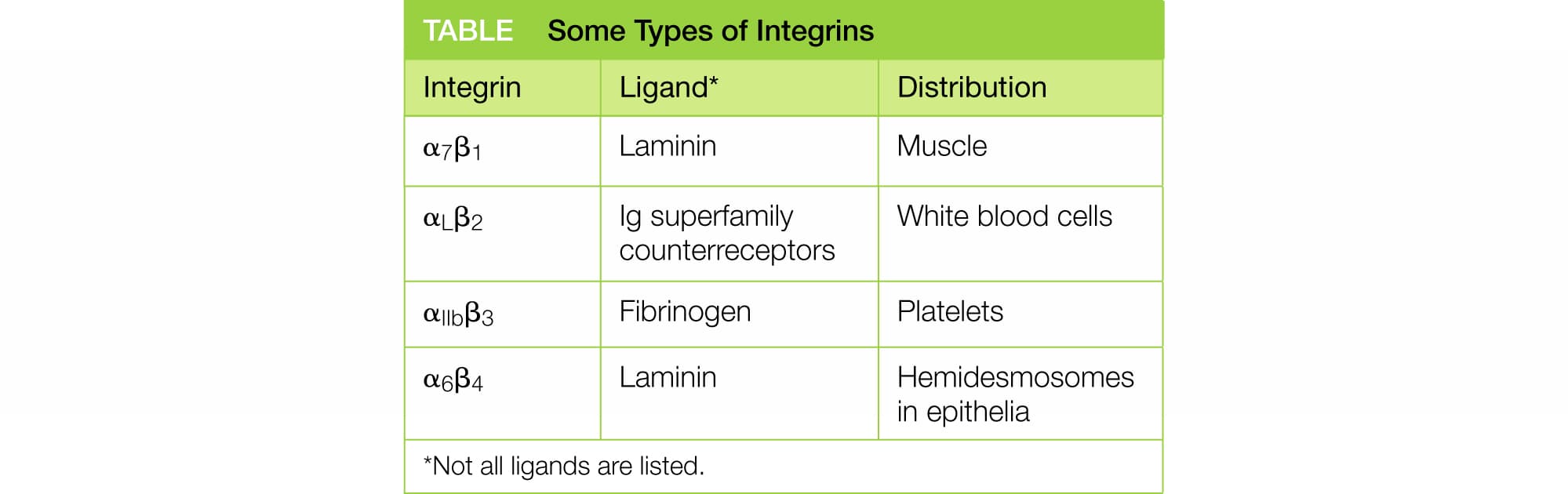
Humans contain 24 types of integrins, which are formed from the products of 8 different β-chain genes and 18 different α-chain genes that dimerize in different combinations. The diversity of integrin functions is remarkable. The table lists four varieties of integrins, along with their ligands in the extracellular matrix and their cell-type distribution.Which one of the statements below accurately describes the phenotype when a particular α subunit is mutated?
Integrins are thought to be rigid rods that span the membrane and link binding sites outside the cell to those inside the cell.
Which one of the following statements accurately reflects an aspect of anchorage dependence?