Historical and contemporary violations of human rights can be evaluated, using the principles and articles established within the UN Universal Declaration of Human Rights. Students will examine the atrocities committed under Augusto Pinochet, Deng Xiaoping, and Slobodan Milosevic in light of the principles and articles within the UN Universal Declaration of Human Rights. Students will examine and analyze the roles of perpetrators and bystanders in human rights violations in Cambodia, Rwanda, and Darfur in light of the principles and articles within the UN Universal Declaration of Human Rights. Students will examine the policy of apartheid in South Africa and the growth of the anti apartheid movements, exploring Nelson Mandela?s role in these movements and in the post-apartheid period. Students will explore efforts to address human rights violations by individuals and groups, including the efforts of Mother Teresa, Aung San Suu Kyi, and the Mothers of the Plaza de Mayo.
Cultural identity and nationalism inspired political movements that attempted to unify people into new nation-states and posed challenges to multinational states. Students will investigate the role of cultural identity and nationalism in the unification of Italy and Germany and in the dissolution of the Ottoman and Austrian Empires.
Shifts in population from rural to urban areas led to social changes in class structure, family structure, and the daily lives of people. Students will investigate the social, political, and economic impacts of industrialization in Victorian England and Meiji Japan and compare and contrast them.
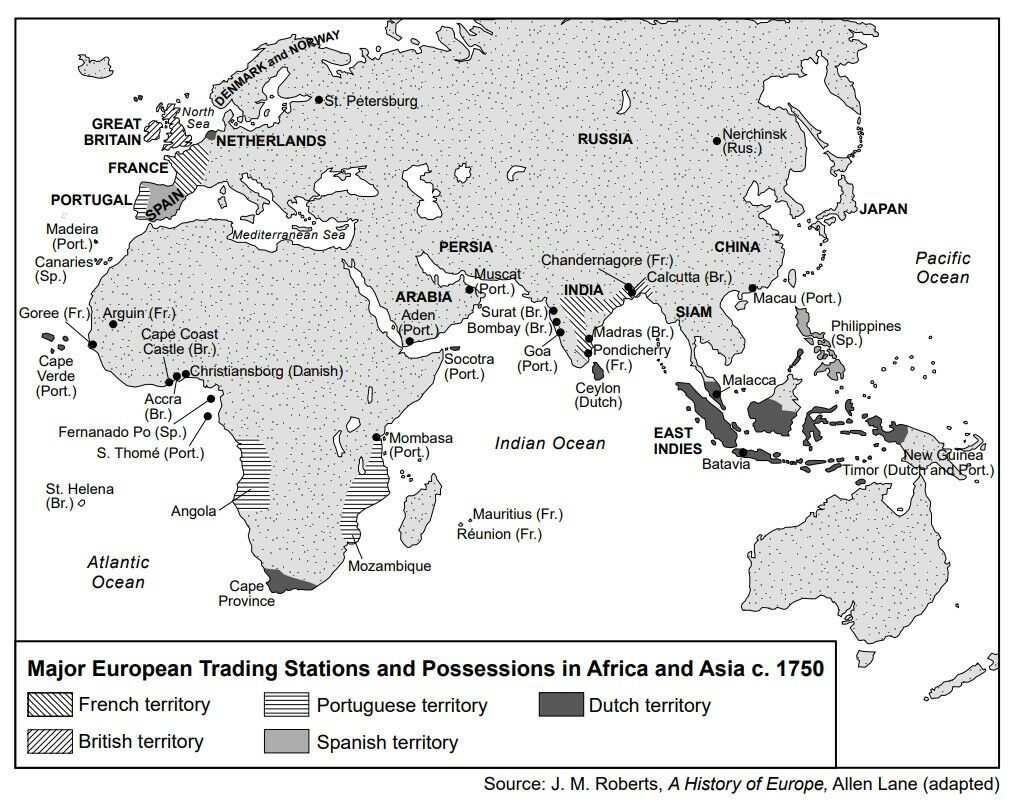
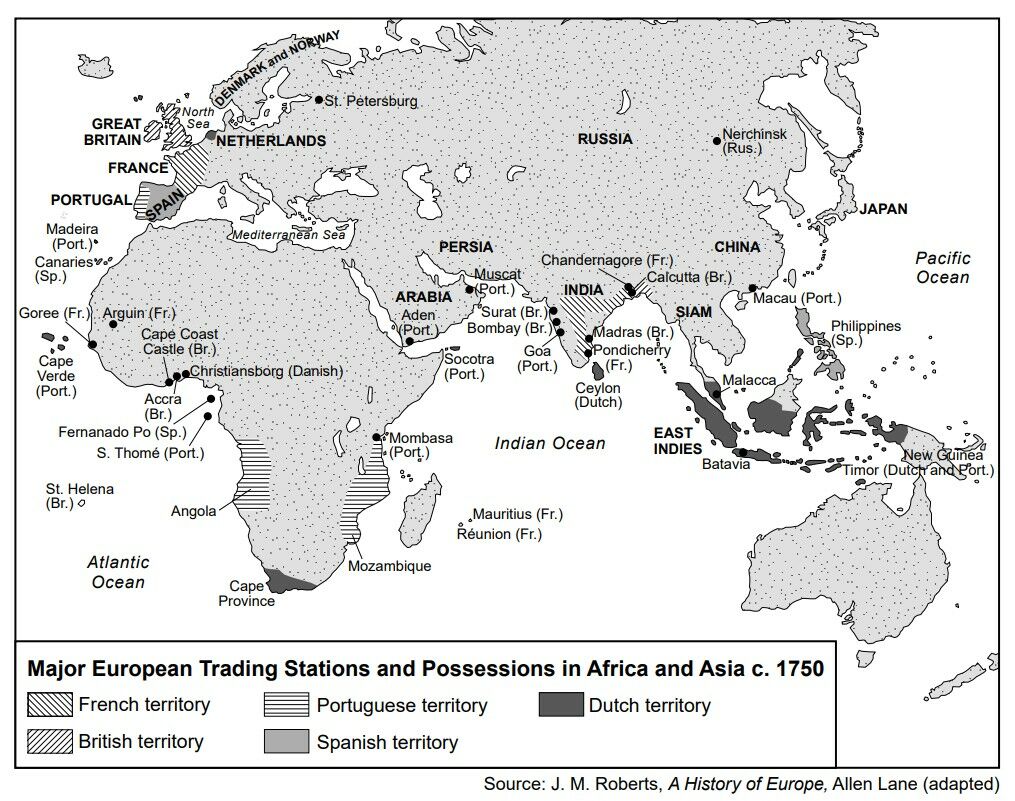
Those who faced being colonized engaged in varying forms of resistance and adaptation to colonial rule with varying degrees of success. Students will investigate one example of resistance in Africa (Zulu, Ethiopia, or Southern Egypt/Sudan) and one in China (Taiping Rebellion or Boxer Rebellion and the role of Empress Dowager CiXi). Students will investigate how Japan reacted to the threat of Western imperialism in Asia.
Technological developments increased the extent of damage and casualties in both World War I and World War II. Students will compare and contrast the technologies utilized in both World War I and World War II, noting the human and environmental devastation.
Globalization is contentious, supported by some and criticized by others. Students will compare and contrast arguments supporting and criticizing globalization by examining concerns including: free market, export-oriented economies vs. localized, sustainable activities development of a mixed economy in China and China's role in the global economy multinational corporations and cartels (e.g., Organization of Petroleum Exporting Countries) roles of the World Trade Organization, the World Bank, the International Monetary Fund, and microfinance institutions economic growth and economic downturns (e.g., recession, depression) on a national and a global scale economic development and inequality (e.g., access to water, food, education, health care, energy) migration and labor ethnic diversity vs. homogenization (e.g., shopping malls, fast food franchises, language, popular culture).
Globalization has created new possibilities for international cooperation and for international conflict. Students will examine the roles of the United Nations (UN), North Atlantic Treaty Organization (NATO), the European Union, nongovernmental organizations (NGOs), and efforts to build coalitions to promote international cooperation to address conflicts and issues. They will also examine the extent to which these efforts were successful. Students will investigate one organization and one international action that sought to provide solutions to environmental issues, including the Kyoto Protocol. Students will examine threats to global security, such as international trade in weapons (e.g., chemical, biological, and nuclear), nuclear proliferation, cyber war, and terrorism, including a discussion of the events of September 11, 2001.
Tensions between agents of modernization and traditional cultures have resulted in ongoing debates within affected societies regarding social norms, gender roles, and the role of authorities and institutions. Students will investigate, compare, and contrast tensions between modernization and traditional culture in Turkey under the rule of Kemal Ataturk and in Iran under the Pahlavis and the Ayatollahs. Students will explore how changes in technology, such as communication and transportation, have affected interactions between people and those in authority (e.g., efforts to affect change in government policy, engage people in the political process including use of social media, control access to information, and use terrorism as a tactic).
Cultures and countries experience and view modernization differently. For some, it is a change from a traditional rural, agrarian condition to a secular, urban, industrial condition. Some see modernization as a potential threat and others as an opportunity to be met. Students will investigate the extent to which urbanization and industrialization have modified the roles of social institutions such as family, religion, education, and government by examining one case study in each of these regions: Africa (e.g., Zimbabwe, Kenya, Nigeria, Sierra Leone), Latin America (e.g., Brazil, Argentina, Chile, Mexico), and Asia (e.g., China, India, Indonesia, South Korea).
The Cold War originated from tensions near the end of World War II as plans for peace were made and implemented. The Cold War was characterized by competition for power and ideological differences between the United States and the Soviet Union. Students will compare and contrast how peace was conceived at Yalta and Potsdam with what happened in Europe in the four years after World War II (i.e., Soviet occupation of Eastern Europe, Truman Doctrine, Berlin blockade, NATO).
Governments, groups, and individuals have responded in various ways to the human atrocities committed in the 20th and 21st centuries. Students will explore multinational treaties and international court systems that bind countries to adhere to international human rights. Students will explore international organizations that work to maintain peace, stability, and economic prosperity, and to protect nations and people from oppressive governments and political violence.
Track each student's skills and progress in your Mastery dashboards