Loading...


NY Released Regents Exam - Global History and Geography II (Aug 2024)
Quiz by NYSED Global History and Geography
Track each student's skills and progress in your Mastery dashboards
Based on this passage, what was one cause of the collapse of the Mughal Empire?
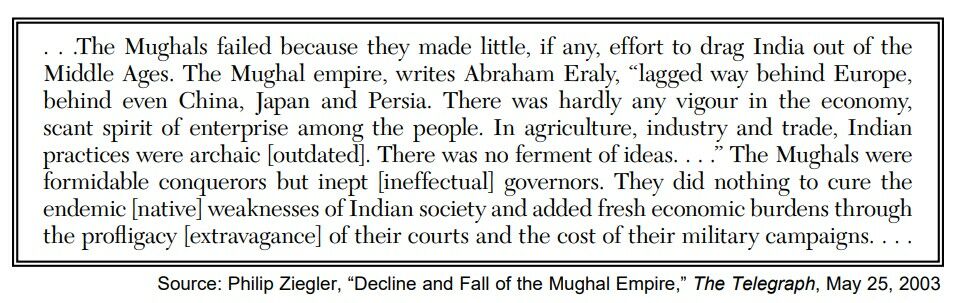
poor governing and excessive spending
a lack of trained military forces to protect against invasions
widespread rebellions by the common people across the empire
an entrepreneurial spirit and rapid expansion of trade
Which course of action did the British take in response to the situation described in this passage?
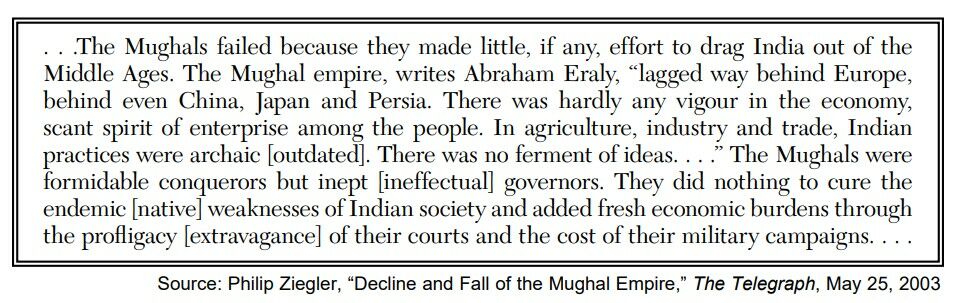
moved the monarch’s headquarters to New Delhi
propped up the Mughal emperor’s government with troops and cash
withdrew all British government representatives from the Mughal Empire
expanded British territorial control within the Indian subcontinent
Based on this passage, what was one cause of the collapse of the Mughal Empire?
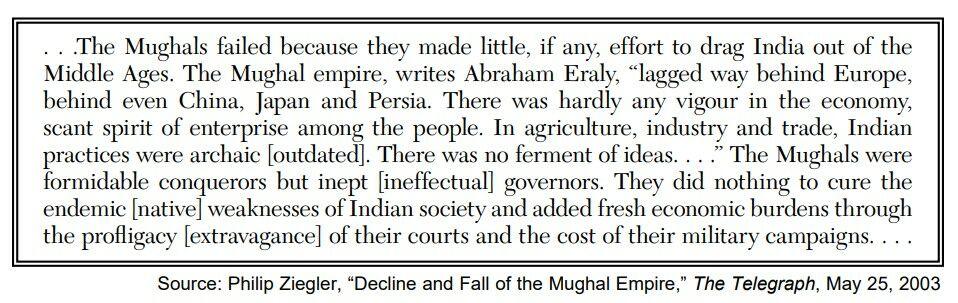
Which course of action did the British take in response to the situation described in this passage?

According to this passage, what was one impact of the agricultural changes in England?

What impact did Speakers C and D have on world history?

These speakers’ ideas and arguments were influenced by

This cartoon could be used to explain the

Which statement best represents a response taken by the Third Estate to the situation shown in the cartoon?

What problem did Olympe de Gouges hope to directly address with this passage?

Which claim about the Ottoman Empire is best supported by this passage?

What was one reason the British wanted to increase the supply of opium to China?

In what way did the situations shown in this cartoon significantly affect China?

The Japanese social and economic changes of the late 19th century described in the passage were a result of

Which claim about the impacts of foreign influence in Japan is best supported by this passage?

Which claim is best supported by this illustration?

What was a direct outcome of the event in this illustration?

Which evidence best supports the claim made by Ho Chi Minh in this passage when he said “It was patriotism, not communism, that inspired” him?

Based on this passage, which action was being recommended by Ho Chi Minh?

Which event led to the situation depicted in the illustration?

Based on this illustration, which course of action is being recommended by Mustafa Kemal Atatürk?

What was the purpose of this article?

Based on this article, the type of action taken by Hans and Sophie Scholl can best be described as

Based on this passage, what was the main purpose for the establishment of the North Atlantic Treaty Organization (NATO)?

Which statement best represents the position of the world in this cartoon?

Which later development was a result of the political situation shown in this cartoon?

Which group in Iran most likely opposed thepolicies of Shah Pahlavi described in this passage?

Which event would later reverse many of the changes described in this passage?

Based on this article, what major problem is China attempting to overcome?

Which claim about the Maritime Silk Road is best supported by this article?

