demonstrate that the flow of electricity in circuits requires a complete path through which an electric current can pass and can produce light, heat, and sound
demonstrate that light travels in a straight line until it strikes an object or travels through one medium to another and demonstrate that light can be reflected such as the use of mirrors or other shiny surfaces and refracted such as the appearance of an object when observed through water
explore the uses of energy, including mechanical, light, thermal, electrical, and sound energy
Track each student's skills and progress in your Mastery dashboards
Give this quiz to my class
Q 1/22
Score 0
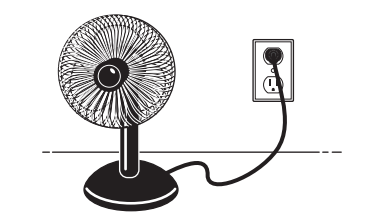
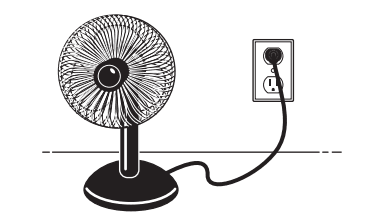
Many types of fans are used in homes. One type of electric fan is shown below. In addition to mechanical energy, which of these is produced as electric current passes through the circuit of this fan?
60
Light
Water vapor
Heat
Mass
Q 2/22
Score 0
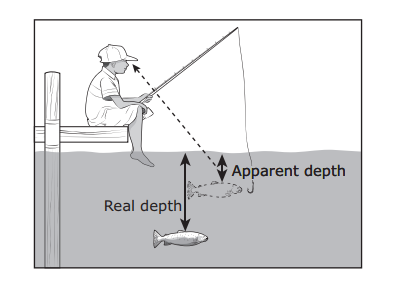
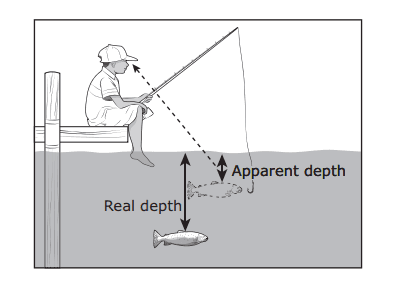
The diagram below shows a fish being viewed from above the water. The fish appears to be closer to the surface than it really is. What causes this difference?
60
Light is reflected.
Light is focused.
Light is refracted.
Light is blocked.
22 questions
Q.
Many types of fans are used in homes. One type of electric fan is shown below. In addition to mechanical energy, which of these is produced as electric current passes through the circuit of this fan?
1
60 sec
5.6.B: Force, Motion and Energy
Q.
The diagram below shows a fish being viewed from above the water. The fish appears to be closer to the surface than it really is. What causes this difference?
2
60 sec
5.6.C: Force, Motion and Energy
Q.
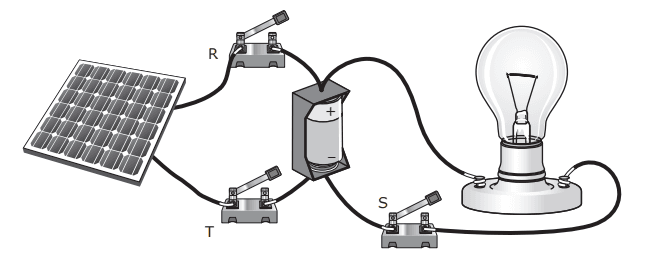
A simplified diagram of a system using solar energy is shown. To recharge the battery for later use without lighting the bulb, which of the following switches should be closed?
3
60 sec
5.6.B: Force, Motion and Energy
Q.
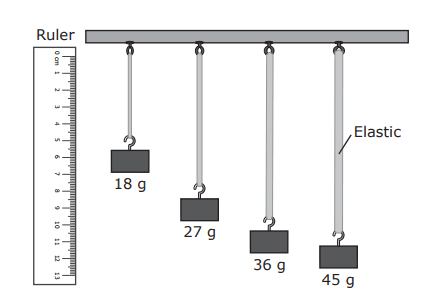
A student designs an experiment to test the effect of the width of a piece of elastic on the elastic’s ability to stretch. The student selects four pieces of elastic with different widths but the same length. The student then attaches blocks with different masses to the pieces of elastic. The results of the student’s experiment are shown below. What should the student do to improve this experiment?
4
60 sec
5.6.D: Force, Motion and Energy
Q.
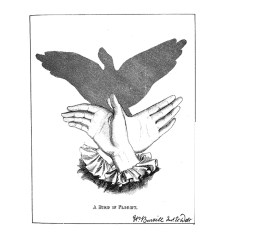
In 1859, Henry Bursill published a book of hand shadows. The picture below shows one of these hand shadows. Which property of light makes it possible to produce hand shadows?
5
60 sec
5.6.C: Force, Motion and Energy
Q.
When a bat searches for prey at night, it makes sounds as it flies, and it uses the sounds’ echoes to find its prey. When the bat flies and listens to echoes to locate prey, it is using —
6
60 sec
5.6.A: Force, Motion and Energy
Q.
Lasers produce a beam of light that can be focused on a small area. A teacher uses two mirrors to shine a beam of light from a laser onto a box. Which diagram shows how the teacher should position the two mirrors?
7
60 sec
5.6.C: Force, Motion and Energy
Q.
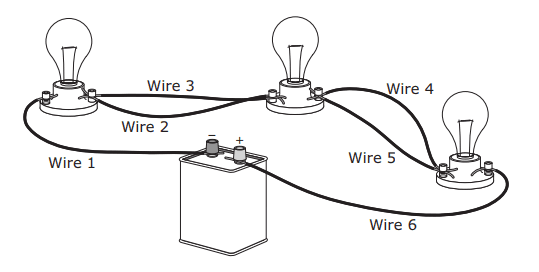
All the light bulbs in this circuit are lit. Which change would cause all the bulbs to go out?
8
60 sec
5.6.B: Force, Motion and Energy
Q.
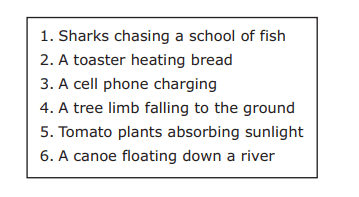
A student made a list of activities that involve energy. Which activities on the list are examples of the use of mechanical energy?
9
60 sec
5.6.A: Force, Motion and Energy
Q.
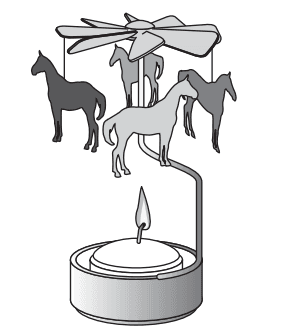
An old-fashioned metal toy is shown below. When the candle is lit, the carousel of horses begins to turn. Which of these correctly describes the energy that makes the carousel turn?
10
60 sec
5.6.A: Force, Motion and Energy
Q.
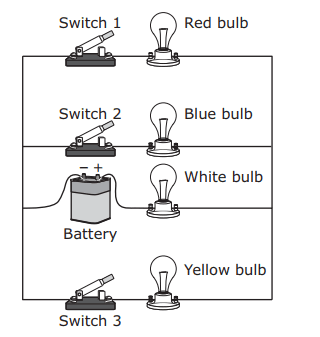
Students constructed a circuit using different-colored lightbulbs. What will happen if Switch 3 is closed and the other switches are left open?
11
60 sec
5.6.B: Force, Motion and Energy
Q.
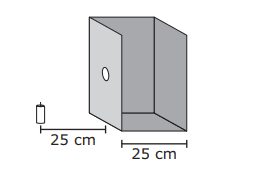
A teacher takes the top and a side off a box. She cuts a hole in another side and puts a candle outside the box, as shown below. When the teacher lights the candle in a dark room, some of the candlelight shines through the hole. Which diagram best shows how the light appears on the opposite wall of the box?
12
60 sec
5.6.C: Force, Motion and Energy
Q.
This circuit has three lightbulbs and a bell. Which procedure will result in only the blue lightbulbs operating?
13
60 sec
5.6.B: Force, Motion and Energy
Q.
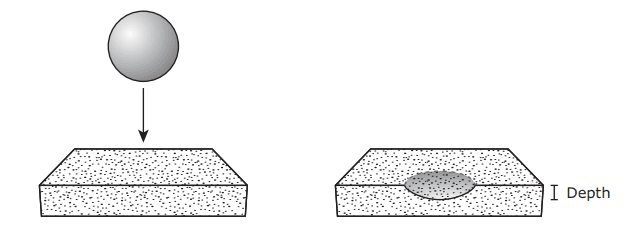
Students drop the same heavy ball onto identical blocks of soft clay from different heights. For each height they measure the depth of the dent the ball makes in the clay. Why is the depth of the dent different in each trial?
14
60 sec
5.6.D: Force, Motion and Energy
Q.
A student uses a set of headphones to listen to music. Which of these objects uses the same source of energy as the headphones?
15
60 sec
5.6.A: Force, Motion and Energy
Q.
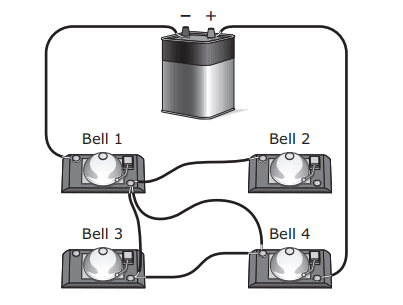
The diagram shows an electric circuit with four bells that a student plans to build. When the student connects the wires as shown, which of the bells will ring?
16
60 sec
5.6.B: Force, Motion and Energy
Q.
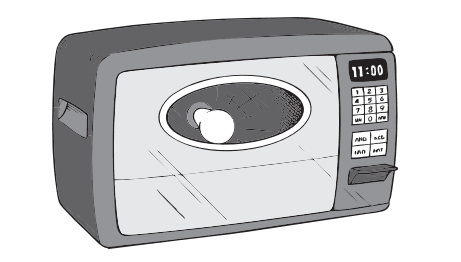
The toy oven shown uses a lightbulb to bake small cakes. What types of energy does the toy oven use to bake the cakes?
17
60 sec
5.6.A: Force, Motion and Energy
Q.
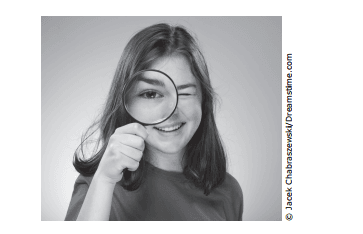
This photograph shows a girl using a lab instrument during an investigation on light. A teacher asks the other students in the class to look carefully at the girl’s eye and give reasons for its appearance. Which table correctly identifies the reasons for the appearance of the girl’s eye through the lab instrument?
18
60 sec
5.6.C: Force, Motion and Energy
Q.
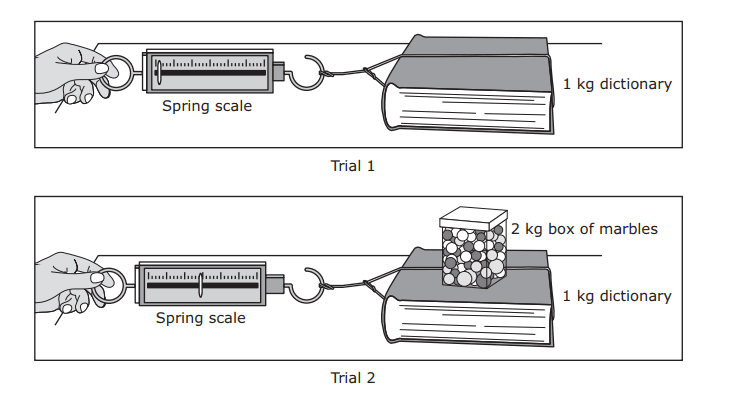
The diagrams show two trials of an experiment in which a spring scale was used to measure force. This experiment can be used to determine —
19
60 sec
5.6.D: Force, Motion and Energy
Q.
Which object requires only mechanical energy to perform its main function?
20
60 sec
5.6.A: Force, Motion and Energy
Q.
In some circuits that are used for decorating, one burned-out lightbulb will prevent all the other lightbulbs from lighting. In other circuits, one burned-out lightbulb will have no effect on the other lightbulbs. In which of these circuits will the other lightbulbs still light even if one bulb is burned out?
21
60 sec
5.6.B: Force, Motion and Energy
Q.
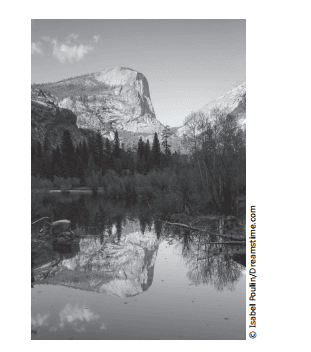
The picture shows an area of Yosemite National Park. Which statement about light is supported by this picture?